Roofing Manufacturers
Duro-Last Roofing Systems in New Bedford, MA
Duro-Last prefabricated PVC roofing in New Bedford, MA: measured sheets, factory-welded seams, field seams, curbs and flashings inspected and repaired.
Request a Roof Assessment
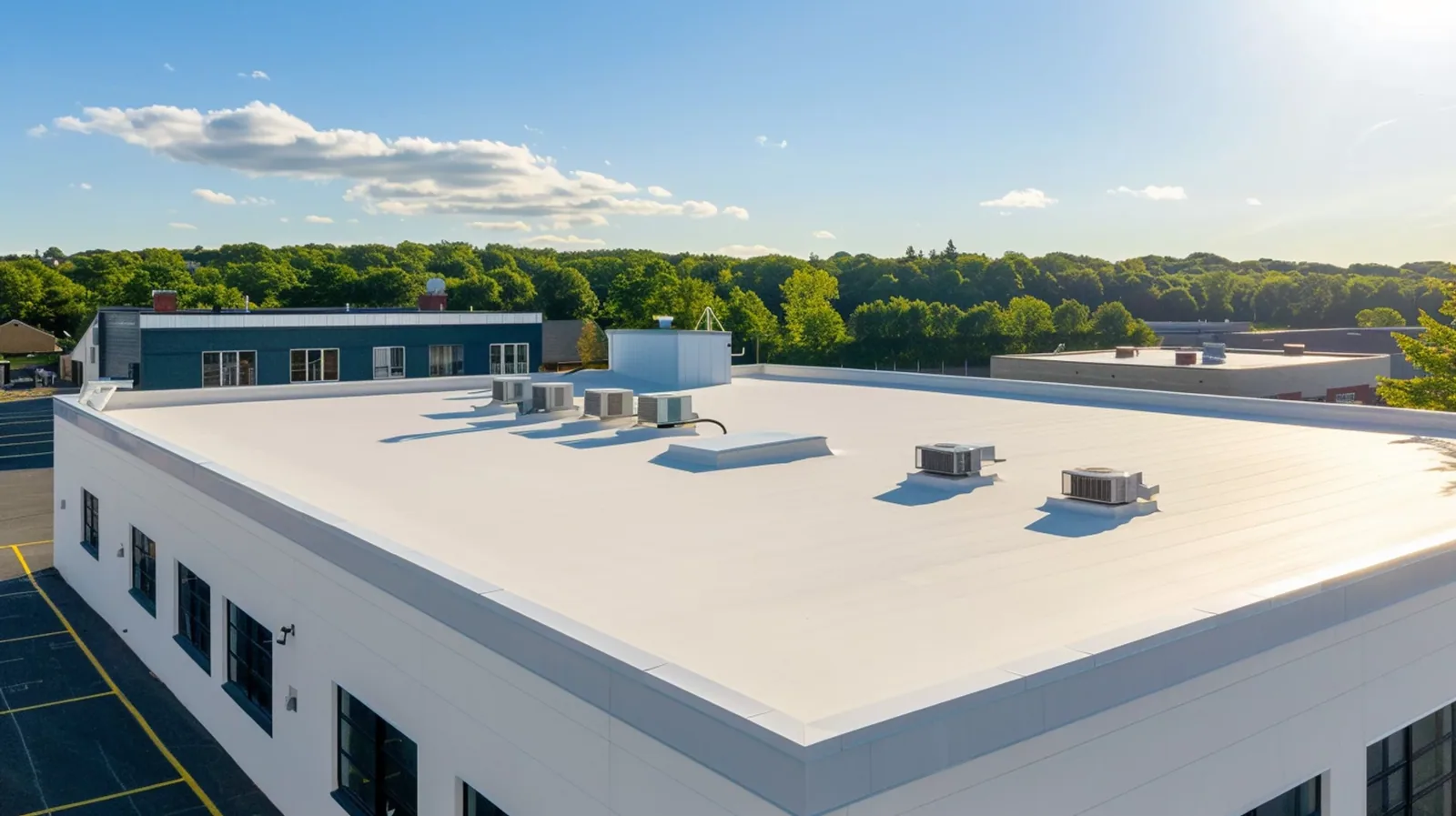
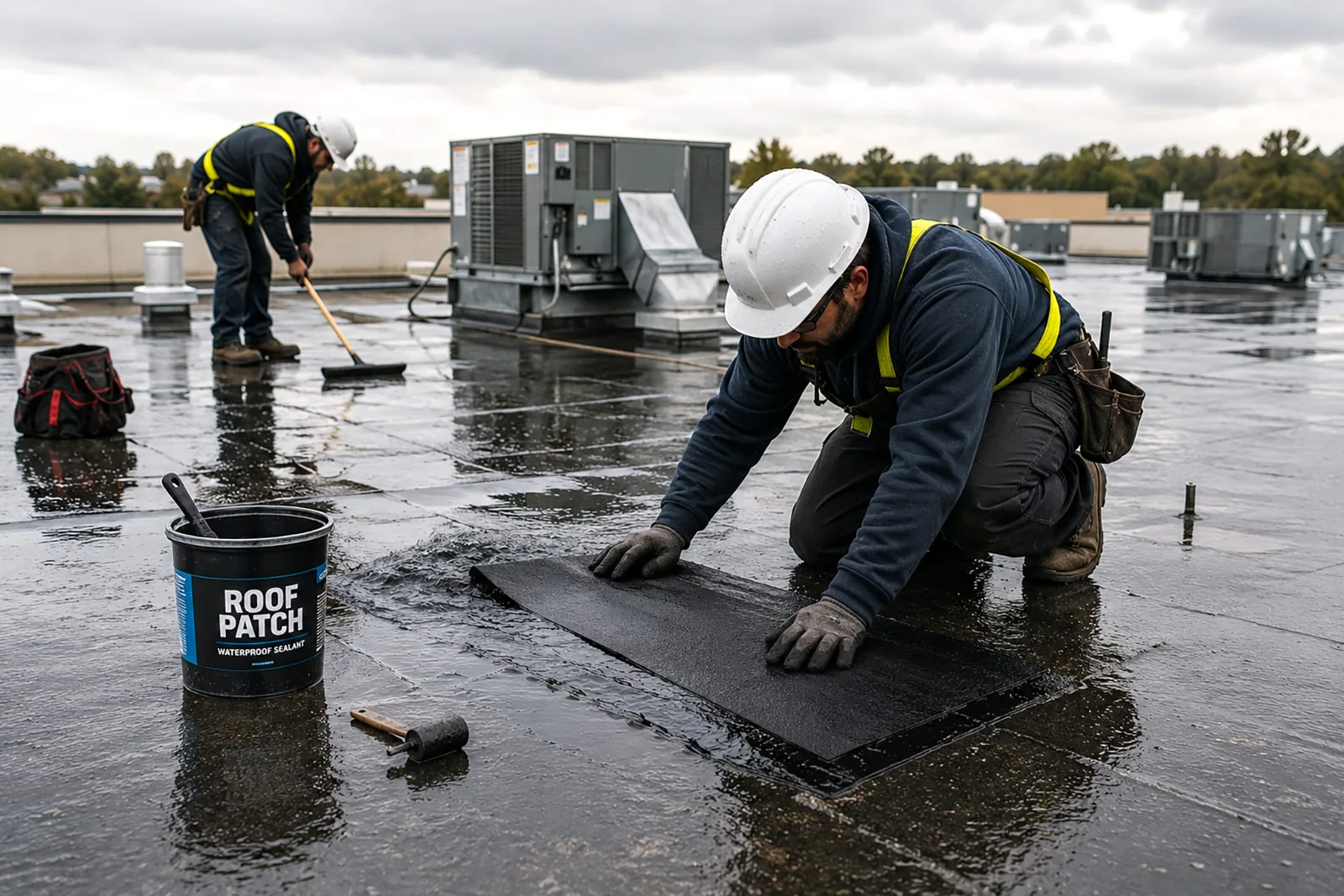
Which seams on a prefabricated roof were welded in a factory, and which were welded on the roof? That is the question a facility director should ask under a stained ceiling tile on a Duro-Last building, and the first thing an inspector would find is that the field-made joints, the ones a crew formed on site around curbs and corners, are where problems begin. Duro-Last makes custom-fabricated PVC membranes, sized to a measured roof and delivered with welded seams and prefabricated flashings. We install, repair and maintain this system type in New Bedford, MA, and each finding goes on the roof plan before a number is discussed.
What is different about a roof that arrives as measured sheets?
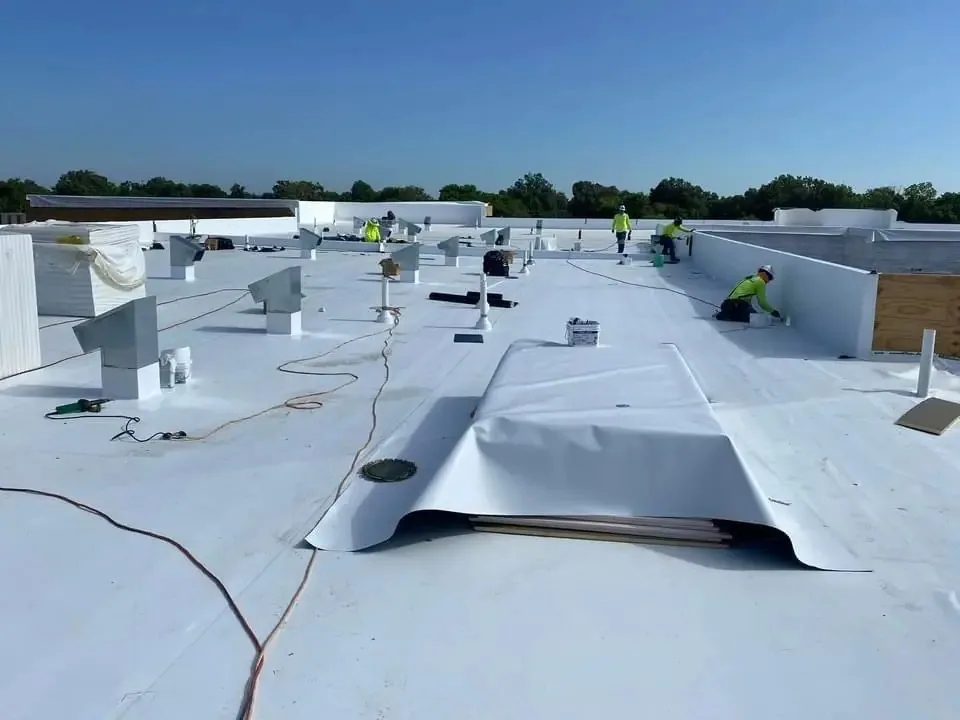
On a conventional single-ply job, rolls are cut and welded on the roof. With a prefabricated system, the roof is measured first and sheets are fabricated to those dimensions, with many seams already welded under factory conditions. Prefabricated pipe boots, corners and curb flashings arrive ready to fit. The result is fewer field seams, but the system relies on accurate measurements, because a sheet cut to the wrong dimension is hard to fix on a roof.
That makes the survey stage important. We measure parapet heights, curb sizes, penetration positions and slope, photograph each condition and draw it on the plan. When an existing roof is being recovered, we also check the substrate for flatness and moisture, since the new sheet is only as good as what it sits on. A PVC sheet ages under New Bedford's freeze-thaw swings at its folds, corners and welds, so those are the spots we test by hand.
Attachment is the next decision. Prefabricated sheets can be fastened mechanically through insulation, attached with plates along the perimeter and walls, or adhered in places. Each method changes how the roof resists wind and how repairs are made, and each leaves different signs when it weakens: raised plates, fluttering fields or loose perimeter clamps. We record which method applies on each roof area and check it by hand at corners and edges where uplift is highest.
Where do prefabricated roofs open up after years of service?
The factory welds are typically uniform, so the field joints get the attention: seams where sheets meet on site, welds at corners and the joints between the membrane and metal edge. We probe each one, look for gaps and cold welds, and check the attachment line where the sheet is fastened to the deck or the wall. Flashing at curbs and pipes is prefabricated, but if an item was added later, a field-made boot may exist, and those are checked with extra care.
Another weak spot is the edge. The perimeter takes wind first, so we examine termination bars, fastener spacing and edge metal. A seam failure repair on a PVC roof is a welded patch or a rewelded joint if the sheet will still fuse, and we test a small area before committing. If it will not fuse, we choose a mechanically attached patch or replace the section.
Moisture under a prefabricated sheet follows the same rules as under any other. A leak at a field seam can saturate the insulation below and travel, so the stain inside the building may sit far from the entry point. We map the wet boundary with a moisture scan, confirm with a core cut and size the repair to it, replacing wet board and rewelding or replacing the failed joint. The record shows both so the next inspector sees what was done.
How does PVC hold up to exhaust, grease and sun?
PVC is chosen in many places because it tolerates grease, oils and many chemical exposures better than some other single-ply materials. That does not make it immune. Plasticizer can migrate out of the sheet over many years, leaving it stiffer and more prone to cracking at folds and corners, and a roof with heavy exhaust near the membrane deserves a closer look at those points. We check each discharge for staining and softening and test the flexibility of the sheet near corners.
New Bedford's temperature range, from a record low of minus 12 F to a record high of 107 F, puts every fold and flashing through large swings. A sheet that bends at a parapet corner on a cold morning and bakes in July wears at that fold. We note stiffening, mark crazing and recommend added protection or detailing changes where the evidence appears.
What do larger industrial parks change about the survey?
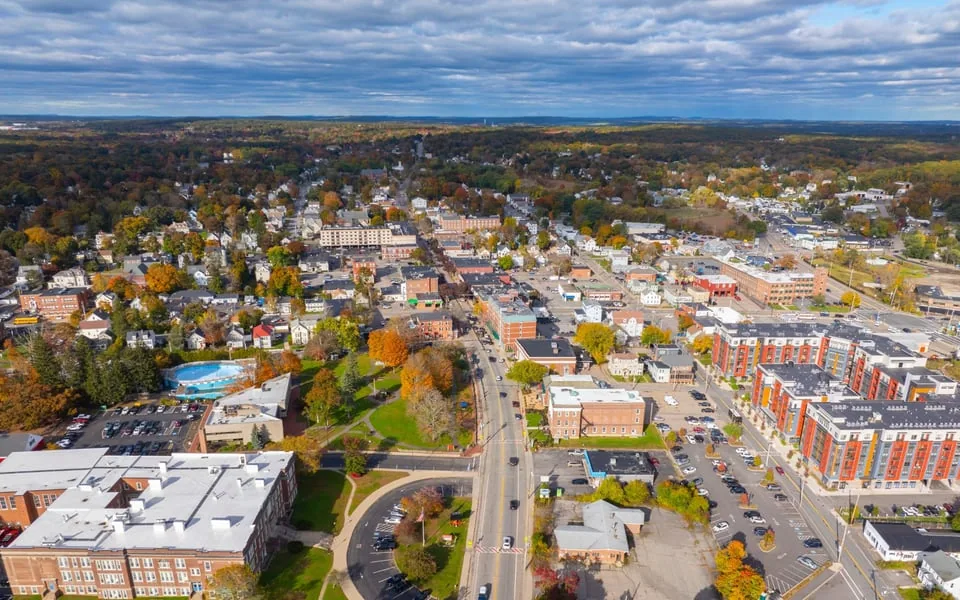
Industrial settings include Myles Standish in Taunton, over 800 acres of manufacturing, office, high-tech and distribution use, and the New Bedford Business Park, which a 2013 description put at 44 companies and about 4,500 jobs. Roofs in settings of that kind may be wide, with many curbs and long perimeters, and measured sheets suit that scale. The survey covers seam counts, drain locations, equipment layout and access for materials.
We plan staging with the site manager: crane positions, truck routes, loading dock schedules and fire lanes. Sections are closed each day, and operations continue below. That kind of coordination matters most for a tenant in Myles Standish Industrial Park or the New Bedford Business Park, where neighbors share truck lanes and loading docks.
Cost drivers for a measured system are clear: roof area, the number of penetrations and curbs, edge length, how much insulation or cover board is added, whether tear-off is required and how many phases the schedule needs. Measuring and fabrication also add lead time, so ordering happens early enough to meet the season. In New England, adhesives and field welds are best done in mild weather, and the order date works backward from the planned start.
What should an owner check after a hurricane or a blizzard?
Check the edges, the drains and the penetrations. Terminations and edge metal here have been tested by 89 mph gusts over Buzzards Bay in 1991 and a record 20-foot tide at New Bedford in 1954. The January 2015 blizzard dropped 24.1 inches on Fall River, and snow loads low spots until meltwater finds a drain.
After a storm, we walk the perimeter, probe field seams, clear drains and record any damage with photographs. An emergency roof repair covers an active opening at any hour, and a later visit completes the permanent work. An owner whose paperwork names Versico or Holcim Elevate gets the same perimeter walk and seam probe.
Records finish the job. Photographs, measurements, the system description, the installer's drawings if available and every repair invoice belong together in one file. With those, a later owner can see how the roof was built and where it has been repaired, and a capital plan can start from facts instead of guesses.
Commercial Roofing Questions
Why does the measuring stage matter for a prefabricated roof?
Because the sheets are fabricated to the recorded dimensions. A wrong parapet height or a missing curb produces a sheet that does not fit, and correcting it on the roof costs time.
Are factory welds more reliable than field welds?
They are made under controlled conditions, so they tend to be uniform. Field welds depend on weather, surface cleanliness and technique, which is why we probe them first on an aging roof.
Can an old PVC sheet be patched?
Often yes, if it will still fuse. We test-weld a small area. If the sheet has stiffened too much, we use a mechanical attachment or replace the affected section.
What if a roof has had added equipment since the original install?
Those additions are likely to have field-made flashings, which we inspect carefully. We recommend rebuilding any that are cracked or poorly terminated, using prefabricated boots where possible.
How is work scheduled over operating facilities?
With the site manager, around dock times and production. We close sections each day and keep fire lanes and entrances clear.
Ready to review the roof scope?
Request a Roof AssessmentKeep Reading