Roofing Manufacturers
Versico Roofing Systems in New Bedford, MA
Versico single-ply roofing in New Bedford, MA: adhered and fastened TPO, EPDM and PVC assemblies, adhesive weather limits, and seam and flashing checks.
Request a Roof Assessment
Why does a recover that went down cleanly in July start to lift at the laps by March? On a Versico single-ply roof, the first thing an inspector would find is the bond line: whether the sheet is still adhered across its field, whether the lap sealant has held and whether fastener plates have begun to raise the surface. Versico produces single-ply TPO, EPDM and PVC membranes, with insulation, adhesives and accessories. We install, repair and maintain these systems in New Bedford, MA, and an inspection is complete only when the findings are marked on the roof plan and walked with you before any quote.
Does it matter whether the sheet is adhered, fastened or ballasted?
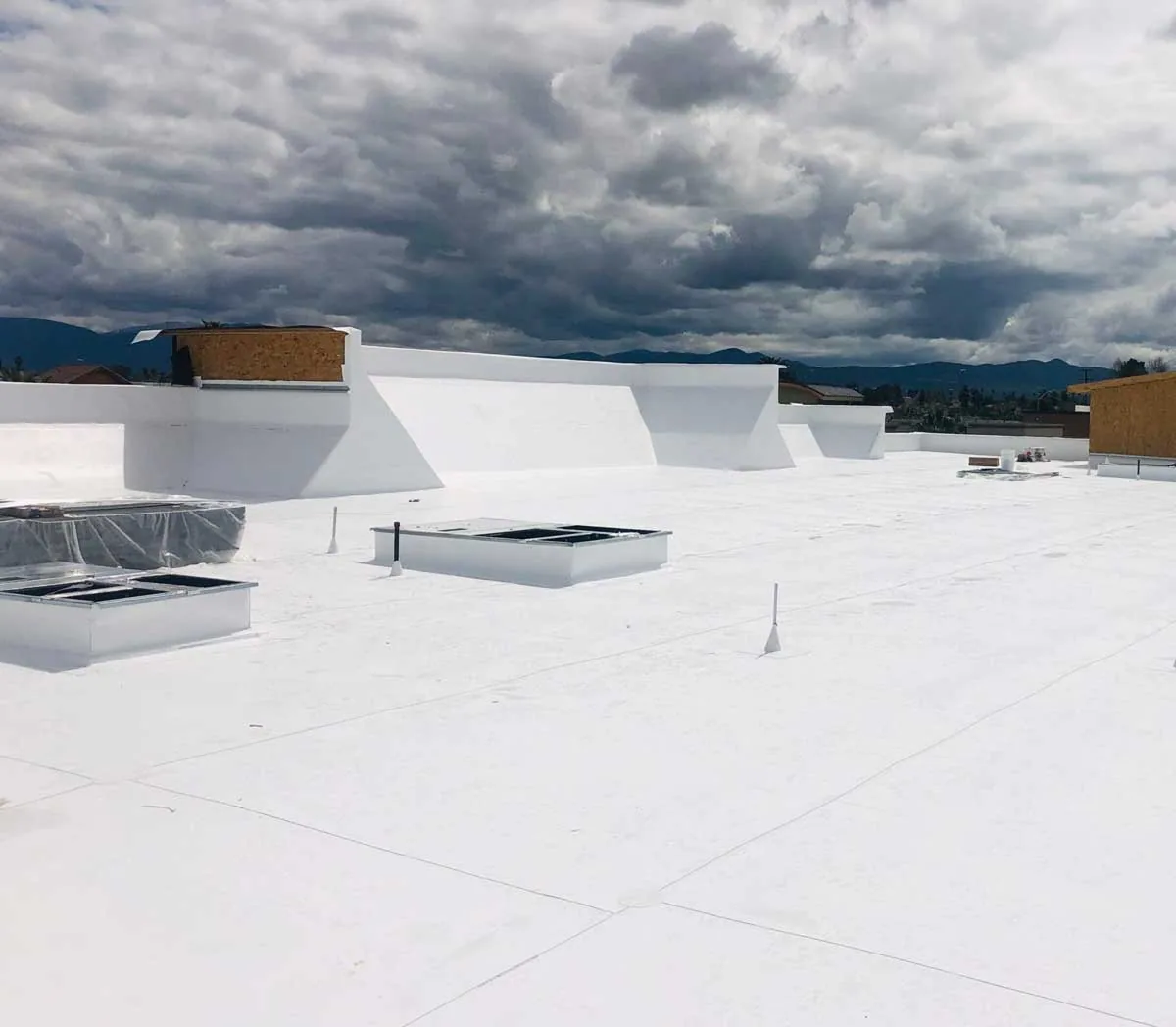
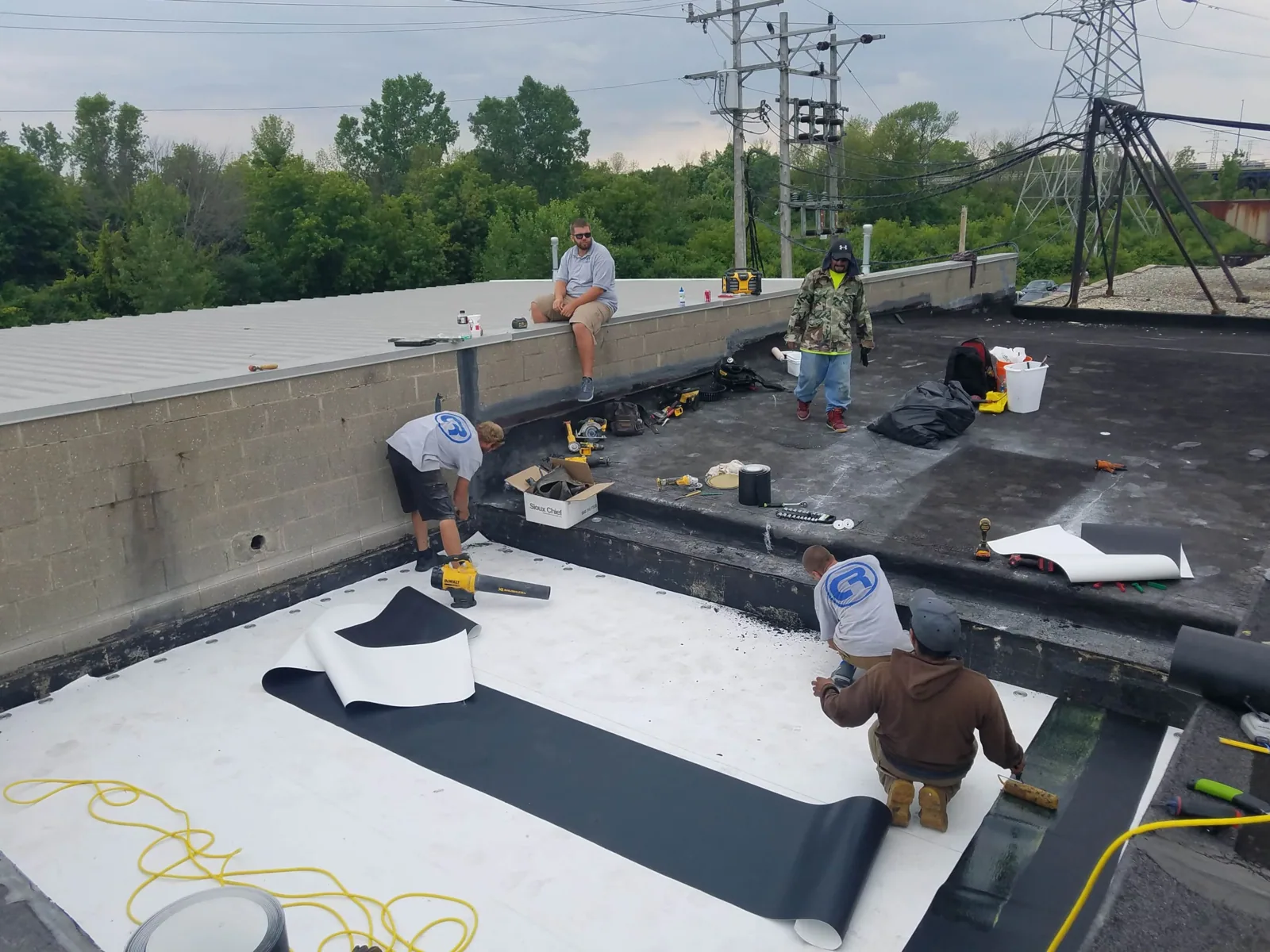
It matters a great deal. A fully adhered sheet is bonded to its substrate with adhesive, which gives a smooth look and spreads wind load across the field, but the bond depends on surface preparation and temperature when it was installed. A mechanically attached sheet is held by fasteners and plates along the seams, which is quick to install but concentrates load at each plate. A ballasted sheet relies on weight, and its edges are the weak zone.
We sound adhered sheets with a light tap to hear hollow spots, look for raised plates on fastened roofs and measure stone depth on ballasted ones. The method decides how a repair is made: an adhered patch needs a clean, dry substrate and compatible adhesive, while a fastened repair may need added plates. A TPO sheet shows age at its welds and an EPDM sheet at its splices, whichever attachment method holds it down.
Lap sealant gets its own attention. On adhered and fastened sheets alike, the exposed edge of each lap is sealed, and that sealant weathers: it cracks, shrinks and lets go of the sheet at the edge. We run a finger and a probe along laps, look for open edges at T-joints where three sheets meet, and note where an earlier repair has already been made. A T-joint that has opened is a small repair now and a wet insulation problem after a winter.
How does the season change what adhesives and sealants can do?
Adhesives and sealants have temperature and moisture limits. Cold slows curing, damp surfaces prevent a bond, and a sudden frost can undo a day's work. New Bedford's record low is minus 12 degrees Fahrenheit and its record high is 107, and in a normal year the city sees about 32.5 inches of snow, mostly from December through March, along with 52.21 inches of precipitation across roughly 124 days.
That calendar shapes scheduling. Large adhered work is planned for the mild months, with a forecast check each morning and sections sized so the crew can finish them before weather changes. In winter we limit work to emergency stabilization and small repairs using products rated for the conditions, and the permanent work waits. The scope version lists these limits, so the owner knows which tasks can proceed in January and which belong in May.
Wind adds another reason to respect the calendar. A new adhered sheet whose edges have not cured yet is vulnerable if a storm arrives in that window, and Bob's 89 mph gusts over Buzzards Bay in 1991 show what can arrive. We therefore finish perimeters first, secure edge metal on the day it is installed and avoid leaving open edges overnight when a front is forecast.
When is a recover over the existing roof the better choice?
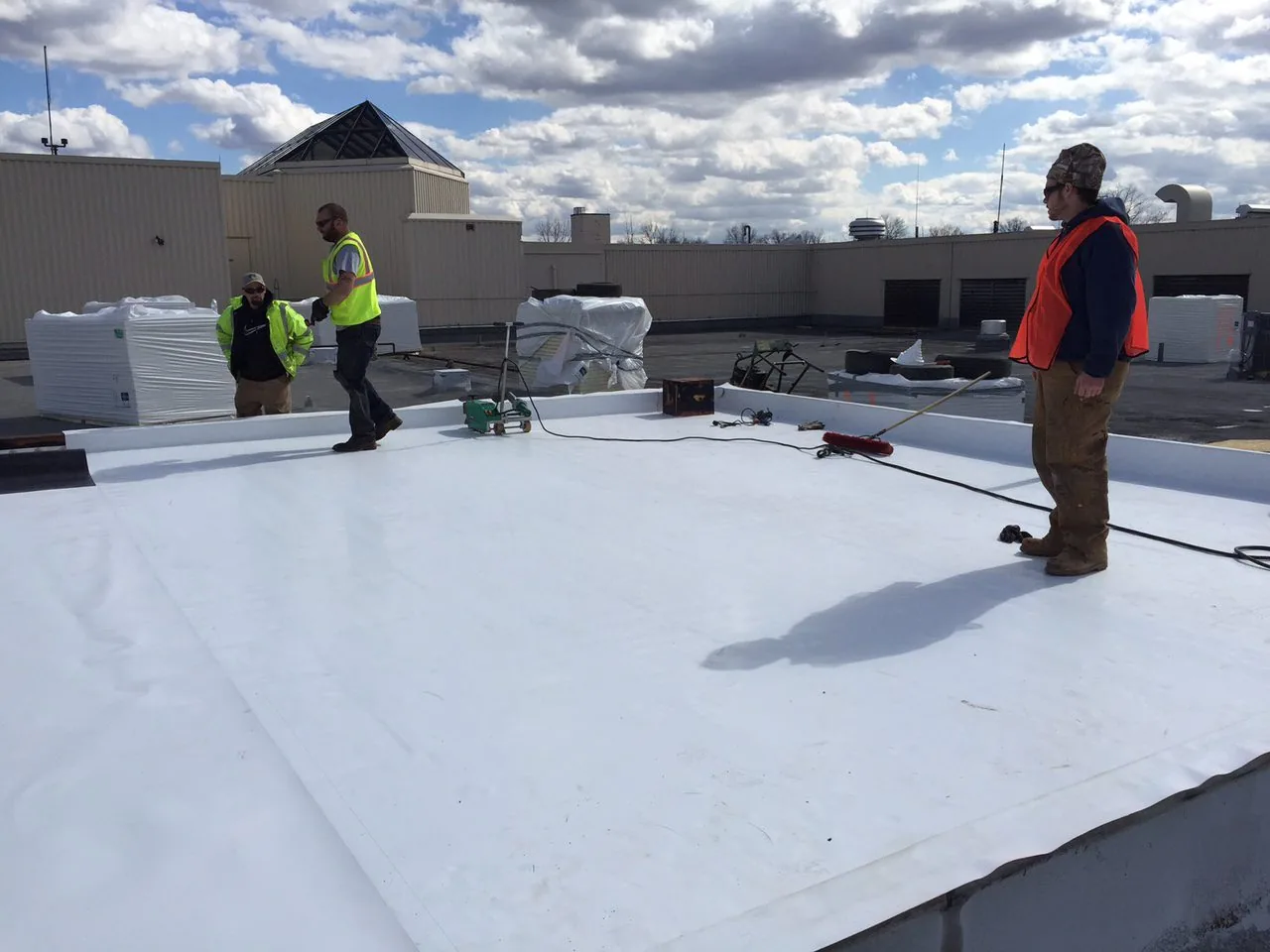
A recover installs a new membrane over a sound existing roof, saving tear-off labor, disposal and disruption. It suits a dry assembly with a stable deck, where the code allows another layer. It does not suit wet insulation, because the new sheet would trap the moisture, and it does not suit a roof with a crushed or corroded deck. A moisture scan and several core cuts decide which side the roof falls on.
Massachusetts' 780 CMR 10th Edition, based on the 2021 International Building Code, took effect October 11, 2024, and a permitted recover is reviewed against it, including limits on the number of roof layers and insulation requirements. We confirm those with the building department before pricing. Our roof recover estimates list what stays, what comes off and what is added, so the comparison with a tear-off is clear.
Cover board and insulation upgrades come with a recover, and they are worth pricing separately. A new layer of polyisocyanurate increases thermal value and can correct slope with tapered pieces, while a cover board gives the adhesive a stable surface. Each addition changes the height of curbs and flashings, so the scope version lists the flashing extensions required at every penetration, parapet and door threshold.
What do larger employers' roofs and corridor locations change?
Southcoast Health, Titleist and Riverside Manufacturing are among New Bedford's major employers, so the roof question differs by building use. A care setting needs phasing and protection, a plant needs coordination with production, and a distribution building needs drainage and seam planning across a large area.
Access matters as well. In northern Dartmouth, I-195 and US Route 6 run side by side one to two miles apart, and Route 140 carries traffic from Route 24 in Taunton down through Lakeville to I-195 in New Bedford. Roofing materials arrive by truck, so staging and crane positions are planned around the access a site has. Owners in Dartmouth and nearby can talk through those logistics at the first visit.
What goes into the file after a repair?
Date, location, cause where known, materials, method and photographs. Those five items let the next inspector match the repair to the original assembly and see whether the same detail is failing again. They also support a warranty question if one arises. We store them with the roof plan and the last roof condition report, so the history of the building's roof reads in order.
An owner who also holds a Soprema or GAF roof keeps the same file structure for it. A facility director with several buildings can then rank roofs by condition and decide where capital goes first.
Photographs should be taken from the same positions each time, with a note of the date and the weather, so differences between visits are visible without guessing. A seam that looked tight in spring and shows a gap the next autumn tells the owner something a single report cannot.
Commercial Roofing Questions
How can I tell if an adhered membrane has lost its bond?
Tap and listen. A hollow sound, a visible bubble or a wrinkle that moves under pressure suggests the sheet has released from its substrate. We mark the area and open a small test cut if the cause is unclear.
Can repairs be made in cold weather?
Emergency repairs can, using materials rated for the temperature. Permanent adhered work waits for suitable conditions, since cold and damp surfaces compromise bonding. The scope version lists what can go ahead in winter and what cannot.
What drives the price of a recover compared with a replacement?
Roof area, preparation, the number of penetrations and the amount of wet material found. A recover skips tear-off and disposal, but if cores show wet insulation, those savings disappear and replacement becomes the sound choice.
Is a fastened sheet a weaker option than an adhered one?
Not by default. Each method has strengths, and performance depends on installation, edge details and maintenance. Raised plates and fastener back-out are the points to inspect on a fastened roof.
How do you handle a roof that serves a care setting?
With phasing and protection. We locate air intakes, schedule loud work in agreed windows, protect interiors below openings and keep the work area separate from patients and staff.
Ready to review the roof scope?
Request a Roof AssessmentKeep Reading