Roofing Manufacturers
GAF Commercial Roofing Systems in New Bedford, MA
GAF commercial roofing systems in New Bedford, MA: how single-ply, modified bitumen and built-up assemblies are installed, probed, repaired and maintained.
Request a Roof Assessment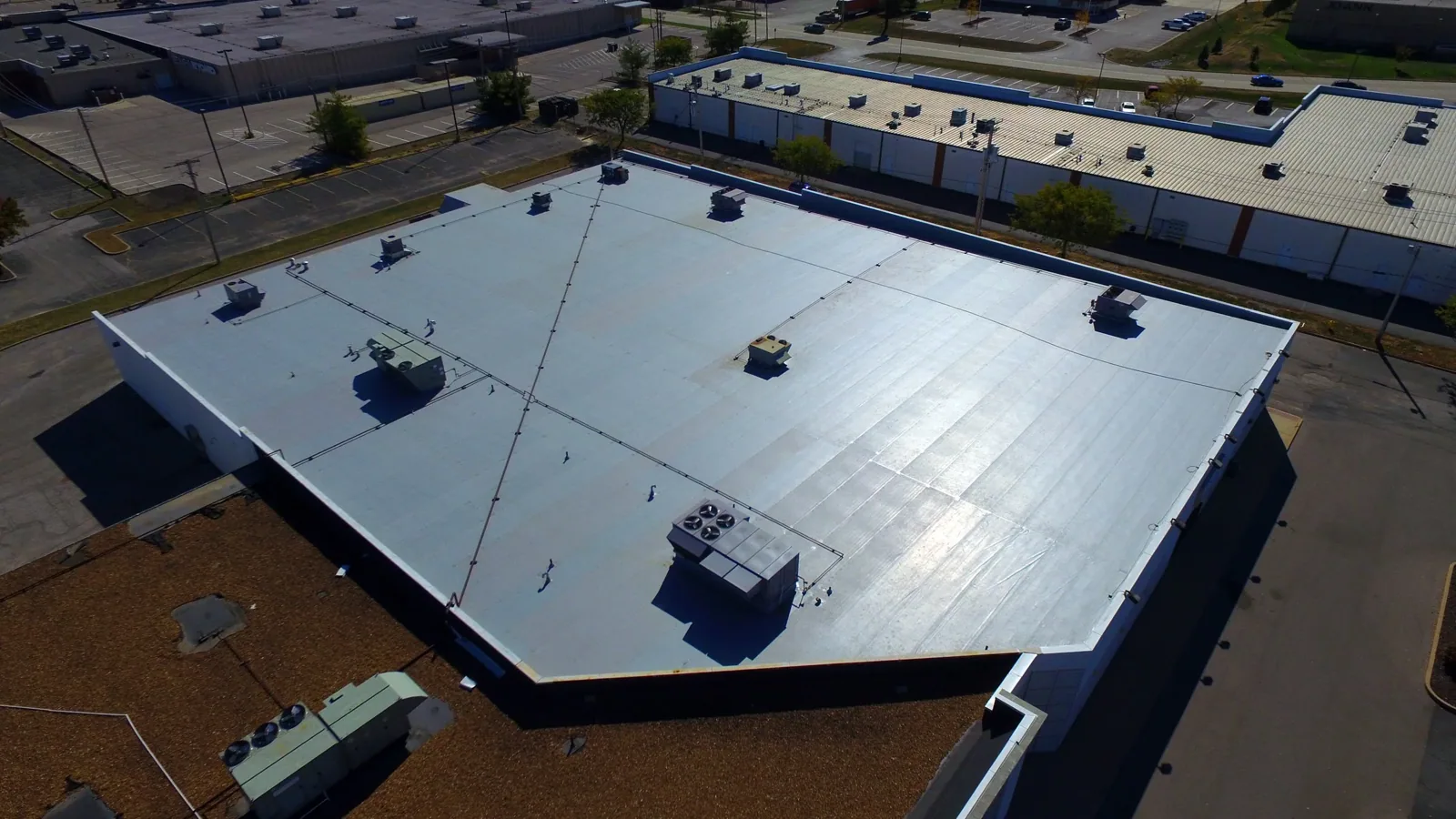
What does an inspector look at first on a roof that was installed with a GAF commercial system, and why does it matter before the ceiling tile ever stains? The first finding is almost always the seam or lap, because that is where a single-ply sheet or a modified bitumen overlap either still holds or has begun to open. GAF makes commercial roofing in several families, including heat-welded thermoplastic single-ply, modified bitumen, built-up assemblies and liquid-applied coatings, and the right inspection follows whichever family is on the building. These are system types we install, repair and maintain in New Bedford, MA, with every finding marked on the roof plan before price comes up.
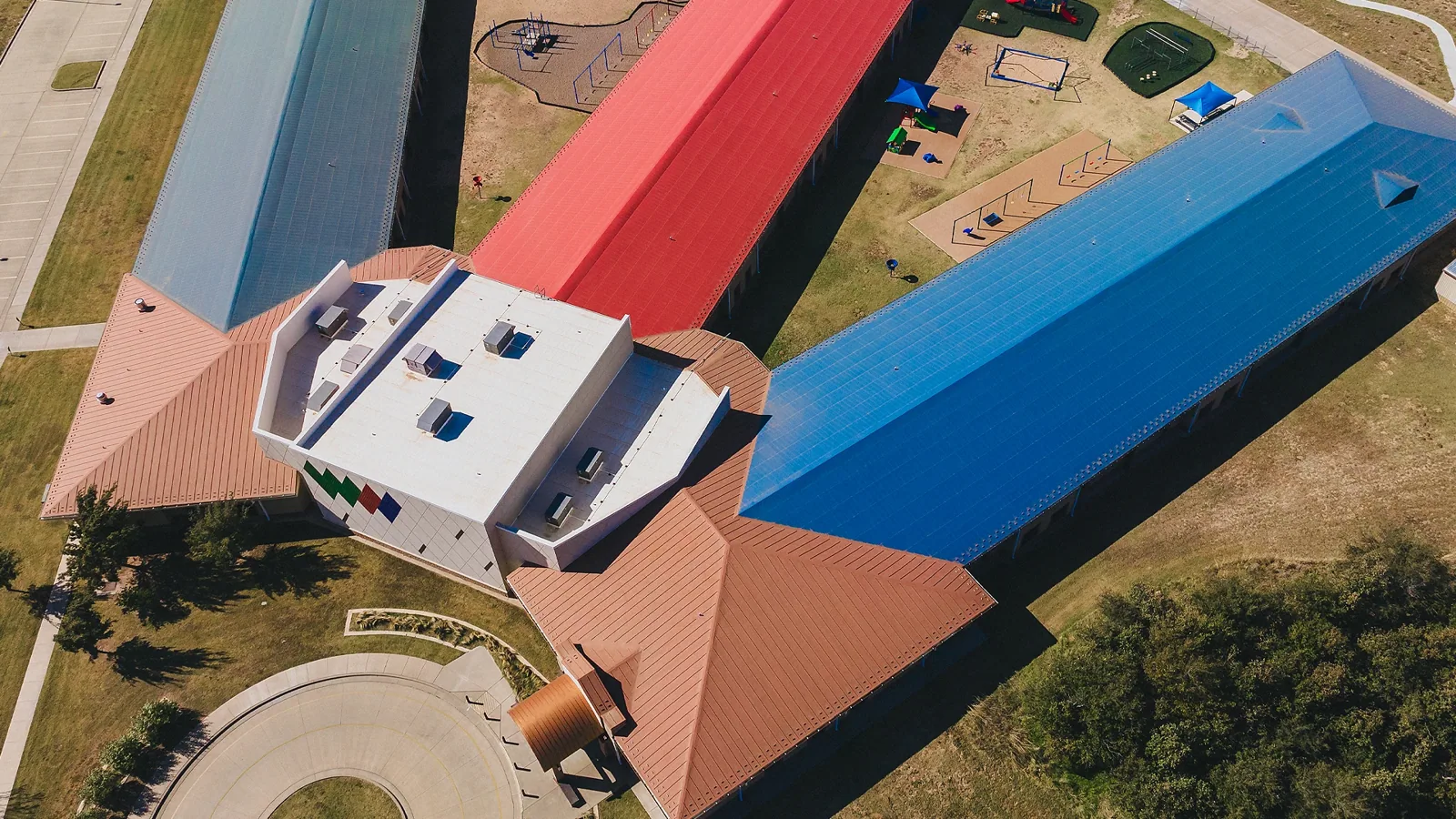
Which GAF system families show up on South Coast roofs?
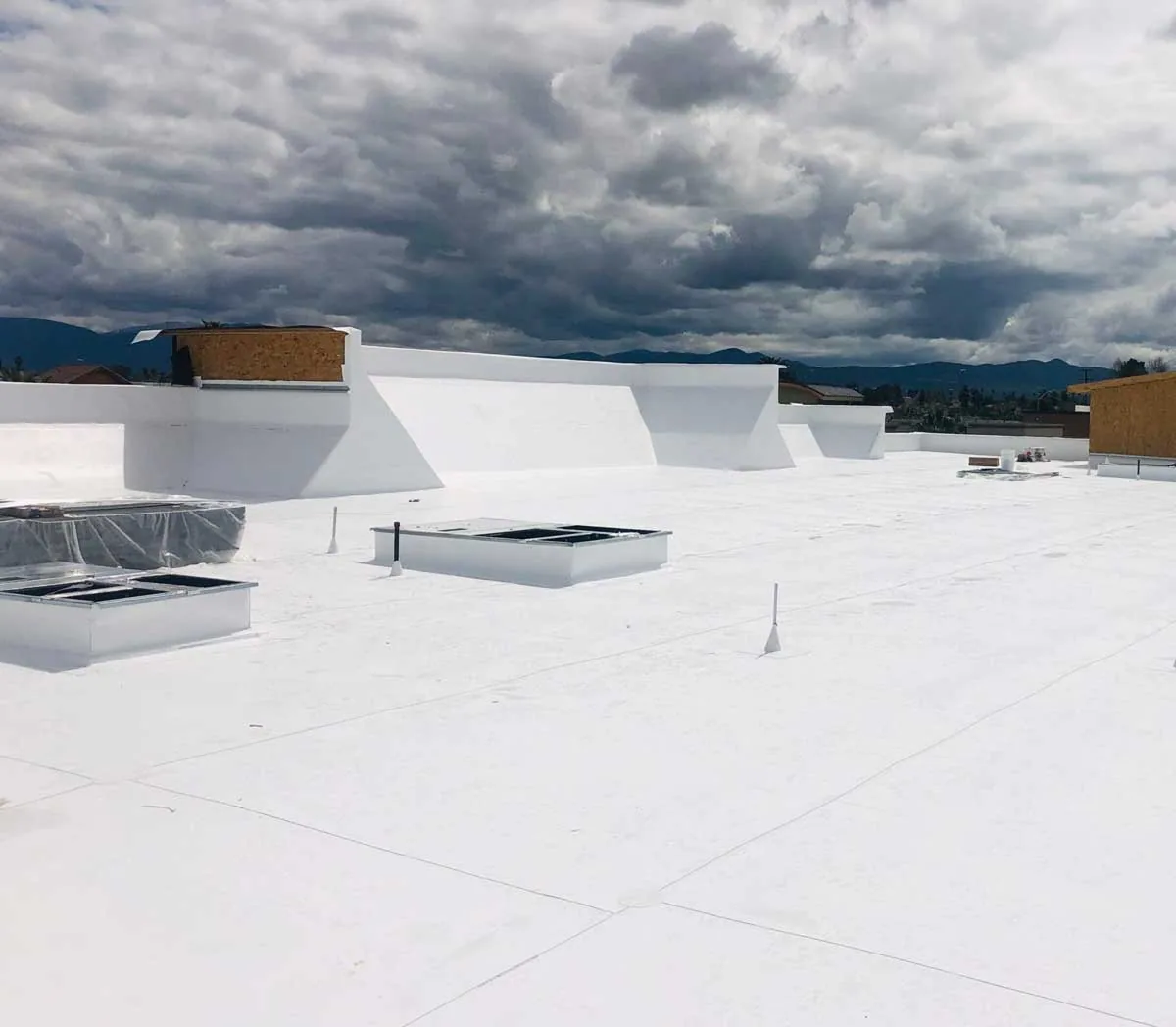
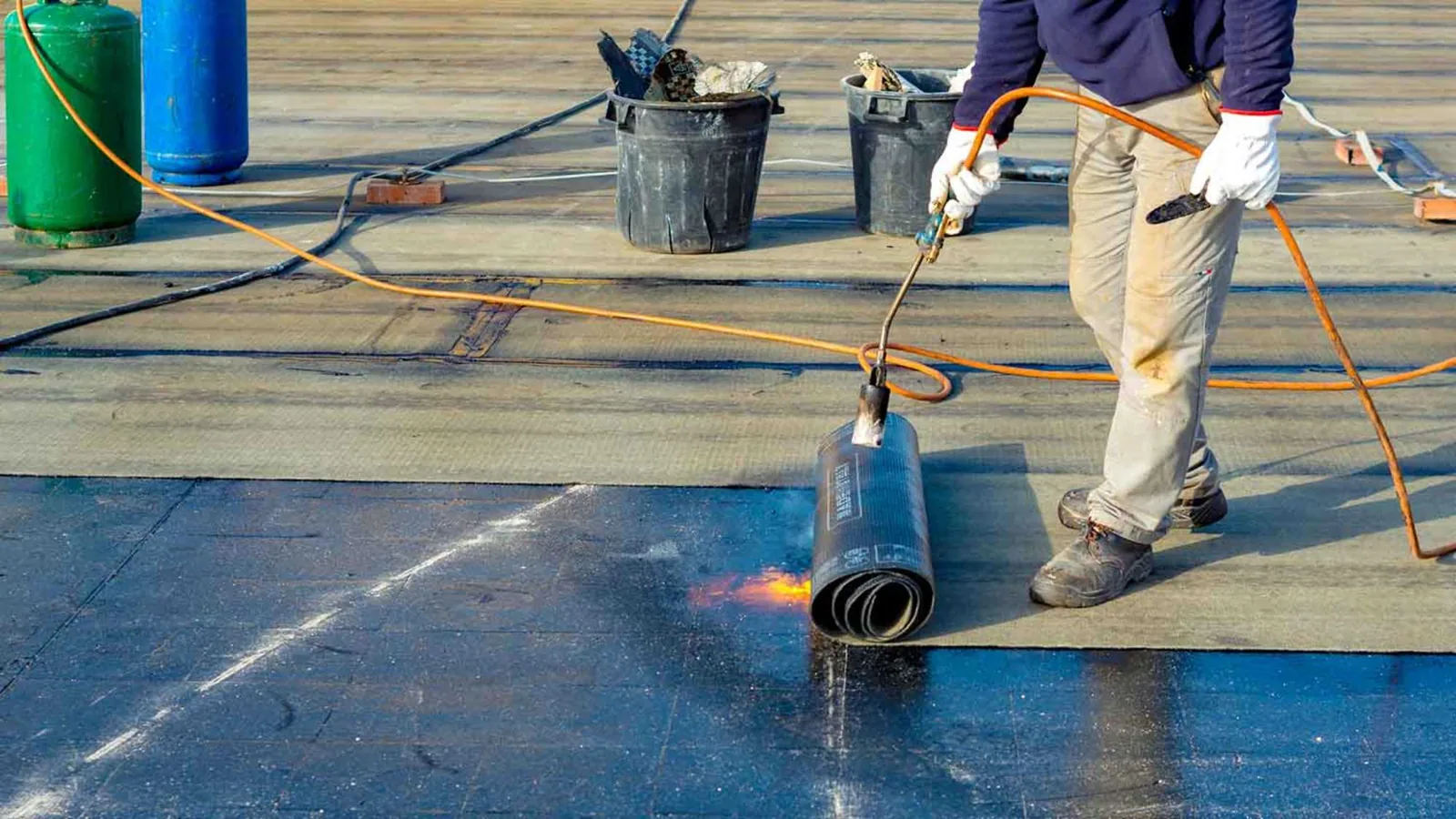
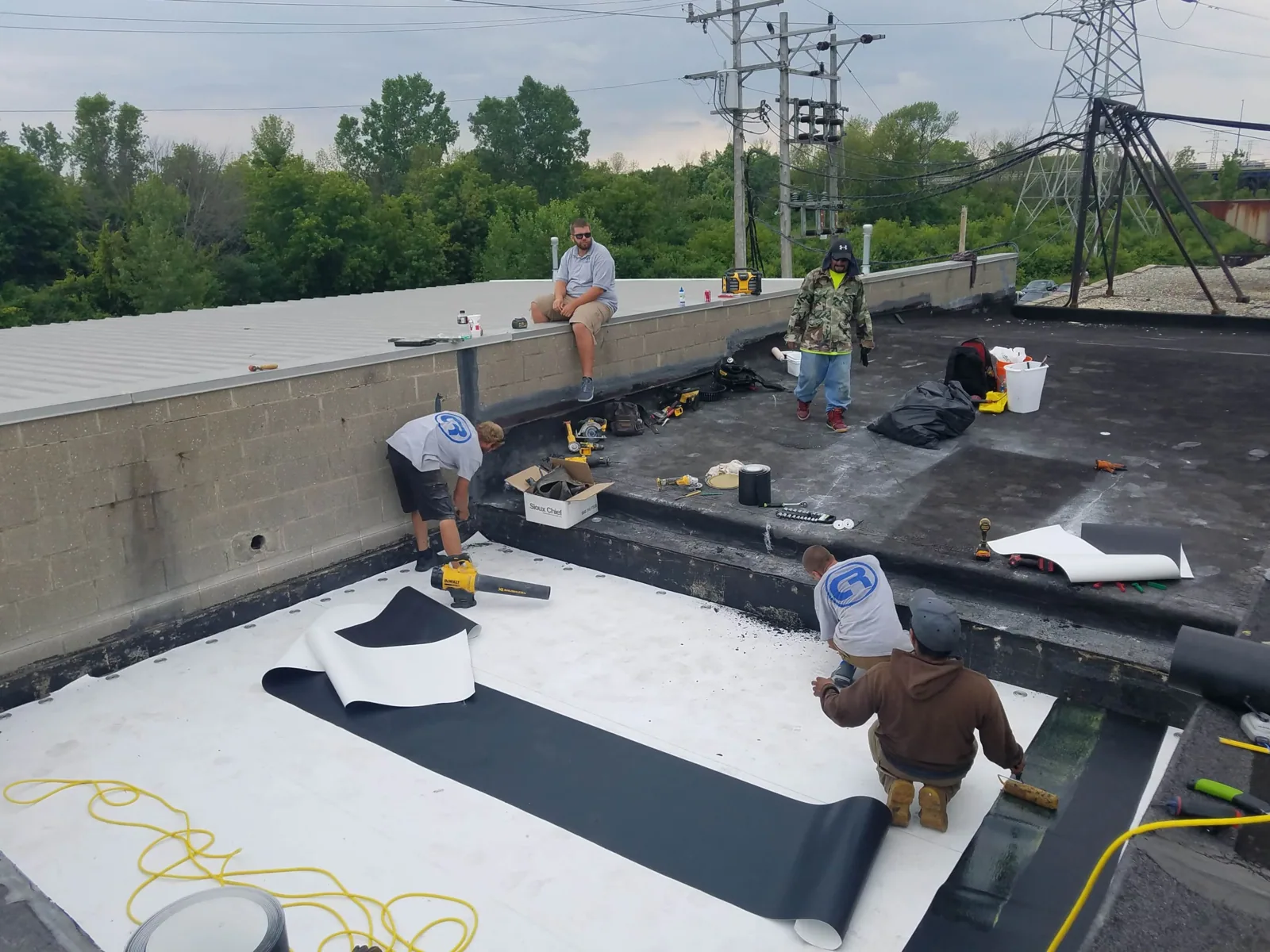
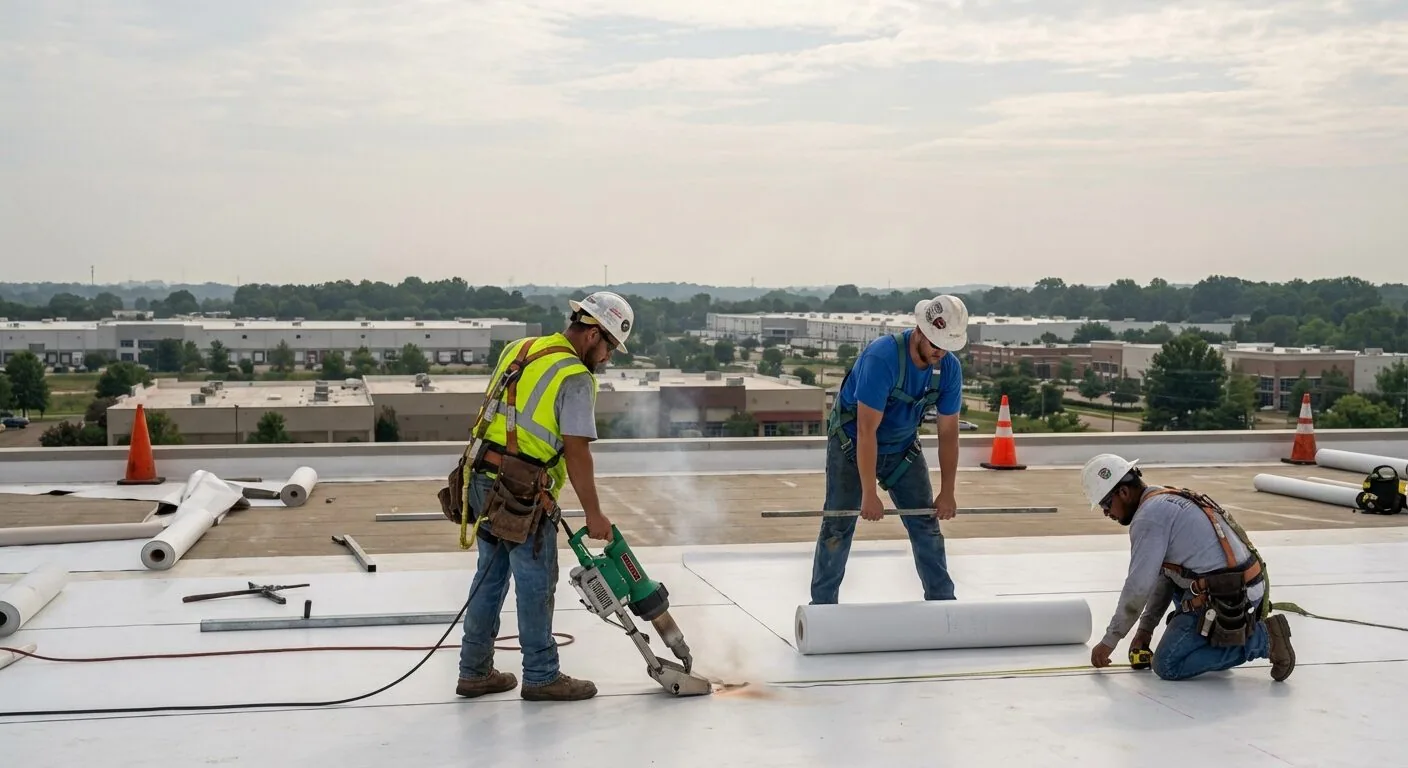
A thermoplastic single-ply sheet is welded at the seams with hot air, and the weld is the part we probe. A modified bitumen roof is built from asphalt-based plies reinforced with fabric, and its lap edges, stripping plies and flashing terminations are the places that open first. A built-up roof layers felts and bitumen into a redundant surface that is often topped with gravel, and it fails differently, through blisters, splits and ballast displacement. Liquid-applied products bring a different set of questions, since a coating or flashing resin is only as good as the surface it bonds to.
A core cut and a visual check answer that in minutes, and the answer decides which repair details apply, which adhesives or heat methods are appropriate, and how much of the existing assembly can stay in service. A TPO sheet and a modified bitumen roof age differently under the same winters, one at its welds and the other at its laps.
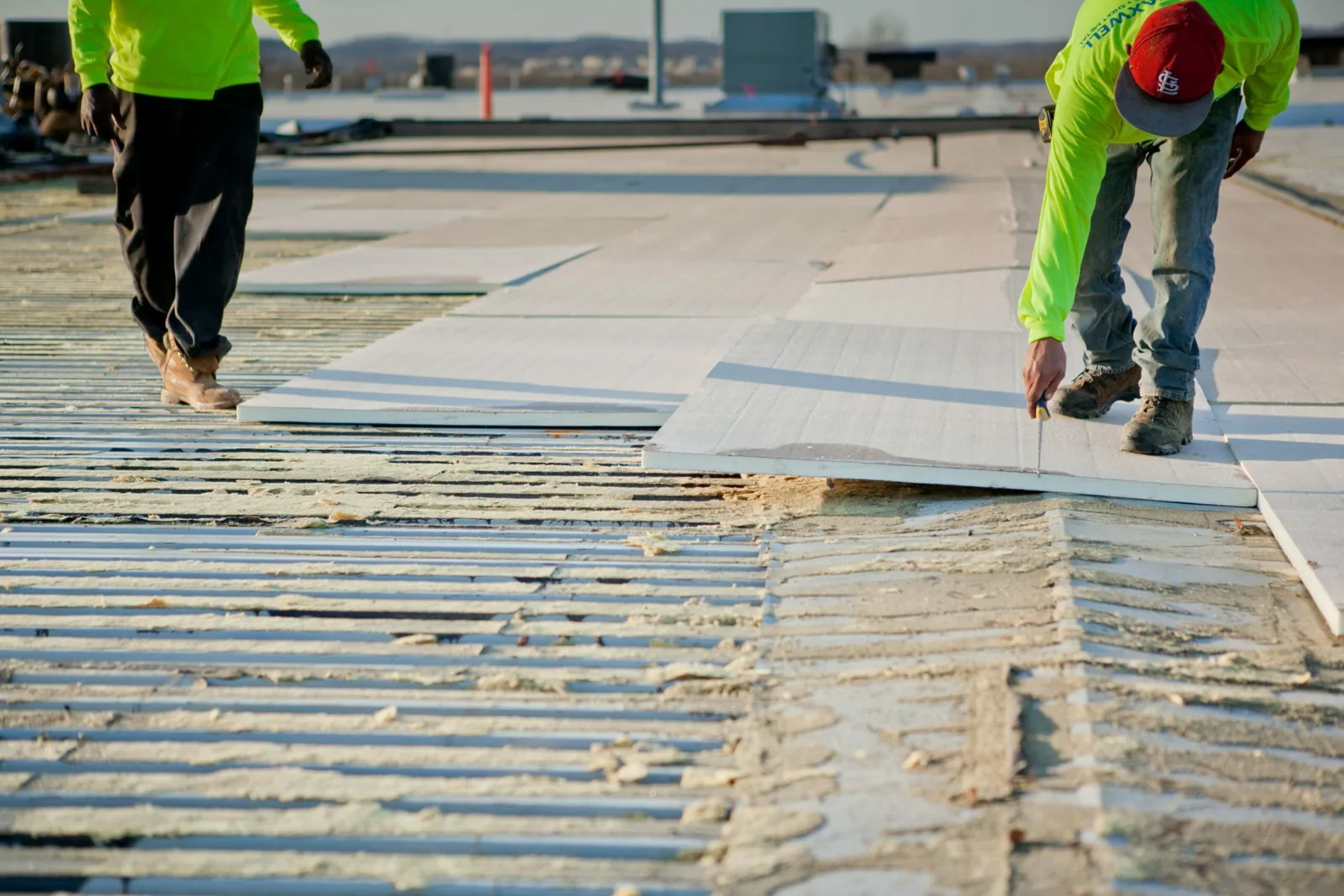
Attachment method is the next thing we record. A sheet can be mechanically fastened through the insulation to the deck, fully adhered with bonding adhesive, or held by ballast, and each method changes how it behaves in wind and how a repair should be detailed. Fastener plates that have backed out show as raised bumps, an adhered sheet that has lost its bond rings hollow under a probe, and ballast that has migrated leaves bare membrane exposed to sun and foot traffic.
How do New Bedford storms and snow test a GAF-type assembly?
New Bedford has been measured against some severe weather. New Bedford has been measured against severe weather: Hurricane Carol in 1954 brought a record 20-foot tide and 80 to 110 mph winds across eastern Massachusetts, and Hurricane Bob in 1991 sent 89 mph gusts over Buzzards Bay and a 5.8-foot surge into the city. The harbor barrier protects the water line, not a loose gravel stop or an edge flashing, so every perimeter detail on a waterfront building deserves a hand check for fastener back-out and lifted edge metal.
Snow is the slower stress. The city averages about 32.5 inches a year, mostly between December and March, and the area also takes rain, with 52.21 inches of precipitation across roughly 124 days. A membrane that holds water in a low spot spends a season under load and freeze-thaw cycling. We mark ponding on the plan and recommend tapered insulation and cover board where the slope cannot be corrected another way.
When is repair enough and when does the system need replacing?
A repair is the right call when the defects are local, the insulation is dry and the membrane still bonds well across most of the field. A moisture scan followed by a core cut is how we confirm that. Typical repairs include rewelding or resealing a seam, replacing a failed pipe boot, rebuilding a wall-to-roof transition and patching a puncture. If the same detail keeps failing, the repair record tells us the problem is the detail, not the patch, and we rebuild it.
Replacement becomes sensible once wet insulation spreads, membrane shrinkage pulls the sheet away from parapet terminations, or repairs recur faster than the budget can follow them. A recover over a sound, dry roof can save tear-off cost where the code and the deck allow it, and a roof recover estimate lists exactly what stays and what goes. Either path begins with a written commercial roof inspection that the facility director can read standing on the roof.
The cost drivers are easy to name. Roof area sets the quantity, the number of penetrations and curbs sets the detail labor, the amount of wet material sets the tear-off, and deck condition sets any added carpentry or steel work. Winter work limits which adhesives and sealants can be used, so the season also shapes the scope.
What should an owner know about a manufacturer warranty?
A manufacturer warranty is a document with its own terms, and those terms govern more than the roof itself. They typically address who may install or repair the system, what notice the owner must give when a leak appears, which maintenance records must be kept and which causes of damage are excluded. We read the document before touching the roof, because a repair method that works physically can still conflict with a requirement in the paperwork.
For that reason we log every repair with the date, location, materials and photographs, and we keep leak reports in the same file. Our roof warranty management work organizes those records so an owner can answer a claim question quickly. We describe the systems and how we maintain them; any coverage question belongs to the manufacturer's document and the owner's agreement with the manufacturer.
Which buildings in the region benefit most from a documented system?
A 19th-century mill such as the Wamsutta, Hathaway or Kilburn mill buildings in New Bedford brings parapets, through-wall flashing and wall-to-roof transitions that carry as much risk as the field of the roof, so the record there tracks terminations first. In the New Bedford Business Park, where a 2013 count found 44 companies and about 4,500 jobs, long seam runs, drains and equipment curbs dominate, and the record follows them.
In every case the principle is the same. The system on the roof sets the repair method, the climate sets the stress, and the documentation lets the next decision rest on evidence. An owner with a Carlisle SynTec or Johns Manville roof gets the same record, kept the same way.
Commercial Roofing Questions
How can I tell which GAF system my roof has?
Look at the installation record first, then at the roof. A welded white or gray sheet suggests a thermoplastic single-ply, a granulated or smooth asphalt-based sheet suggests modified bitumen, and layered felts with gravel suggest a built-up roof. A core cut confirms the assembly beneath the surface.
Does a manufacturer name change how we inspect the roof?
The system family matters more than the name on the label. We probe seams on thermoplastic sheets, check laps and stripping plies on bitumen roofs, and look for blisters and ballast displacement on built-up roofs. The warranty paperwork then tells us which repair methods are acceptable.
Will repairs we make affect warranty coverage?
They can, depending on the terms. Some warranties restrict who may repair the system or require prompt notice, so we read the document before work begins and keep a dated log of each repair.
What decides between recover and replacement on an older assembly?
Moisture decides it. A scan and a few core cuts show whether the insulation is dry, and the deck condition and code limits on added layers finish the answer. Dry insulation and a sound deck keep a recover on the table.
Can you work on a roof while the building stays occupied?
Yes. We plan staging, noise, dust and access with the facility director, protect interiors where openings are made, and divide the roof into sections that can be closed each day.