Roofing Manufacturers
Carlisle SynTec Roofing Systems in New Bedford, MA
Carlisle SynTec single-ply roofing in New Bedford, MA: EPDM, TPO and PVC seams, flashings and ballast checked, repaired and maintained by system type.
Request a Roof Assessment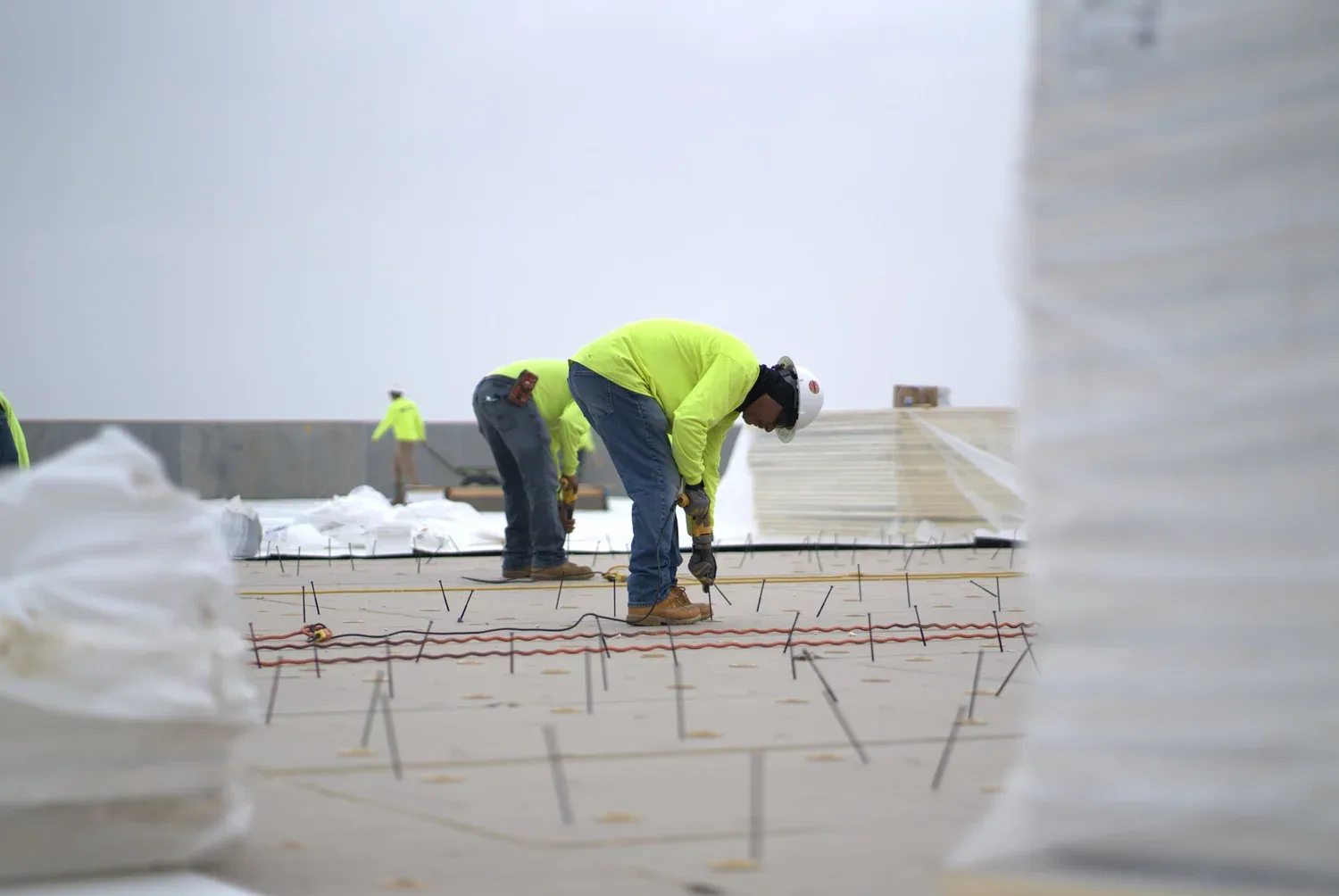
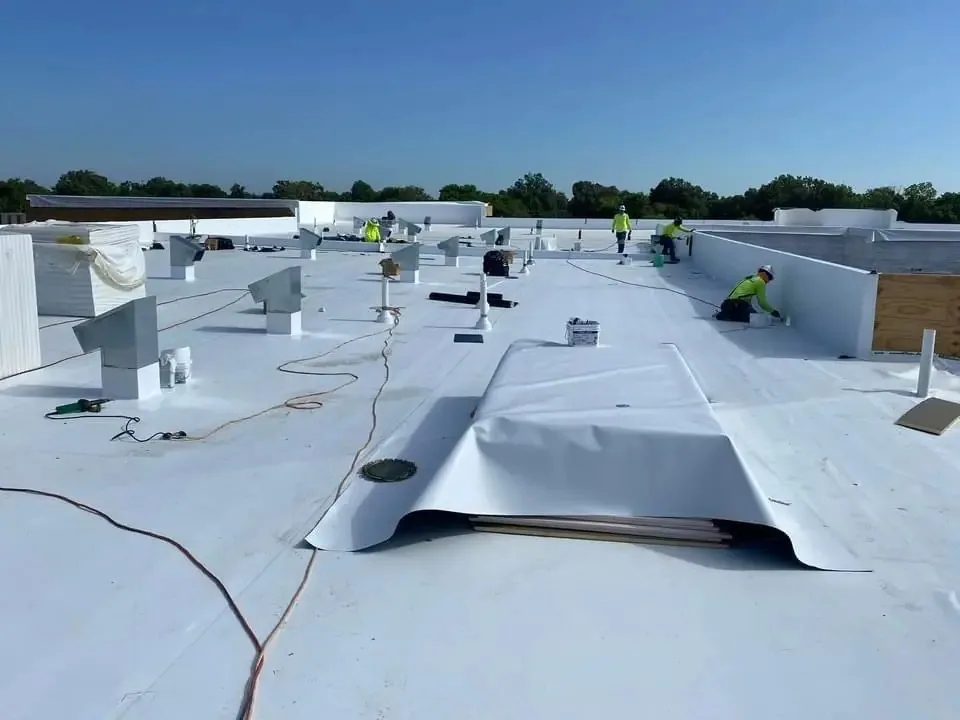
Why does a stain keep returning beneath a Carlisle SynTec roof that looks sound from the ladder? The first thing an inspector would find is usually at a seam, a splice or a flashing, because a single-ply sheet is a large, continuous surface that fails at its joints and edges, not in the field. Carlisle SynTec manufactures single-ply systems in EPDM rubber, TPO and PVC thermoplastic, along with the insulation, adhesives, flashings and accessories that go with them. We install, repair and maintain these system types in New Bedford, MA, and each repair begins with a seam probe and a note on the roof plan.
How do EPDM, TPO and PVC differ on a Carlisle SynTec roof?
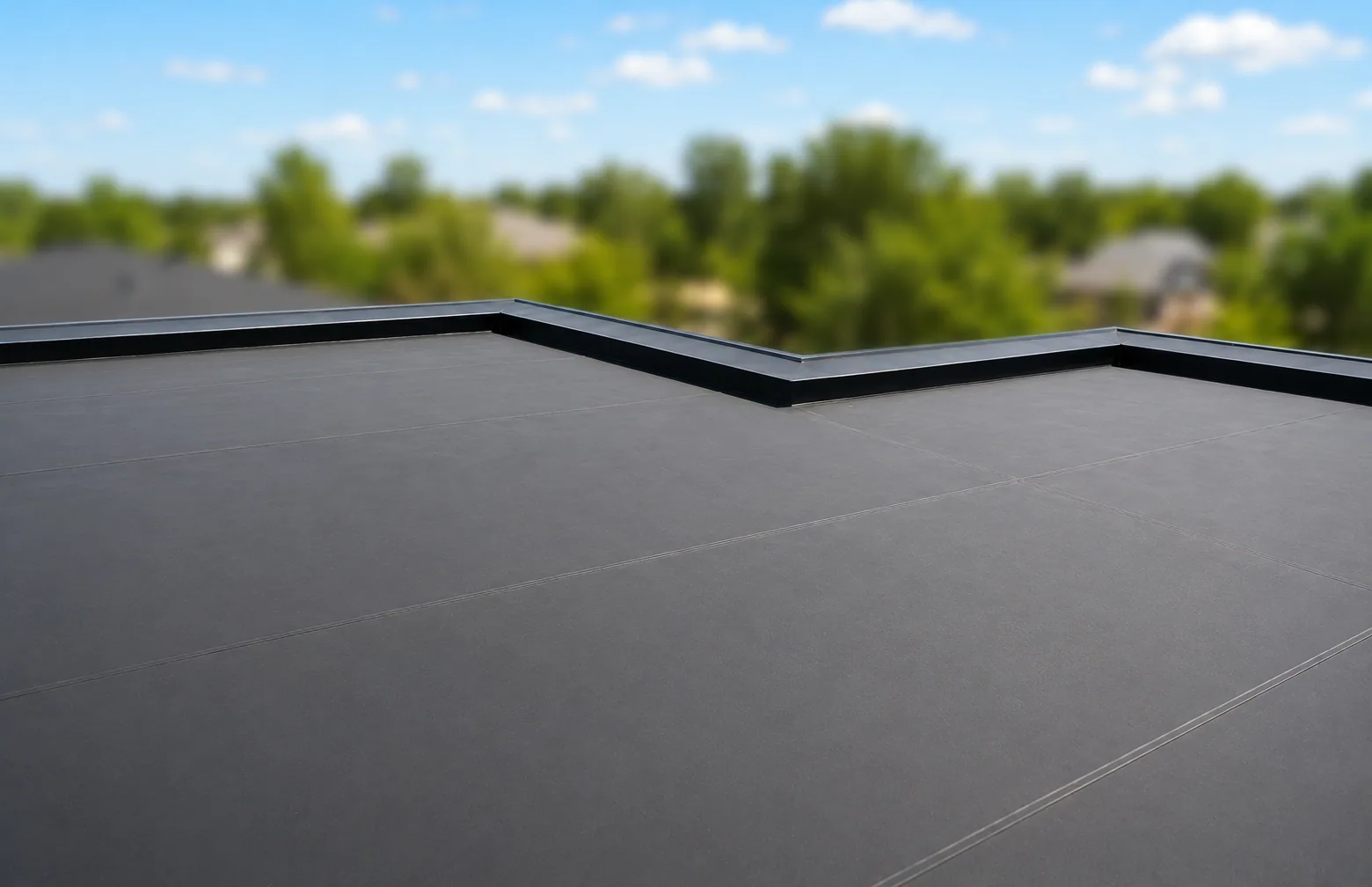
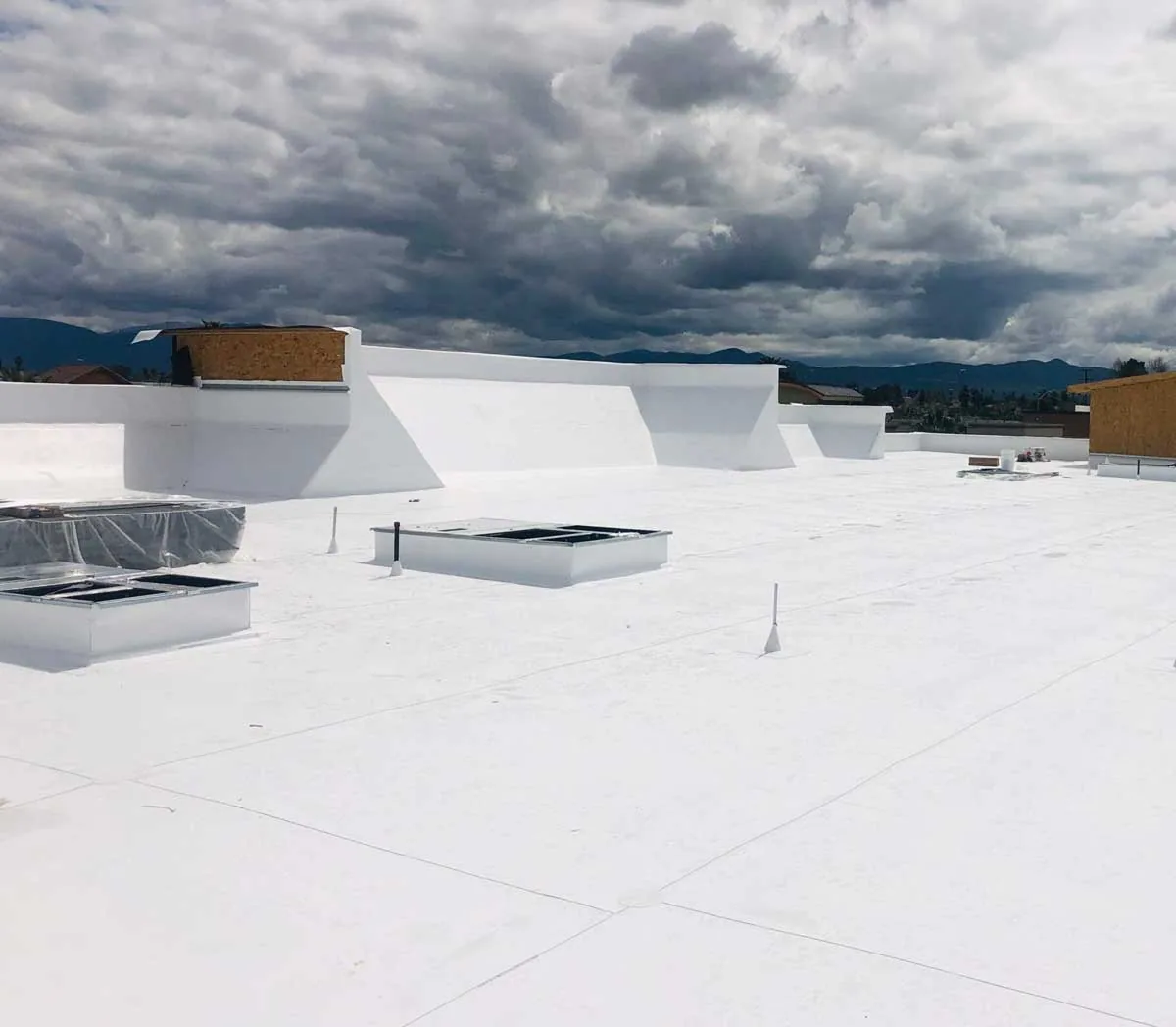
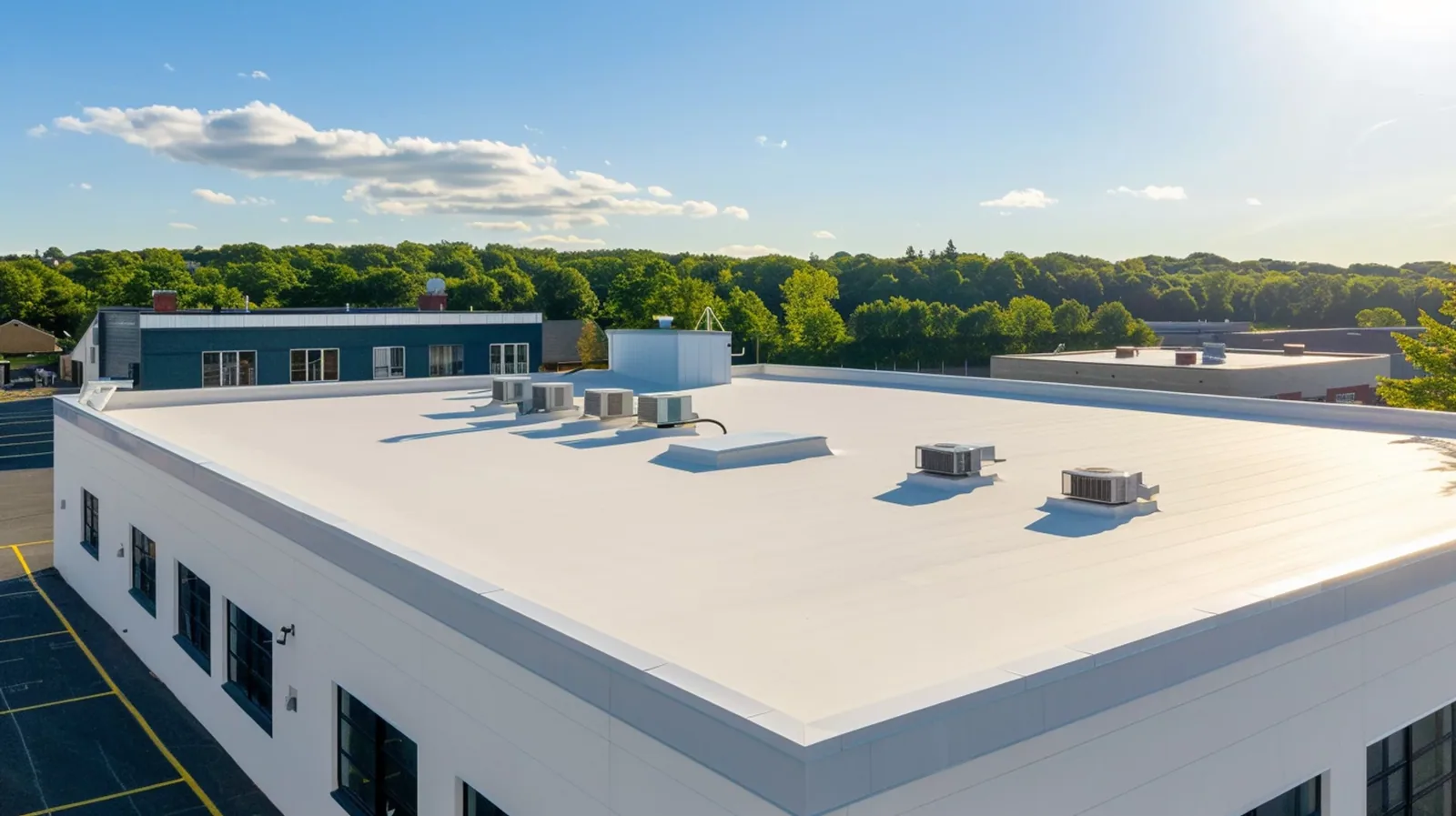
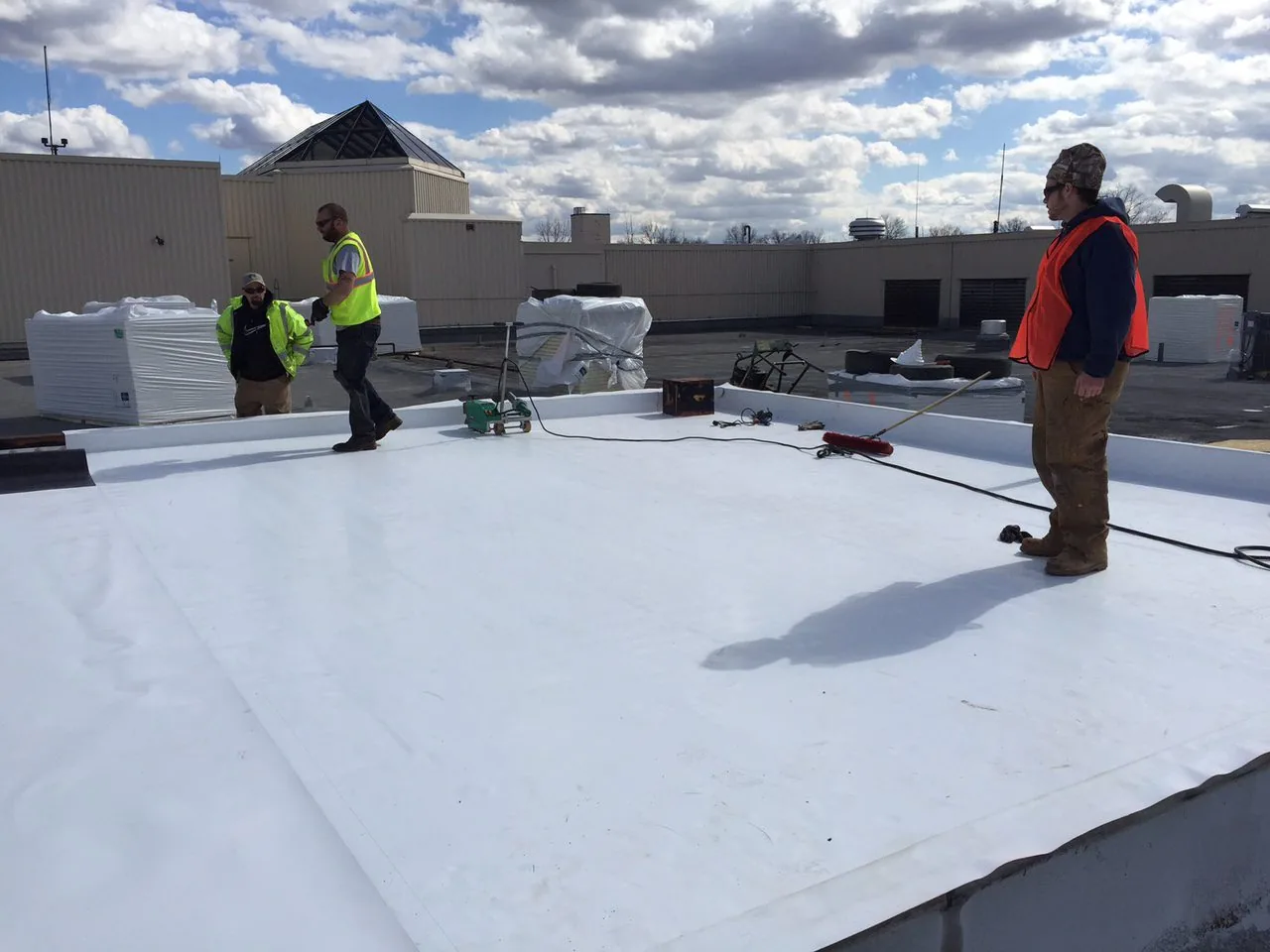
EPDM is a cured rubber sheet that is flexible, forgiving of building movement and joined with splice tape or adhesive. Because the sheet is not welded, we check the splice for lifting, contamination and edge exposure, and we check each flashing for stretch where the rubber was pulled around a curb. TPO and PVC are thermoplastics, welded with hot air, so we probe the weld and look for gaps, voids and cold joints. Carlisle's Sure-Weld TPO is a well-known example of a welded white membrane.
All three can be mechanically attached, fully adhered or, on EPDM and some other systems, held by ballast. Each method has its own failure signs: raised fastener plates, hollow-sounding adhered areas and displaced stone. EPDM tends to show age first at splices and shrinking flashings, while TPO and PVC show it at welds, and the South Coast freeze-thaw cycle works on all three.
Insulation and cover board belong in the same discussion, since a single-ply sheet is only as flat and firm as the board under it. Polyisocyanurate insulation is common beneath these membranes, and when it takes on water it loses strength and thermal value, leaving soft areas that flex under foot and stress the seams above. A moisture scan finds those areas before they show on the ceiling, and a core cut shows how many layers are in place and what condition each is in.
What does ballast displacement tell an inspector about a ballasted roof?
A ballasted roof holds its membrane down with a layer of stone or pavers instead of fasteners or adhesive. When wind scours stone from a corner or edge, the membrane there is left exposed to sun and to uplift, and the displaced stone often piles up against drains and walls. Because Bob brought 89 mph gusts over Buzzards Bay in 1991 and Carol brought 80 to 110 mph winds across eastern Massachusetts in 1954, edge zones on a coastal building deserve an extra look.
We measure stone depth at corners and perimeters, check that gravel stops and edge metal are fastened, and sweep stone away from drain sumps so water can leave. Where the ballast has thinned, we restore it to the specified depth or recommend changing the attachment method. A written roof condition report records each reading with a photograph and a location, so the next visit can measure change.
Pavers and stone also add weight, so we confirm the structure was designed to carry it before suggesting more. On roofs where wind exposure is high, a switch from ballast to a fully adhered or mechanically attached system can reduce the scatter of loose material, though it changes the repair details and the cost, and we price both routes side by side so the choice is clear.
Why do older brick mills need extra attention at the parapet?
Fall River's granite and red-brick textile mills, including Metacomet Mill built in 1847 and Union Mills built in 1859, show how much masonry some South Coast roofs have to meet. A single-ply sheet that ends at a brick wall depends on a termination bar, sealant and through-wall flashing that old masonry can undermine through freeze-thaw cycling. We probe the termination, check for mortar loss behind it and mark every wall-to-roof transition that shows staining on the interior side.
Membrane shrinkage compounds the problem. A sheet that contracts over the years pulls away from the wall, putting its flashing in tension. We look for tight, bridged flashings and open laps at corners, and our seam failure repair work rebuilds those details instead of sealing over them. A termination-by-termination survey in Fall River is the practical way to find out which of those details are still tight.
Corners are the other weak point. Where two walls meet, the sheet has to be folded or cut and patched with a preformed corner, and those patches are where shrinkage tears them first. We press each corner patch with a probe, photograph any lifting and note whether the underlying wall has moved.
How much does drainage matter for a single-ply roof in snow country?
A great deal. Around 32.5 inches of snow falls in New Bedford each year, mostly December through March, and the blizzard of January 2015 measured 24.1 inches in Fall River and 26.0 inches in East Freetown. A single-ply roof holds that load on its low spots, and meltwater has to find a drain that may be frozen shut at the strainer. We check slope, drain sump condition, tapered crickets and scupper openings before winter, and we mark any area that holds water for more than a day after rain.
Where ponding is chronic, the fix is usually in the substrate: tapered insulation, an added drain or a corrected scupper. Our roof drain and scupper work addresses those parts, so the membrane is not asked to compensate for a drainage problem. Standing water also shortens the life of seam sealants and ages the surface faster.
What do owners need from the paperwork on a manufacturer roof?
The manufacturer's warranty, if one exists, sets its own conditions on installation, repair and notice. We read it before changing anything, record the system type and thickness, and keep a repair log with photographs. The paperwork and the physical record then match, and the next owner can read both.
An owner who also holds roofs from GAF or Versico keeps the same record for each. A single register of roof plans, system types, ages and repair history lets a facility director compare buildings and decide which needs capital first.
Commercial Roofing Questions
How do I find out whether my roof is EPDM, TPO or PVC?
The color and the seam give it away. A black rubber sheet joined with tape or adhesive is typically EPDM, while a white or light sheet with a welded edge is a thermoplastic. A small core cut and the installation record settle the question.
What decides whether splice tape needs replacing?
Condition of the edge. If the tape is lifting, contaminated or showing a gap at the seam edge, it needs rework. We probe the length of each splice and mark every open section on the plan.
Can ballast be replaced after a storm?
Yes, once we measure what remains and confirm the membrane underneath is undamaged. Stone depth at edges and corners follows the specification for the building, and we sweep drains clear before leaving.
Does a single-ply recover make sense over an old built-up roof?
Sometimes. A dry, sound roof with a stable deck can take a recover, but wet insulation or a damaged deck rules it out. A moisture scan and core cuts give the answer before anyone prices the work.
Who responds if a seam opens in a storm?
Emergency crews are available around the clock, every day, holidays included. The first visit stops the water and records the opening, and a permanent repair follows in suitable weather.
Ready to review the roof scope?
Request a Roof AssessmentKeep Reading