Property Types We Roof
Self-Storage Roof Repair in New Bedford, MA
Self-storage roof inspection and repair in New Bedford, MA, with leak tracing, unit protection and phased work for occupied storage buildings and office areas.
Request a Roof Assessment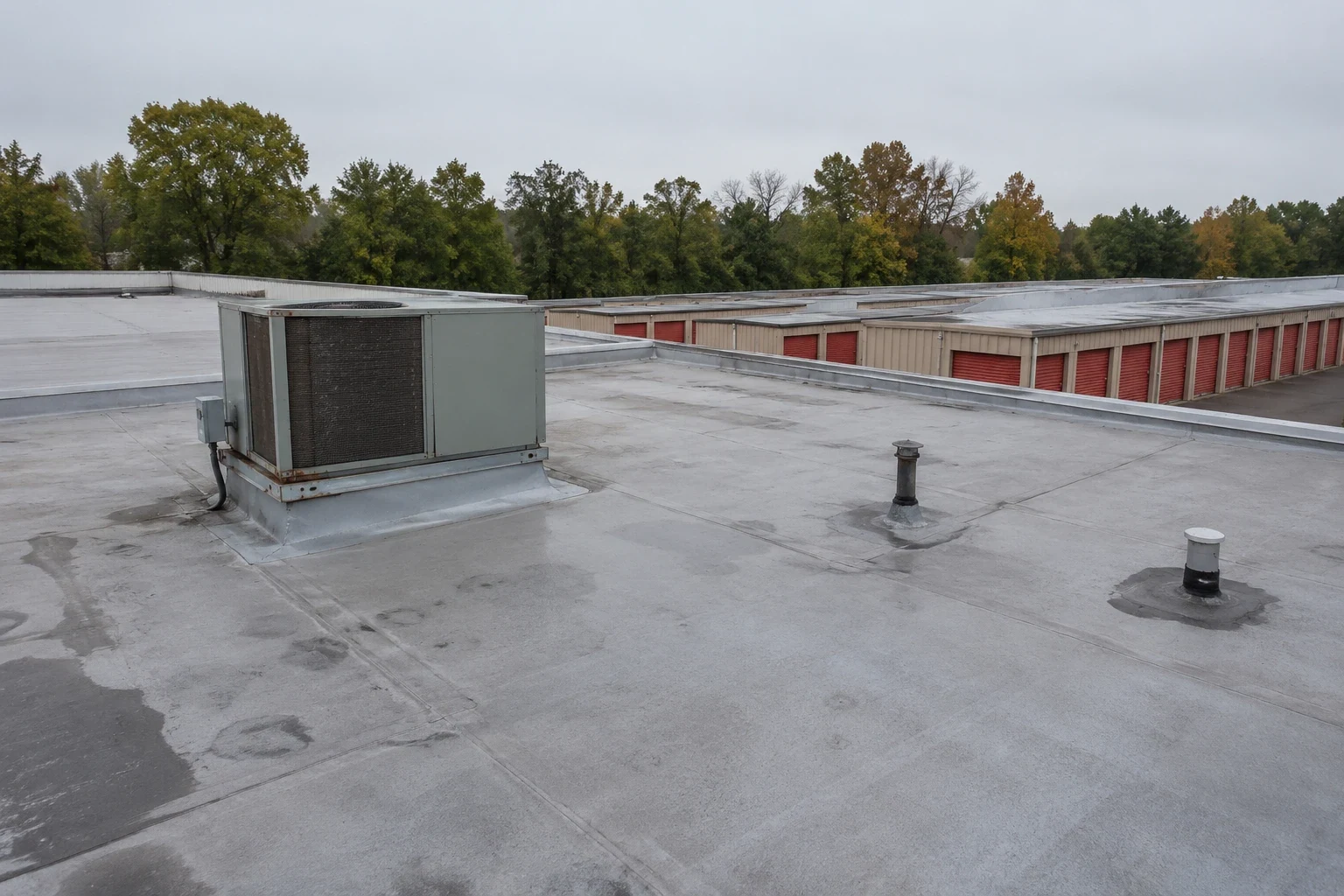
Why does a storage unit show a wet box when the roof above looks dry? On a self-storage building in New Bedford, MA, water can move along a deck rib or insulation joint before it drops into a unit. The stain marks where water arrived, not necessarily where the membrane opened. We inspect the roof detail, check the interior pattern and mark the failure before proposing a repair. That helps protect tenants' stored property without treating every roof bay as damaged.
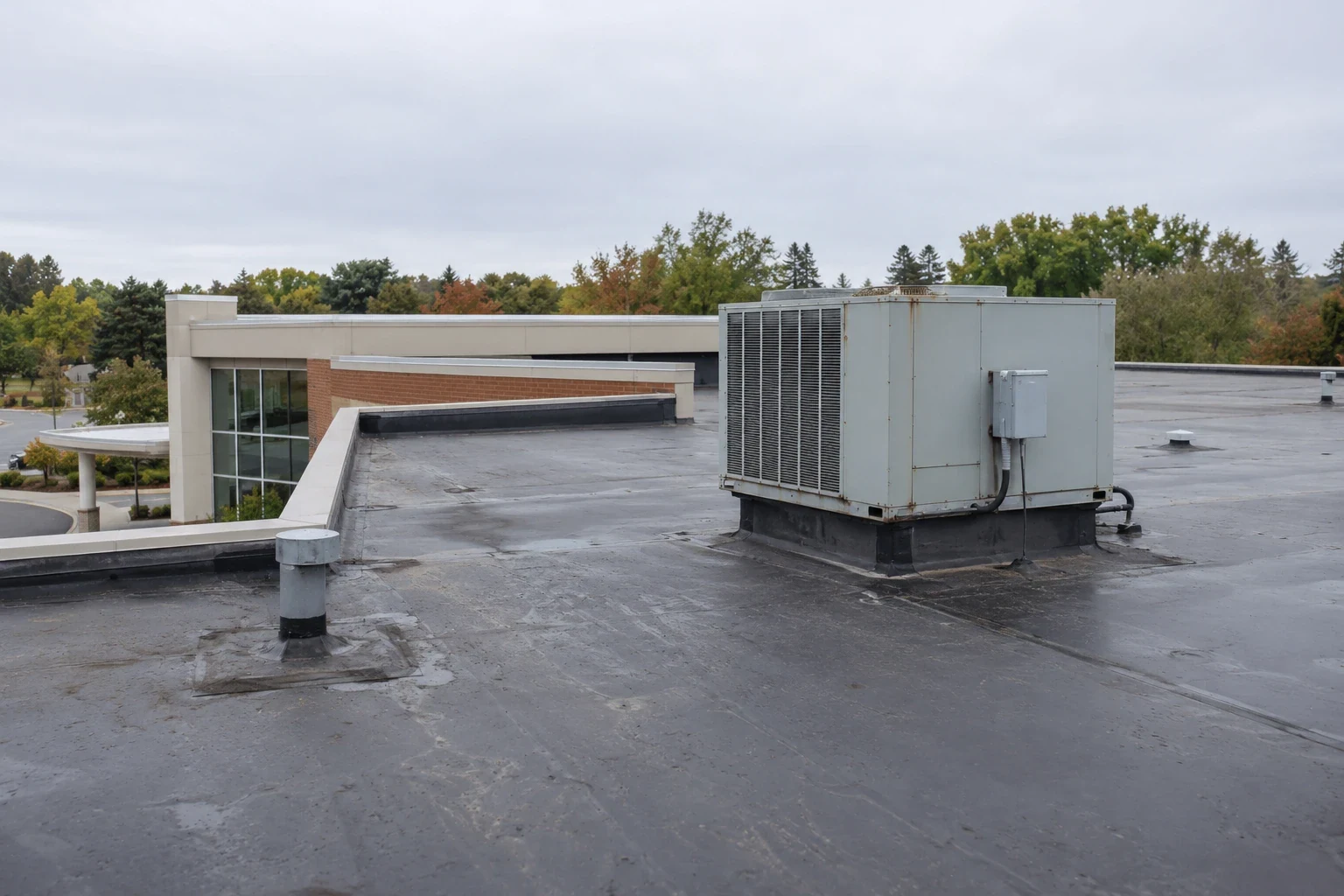
Storage sites often combine long low-slope roofs, roll-up doors, small offices and multiple building sections. A targeted visit can distinguish a failed seam from blocked drainage or a wet insulation area. We note which units sit under the work, how deliveries and access lanes should be protected, and what the owner can repair now versus place in a capital plan.
How do we trace a leak above a row of units?
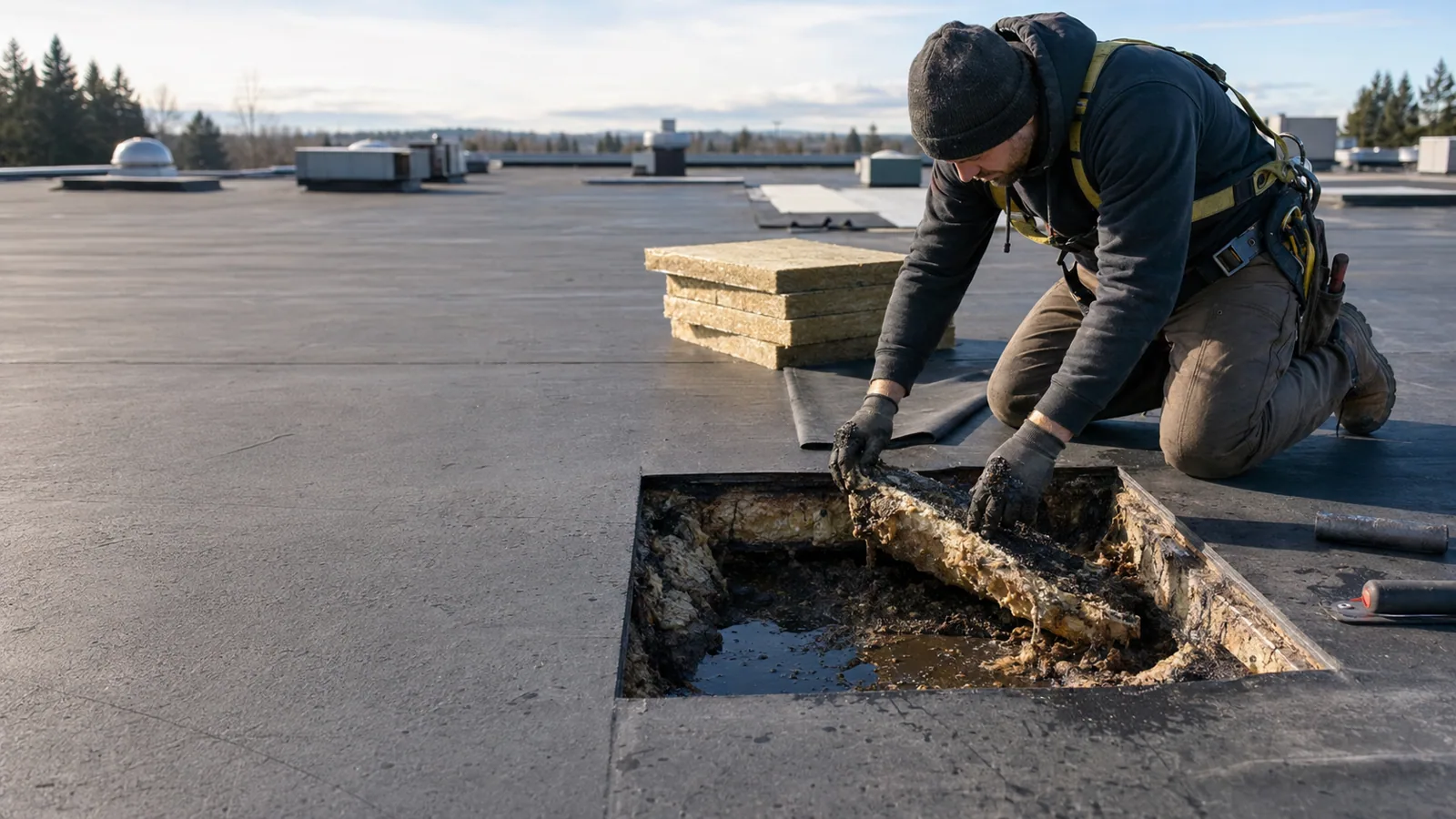
We compare the interior stain with roof seams, drains, curbs and wall transitions. Water may follow a metal deck or insulation joint before it reaches the ceiling, so the closest roof detail is not always the source. A seam probe checks whether a lap has bonded. Fasteners, flashing and the edges of earlier patches are inspected, and moisture readings or a core cut follow if the wet area may run below the membrane.
The resulting plan marks the suspect bay and nearby details rather than a broad rectangle around the stain. If one seam has failed and the insulation remains dry, a focused repair may be enough. If several units show stains after the same weather, we look for a common drainage or termination problem. A roof inspection with marked findings gives the owner a way to match each repair to the unit or office affected.
How can the work protect tenants and stored goods?
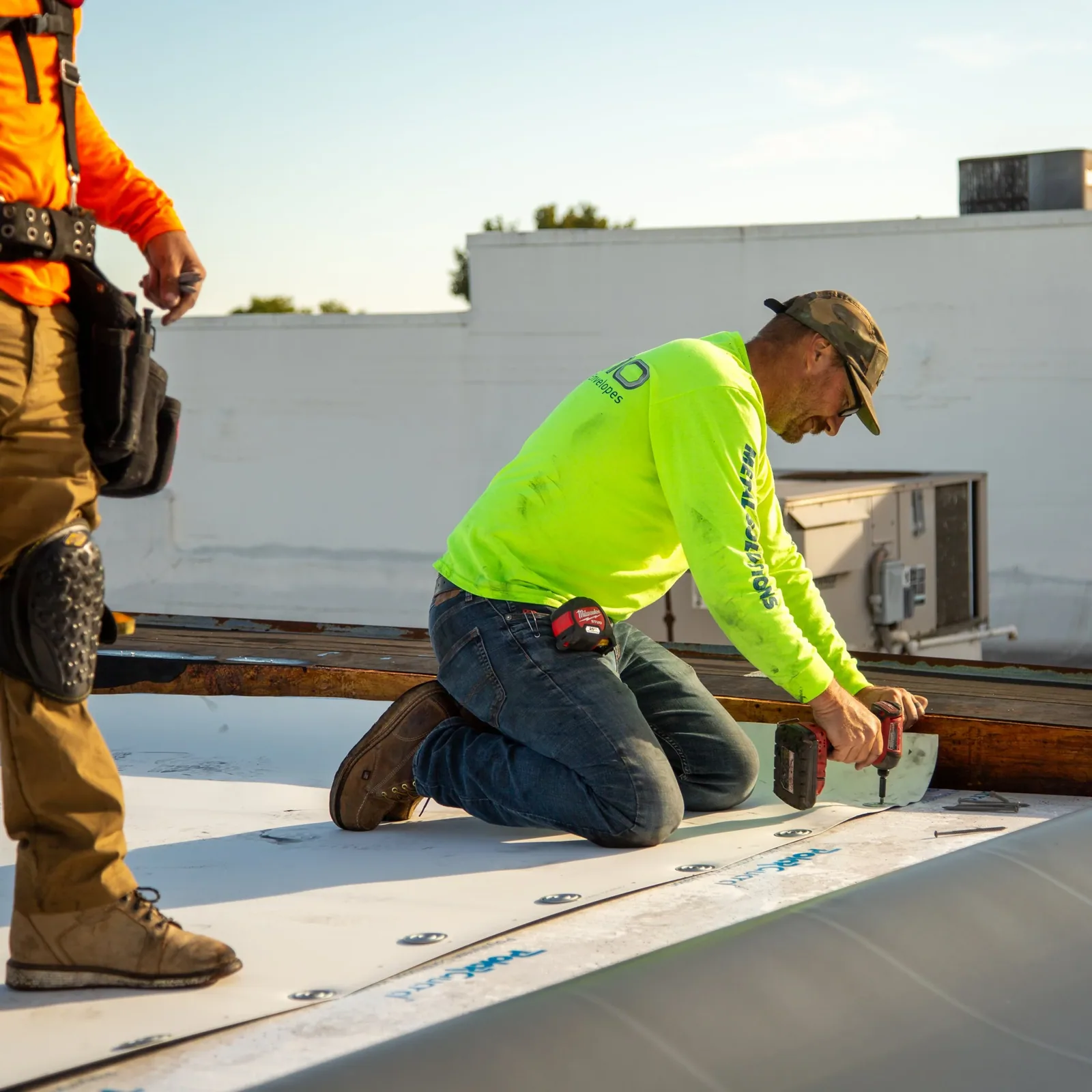
Before a roof section is opened, we identify the unit rows below, office hours, gate access and any delivery periods that cannot be interrupted. Tarps or other interior protection are set where the work warrants them. We keep ladders, lifts and material staging clear of roll-up doors and fire lanes, and we tell the site contact which units may need temporary access limits.
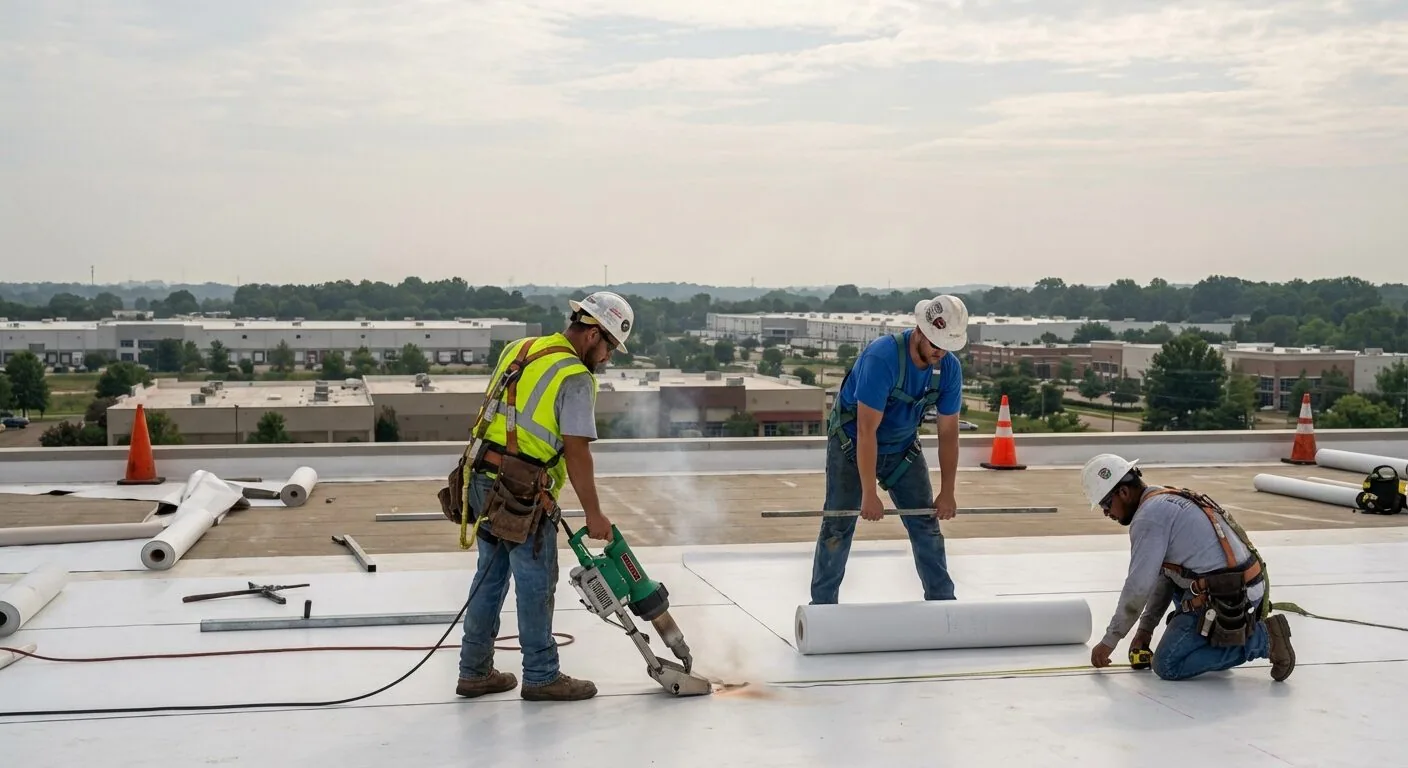
On a larger reroof, sections can be phased so the facility continues operating. That is familiar on a distribution building, where dock activity also depends on clear routes, and the same scheduling discipline applies to storage rows. A phased occupied-building project separates open roof from completed roof and records what each day leaves weather-tight. The estimate should include access constraints and protection needs, not assume an empty building.
What do New Bedford storms leave on a flat roof?
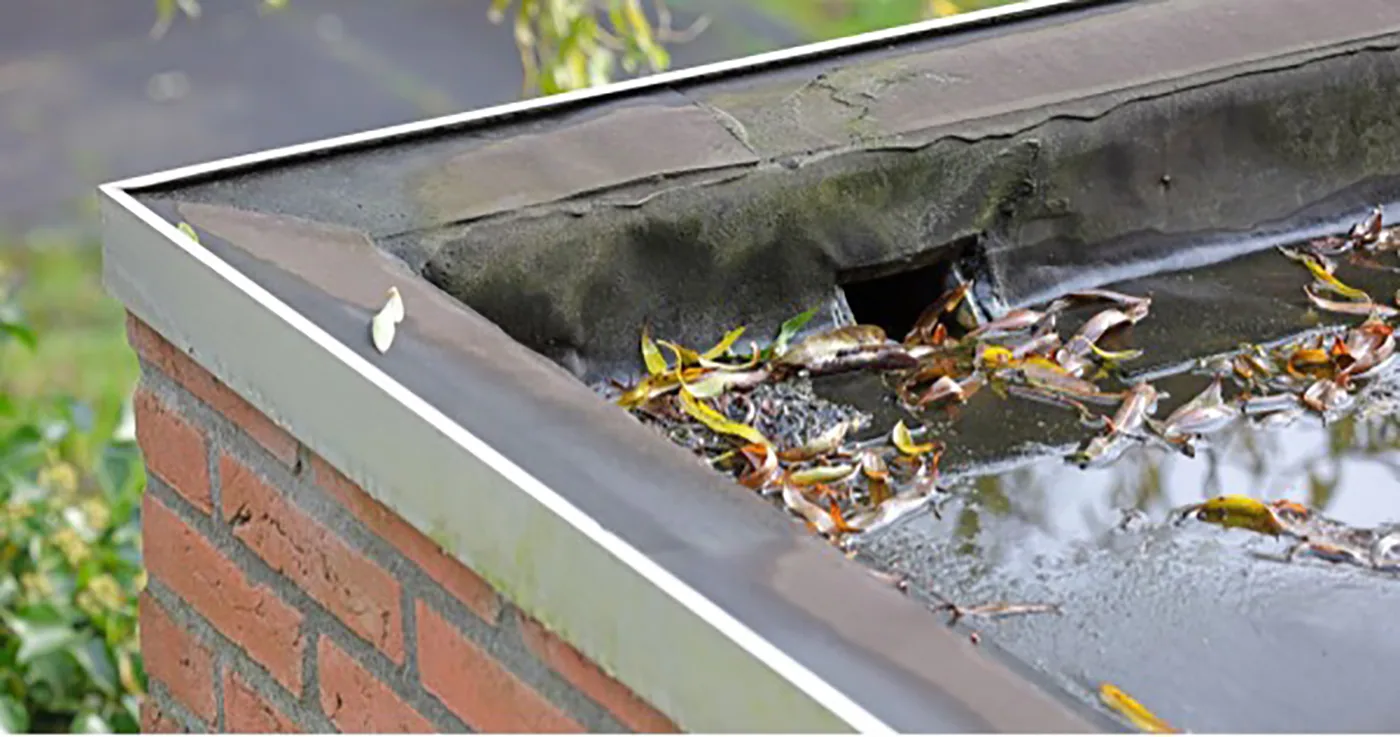
Rain and snow both shape the local roof load: New Bedford receives a little over 52 inches of precipitation in an average year, while snowfall averages about 32.5 inches, concentrated from December through March. A long roof with a shallow slope can hold meltwater around a drain sump after a thaw. We check whether outlets are clear, whether overflow paths work and whether ponding follows a depressed deck or a blocked drain. If water sits over a seam, we inspect the weld and nearby insulation before recommending a surface coating.
Bob's surge topped out at 5.8 feet in New Bedford and Woods Hole, with 89 mph gusts logged on Buzzards Bay. Those readings make edge metal and perimeter terminations worth checking after severe weather. Near the New Bedford Business Park or the Fall River Industrial Park, each building's assembly, exposure and drainage layout still decide the scope. For standing water, drainage repair should correct the holding condition as well as the leak.
What should a storage owner budget for?
The estimate changes with the number of affected bays, wet insulation, roof height, drain count, edge length, access equipment and how much material needs disposal. We identify the repair area and list any hidden condition that could alter the scope after opening. A patch over wet board may stop a drip for a short time while leaving the insulation saturated. If the wet area is limited, repair keeps sound sections in service, as it does on a warehouse roof with the same long, low-slope runs. If moisture is widespread or the membrane has failed across many seams, replacement may make more sense.
We also look at how the office roof joins the storage bays, where HVAC units or roof hatches interrupt the field and whether the edge detail needs rebuilding. We read the actual assembly, bay by bay. A seasonal maintenance visit can record drains, seams and patch condition before the next wet season, so an owner can see what changed between visits.
Downspouts at the ends of unit rows often discharge near the base of a wall, so we check where roof water lands, because a pool at the foundation can wet the first unit in a row as surely as a leak above it.
What should the roof file keep?
Keep the roof plan, warranty information, repair invoices, photos and unit locations together. When the next stain appears, those records show whether it follows a known repair or points to a new failure. We can mark the date, weather reported by the owner, interior unit and roof detail, then note which work was completed. If a claim is involved, roof damage documentation separates observed storm effects from wear or prior maintenance.
The New Bedford Business Park, as described in 2013, was home to 44 companies and about 4,500 jobs. In Fall River, the industrial park sits north of Wilson Road, with Route 24 to one side and Riggenbach Road to the other. In either area, a self-storage roof still needs a building-specific record of moisture, detail failures and repair history. An owner can compare each section, then schedule a follow-up inspection before another leak interrupts access to tenants' belongings. At a site with multiple buildings, we group findings by roof section and unit row, then list work that needs a lift, interior covering or temporary limits on access. Owners can see which repair protects a particular area and which work addresses a drainage or perimeter condition shared by several bays. If the property remains occupied, a start date can depend on tenant notices, truck access and a dry weather window. Those constraints belong in the schedule, not hidden in a lump sum. A phased scope can keep each section weather-tight before the next is opened. The closeout record identifies completed rows, materials left in place and details that need another look at the next visit. That helps managers answer tenant questions and build capital requests from actual roof findings.
Commercial Roofing Questions
Can you locate the roof opening when only one unit is wet?
Yes. We compare the stain with seams, curbs, drains and deck direction, then inspect the likely route. Moisture readings or a core cut can confirm whether insulation is wet beyond the unit where water appeared.
Do tenants need to empty their storage units before repair?
Not always. The work area and interior protection determine whether access limits are needed. We identify the affected rows with the site contact and explain any unit access or covering required before opening the roof.
When does a storage roof need replacement instead of patching?
Replacement becomes more likely when moisture is widespread, seams have failed in multiple areas or repairs no longer stay bonded. We document the wet area and compare repair, recover and tear-off before pricing the larger project.
What details should be checked after a nor'easter?
We look at edge metal, parapet transitions, drain strainers, scuppers and exposed seams. The inspection follows the roof's actual condition, then records any movement or opening that could let the next rain reach stored goods.