Property Types We Roof
Aircraft Hangar Roofing in New Bedford, MA
Commercial hangar roof inspection, repair and replacement in the New Bedford area, planned around clear spans, large doors and protected equipment.
Request a Roof Assessment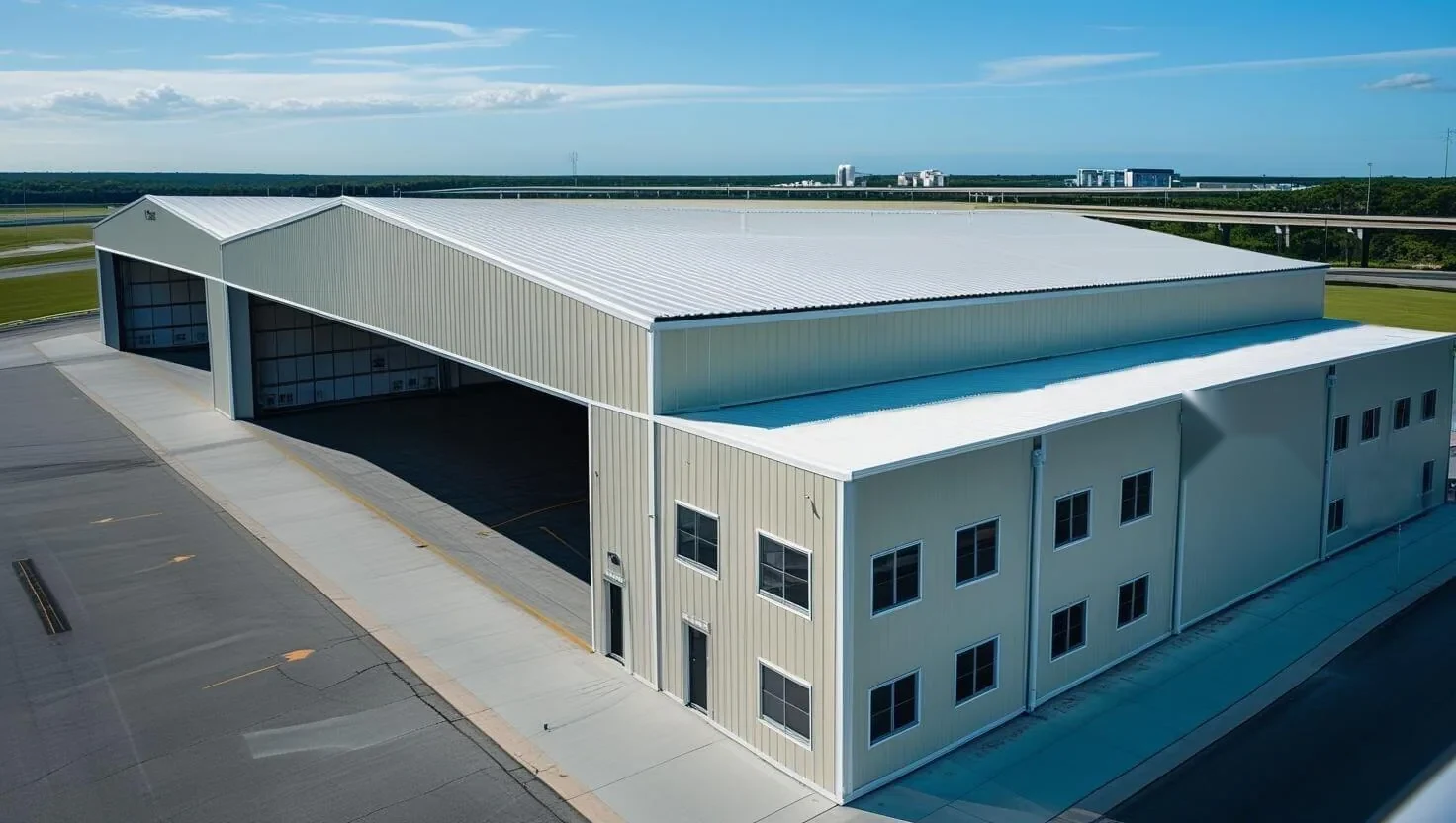
Why is water appearing beside an aircraft door when the roof seam above the center bay looks intact? On a hangar in the New Bedford area, the opening may be at a perimeter flashing or transition, with water traveling across the deck before it drops. We trace the path from the interior mark to the roof detail and record what the assembly actually shows. The repair plan must protect aircraft, tools and door equipment while keeping the large opening usable whenever the work sequence allows. We ask which interior zones hold sensitive equipment and whether the owner can relocate it during a short repair window.

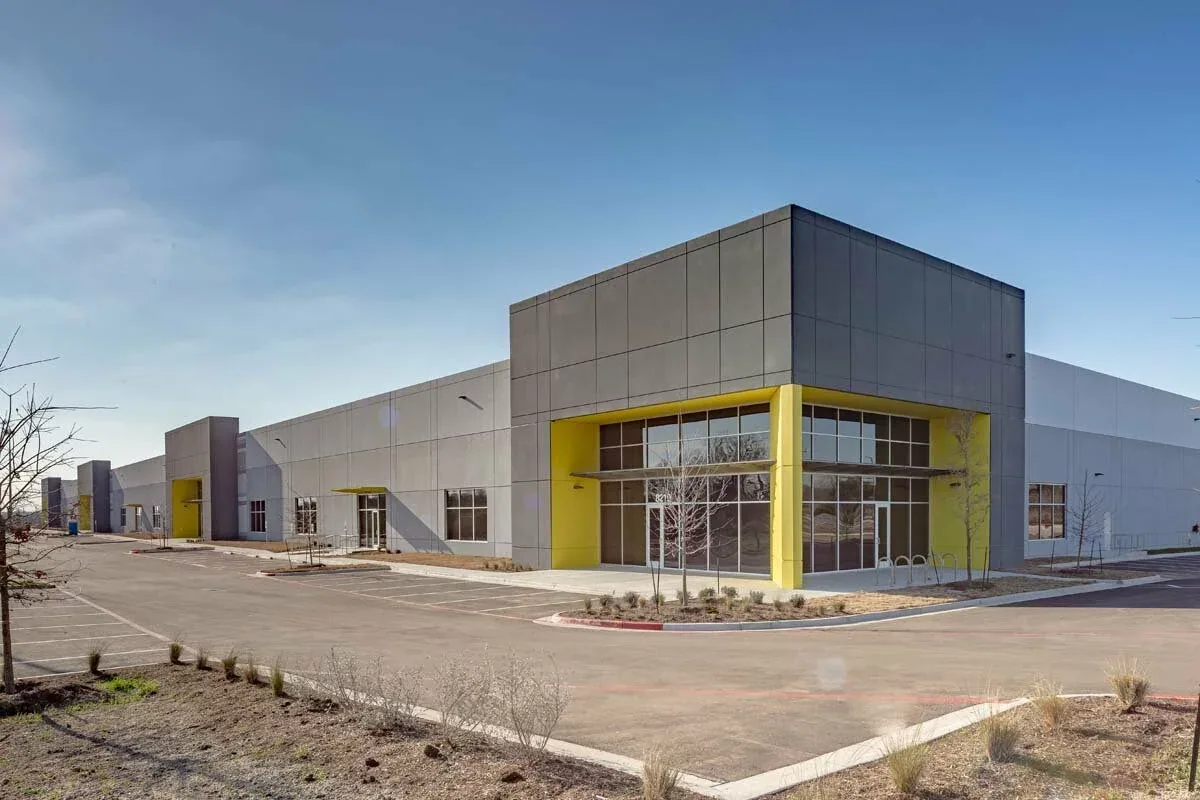
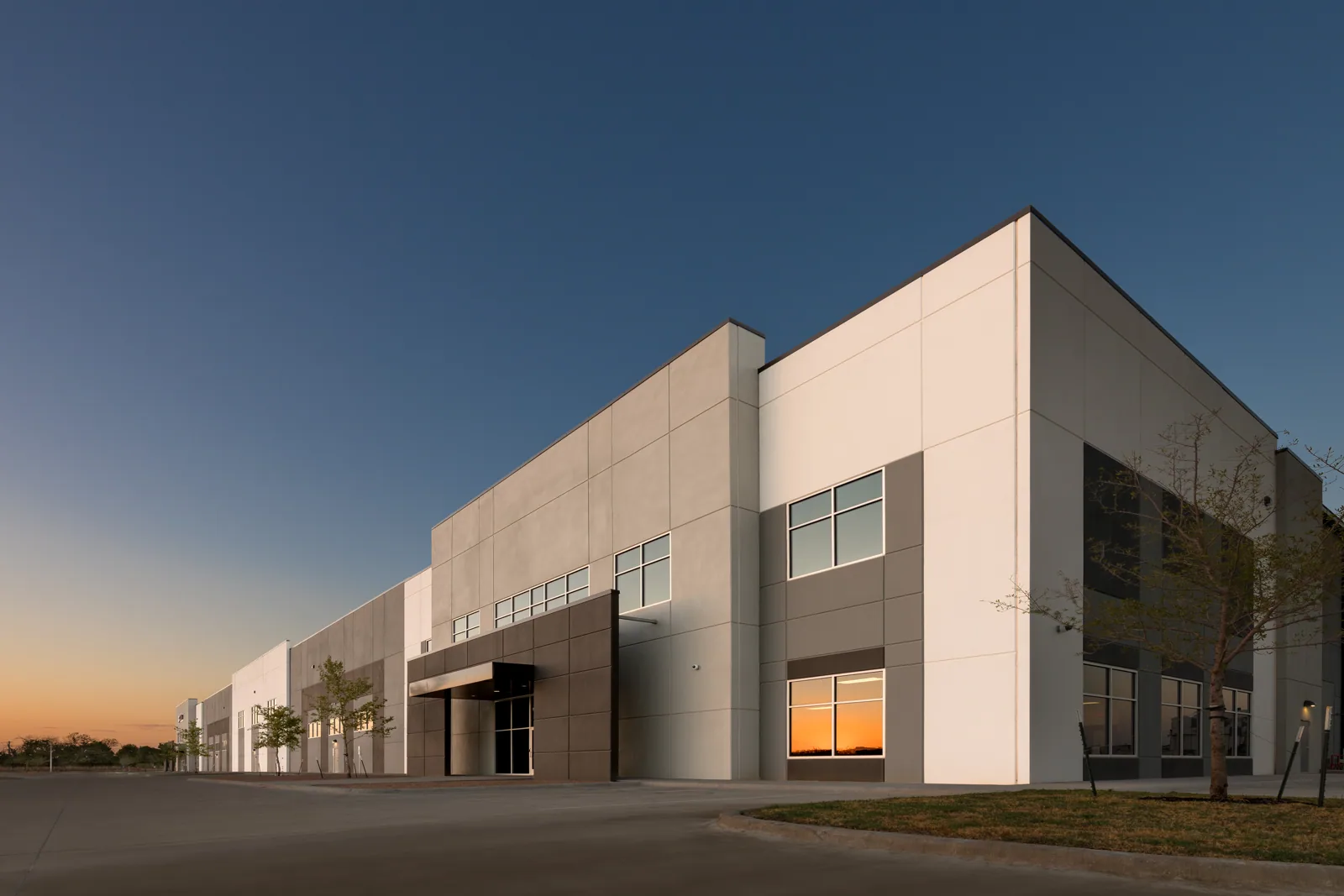
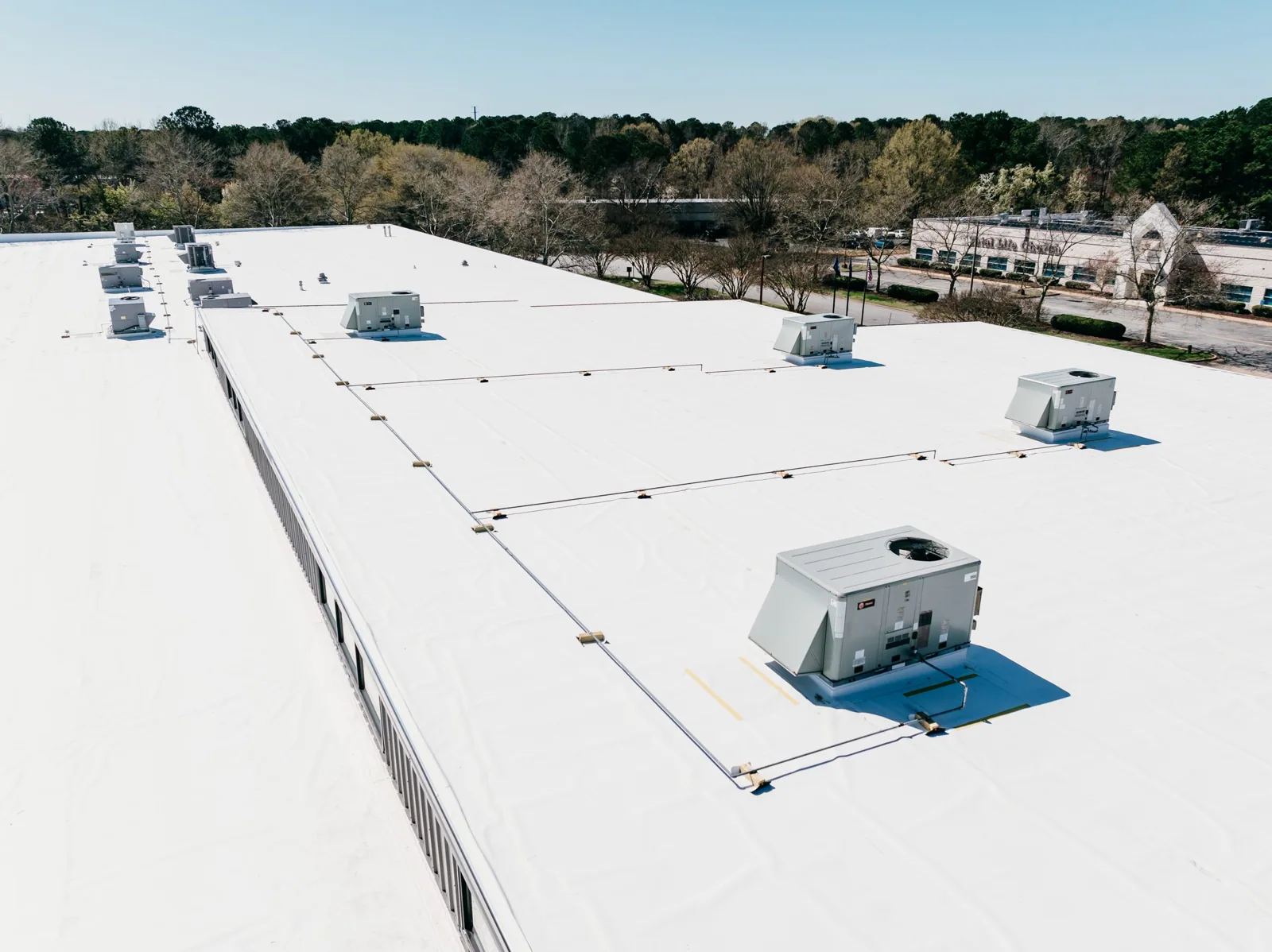
Hangars often have wide clear spans, tall wall lines and large moving doors that make access different from a low office roof. We identify the roof sections, door head, curbs and drainage points before setting a scope. A warehouse roof may share broad membrane runs, while a flex industrial building can combine several roof elevations and tenant uses.
What makes a hangar roof inspection different?
A broad roof field may appear simple from below, but long spans can conceal movement at seams, fasteners and perimeter transitions. We inspect how the membrane terminates at the wall, how the door frame meets the roof edge, and whether equipment supports interrupt the field. At the interior, we compare stains with framing lines and insulation joints because water can travel before reaching a visible opening. Each finding is marked by roof section and paired with a photograph.
Access planning matters as much as the defect. A lift may need clear floor space, while the active door and approach path must stay free of materials. We coordinate the work boundary and temporary protection with the facility contact before removing membrane or flashing. A commercial roof inspection can include seam probes and moisture checks, with a core sample only when the concealed assembly needs confirmation. The report then separates a failed detail from a wider area that may need further investigation.
How do roof details affect large hangar doors?
The door opening places several systems close together: wall cladding, head framing, controls, weather seals and roof-edge metal. A small opening at the head flashing can let water follow the framing and appear well inside the hangar. We check the termination and adjacent membrane without treating the door hardware itself as a roofing defect. If the edge metal has loosened, the repair needs to secure the assembly while preserving the door's full movement and service access.
Drainage also deserves a separate look. A large roof may send water to a small number of outlets, so a blocked drain or depressed area can hold water over a seam. We check drain bowls, overflow routes and scuppers, then distinguish a drainage correction from a membrane repair. The drain and scupper work can be priced alongside wind-related edge repairs when inspection findings support both. The scope should explain what changes before surface restoration is considered.
What local weather should be considered before a repair?
A New Bedford year brings a little over 52 inches of precipitation. Winter contributes an average 32.5 inches of snow, concentrated from December through March. On a large, low-slope field, meltwater can expose a weak seam or remain around an outlet after a thaw. We check drainage and membrane condition together, because a patch placed over a standing-water problem may not hold. The inspection also records whether insulation is dry enough for a repair or restoration system.
Hurricane Bob produced a 5.8-foot surge reading in New Bedford and Woods Hole, while a Buzzards Bay station measured gusts to 89 mph. That regional history makes a post-storm review of exposed edges sensible, but it does not determine a hangar's condition. The New Bedford Waterfront and the commercial areas served by Route 24 have different settings and roof exposures. We document the actual movement, openings or moisture found at the building. If one seam has separated, a focused repair can address that detail without treating the entire roof as failed.
Should the owner repair, restore or replace the roof?
A repair is appropriate when inspection finds a limited failure and the surrounding membrane and insulation remain serviceable. Restoration may suit a compatible assembly after moisture, adhesion and detail conditions are checked. Replacement becomes more compelling when failures repeat across the field, wet insulation is widespread or the roof cannot be made reliable with local work. We compare those options using the same marked findings, so the owner can see what each scope includes and where uncertainty remains.
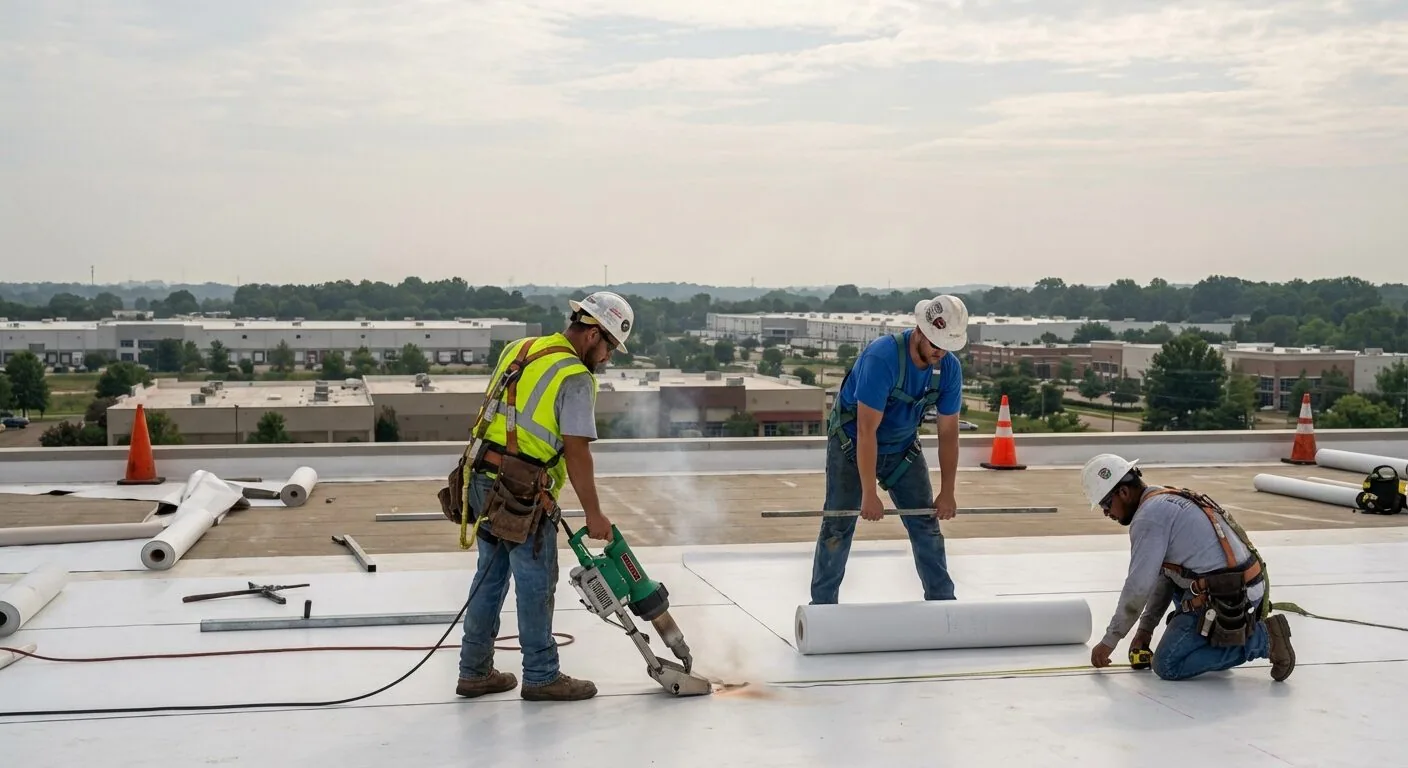
Hangar work can require lifts, fall protection and careful material handling around equipment. We list access needs, temporary covering, edge work and disposal separately instead of hiding them inside a broad allowance. If a roof plan covers several buildings, each assembly still gets its own observations and recommended sequence. A replacement project should state how open areas will be closed each day and how the door approach stays clear. A phased plan gives the facility lead a defined section to review before the next one begins. Before mobilization, we also confirm where equipment can be staged, which door must remain available and how a temporary cover will be secured if weather interrupts the shift. Those decisions are easier to make from the marked roof plan than during an open-roof emergency. The closeout can identify the membrane and flashing repaired, show the boundary of work, and list any nearby detail that merits another inspection. That record helps distinguish a new leak from a previously documented condition.
What should the hangar roof file include?
Keep the roof plan, warranty, prior repairs, photographs and access notes together. Identify which bay lies below each seam, drain and curb so later reports can compare the same areas. After a repair, record materials installed, the limits of the work and any remaining observation. A maintenance visit can revisit drain flow, seam condition and door-head flashing before the next wet season, giving the owner a dated record rather than relying on memory.
New Bedford Business Park's 2013 figures counted 44 companies and roughly 4,500 jobs. Route 24 reaches the Fall River Industrial Park and also serves Freetown and Berkley. Those commercial areas remind owners that roof layouts vary with building use and expansion history. Our report stays with the inspected hangar: which details need work, how access affects the sequence and what should be checked at closeout. The next inspection can then tell whether a repair held or whether movement has returned at a specific edge or seam.
Commercial Roofing Questions
Can a hangar remain in use during roof work?
Often, if the work can be divided safely and aircraft movement is coordinated. We identify lift routes, door operating needs and interior protection with the facility contact before setting the sequence.
Why can a leak appear far from a roof seam?
Water may follow a deck rib, framing member or insulation joint before it reaches the interior. We compare stains with roof details and use moisture checks if the wet area may extend beyond the opening.
Can a roof coating fix a hangar leak?
Only if the assembly is compatible, dry enough and properly prepared. A coating will not correct a loose door-head flashing, blocked drain or saturated insulation, so those conditions must be evaluated first.
What affects the cost of hangar roofing?
Span, height, lift access, edge length, drainage, interior protection and the extent of wet insulation all affect the work. A useful estimate separates those items and states what needs confirmation after opening.
Ready to review the roof scope?
Request a Roof AssessmentKeep Reading