Roof Systems
Spray Polyurethane Foam Roofing in New Bedford, MA
Spray polyurethane foam (SPF) roofing in New Bedford, MA: thickness and density checks, protective coating wear, ponding, wind, and recoat or replace decisions.
Request a Roof Assessment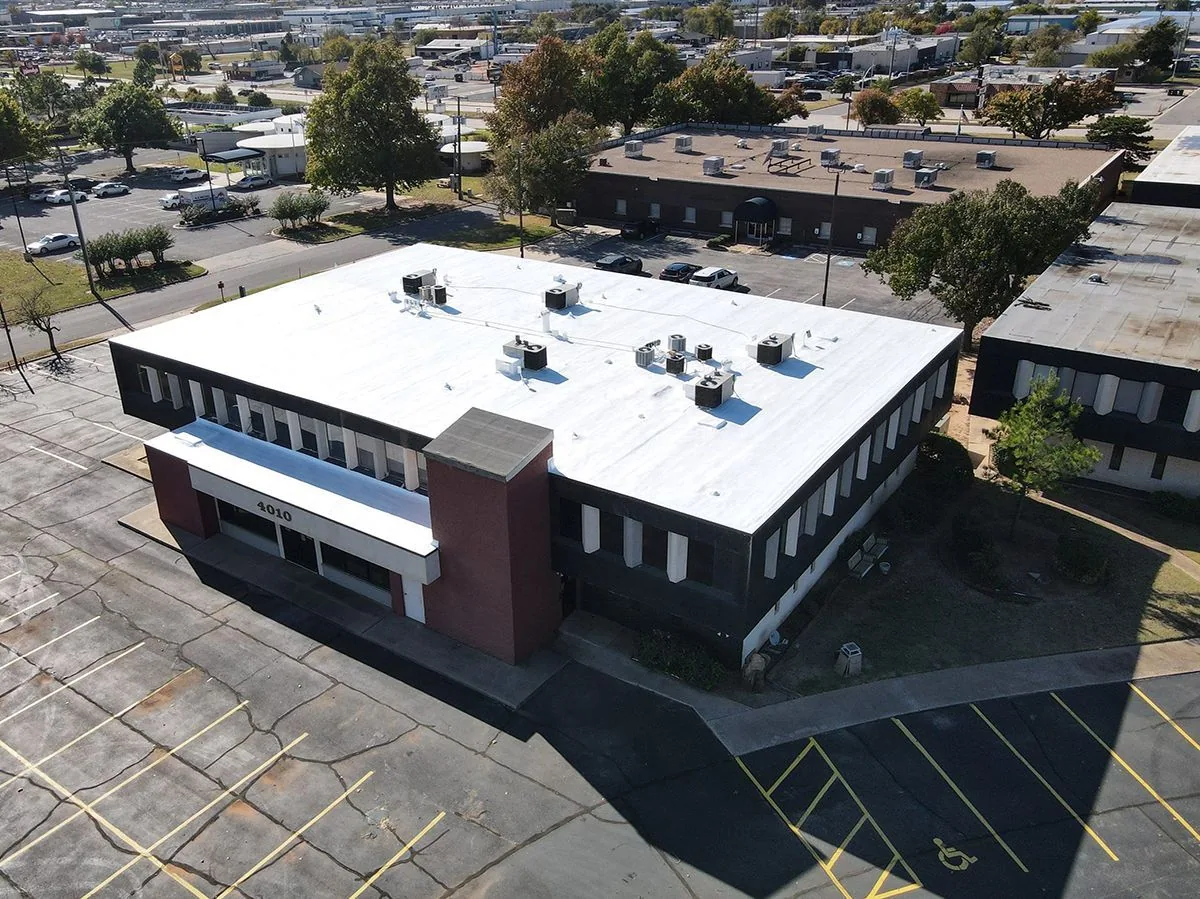
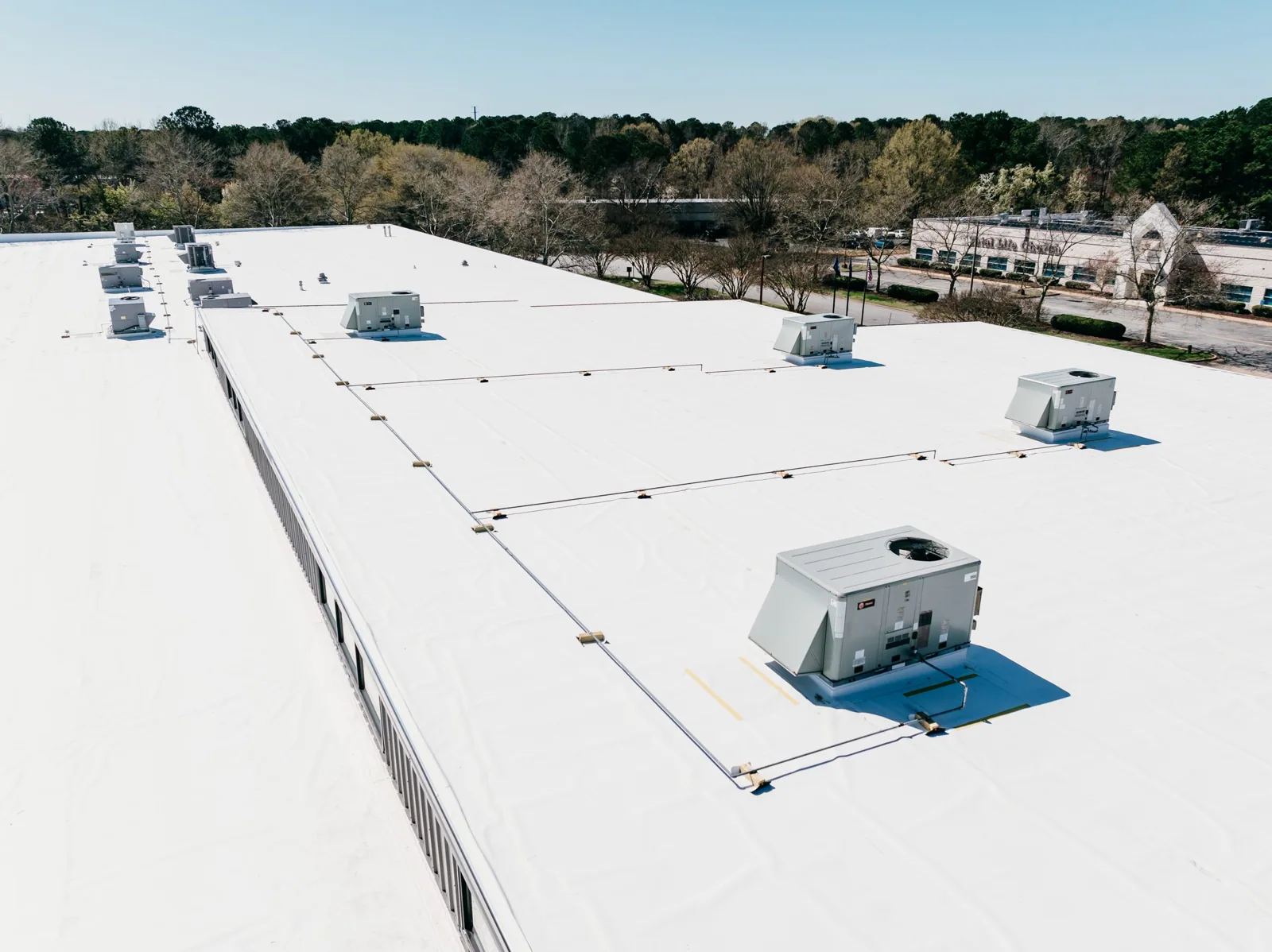
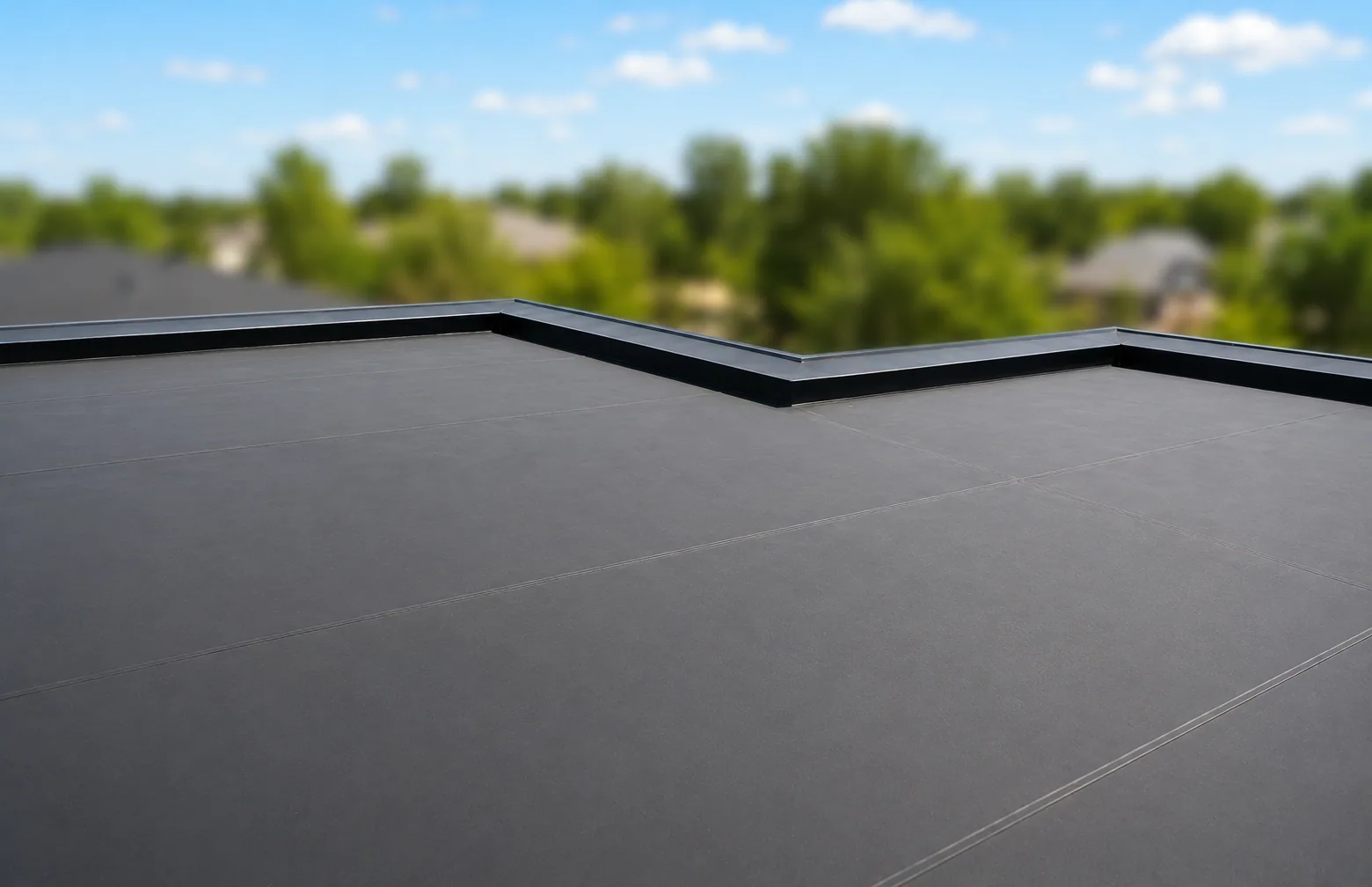
How do I know whether the foam on my roof is still doing its job, or whether I am only looking at a worn-out coating? A facility director who has walked a spray foam roof knows it looks like one continuous sheet, and an inspector would first notice a surface where the protective coat has chalked, thinned or cracked and the foam beneath has begun to show its tan, sun-baked skin. Spray polyurethane foam, or SPF, is applied as a liquid that expands into a solid layer, then topped with a coating that shields it from sun and water.
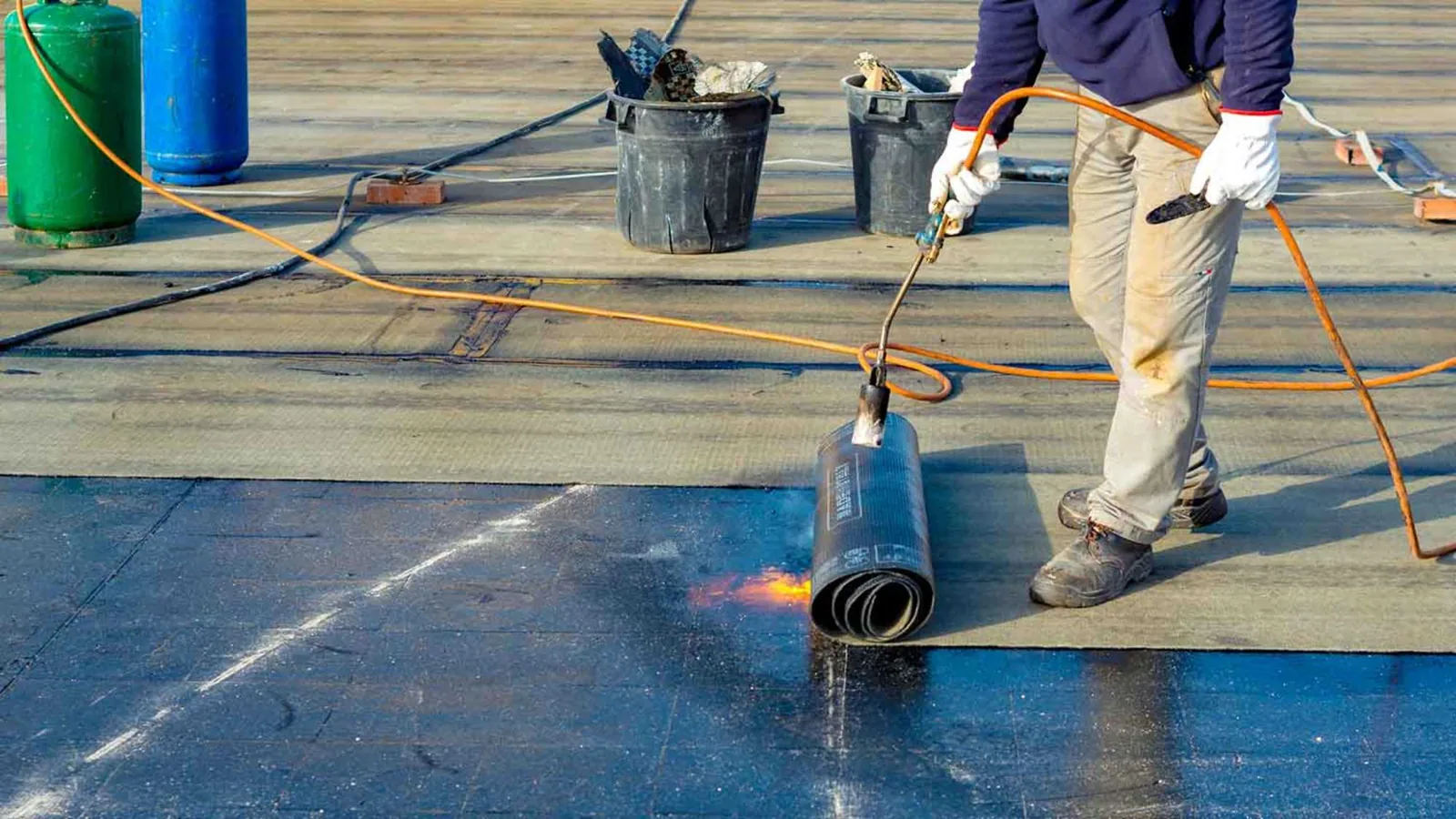
In New Bedford, MA, that coating meets about 52 inches of precipitation across roughly 124 days a year, about 32.5 inches of snow, and a record high of 107 F. Coating, foam thickness and penetrations get read in turn, and each finding is marked on the roof plan ahead of any quote.
What is the foam, and what is the coating?
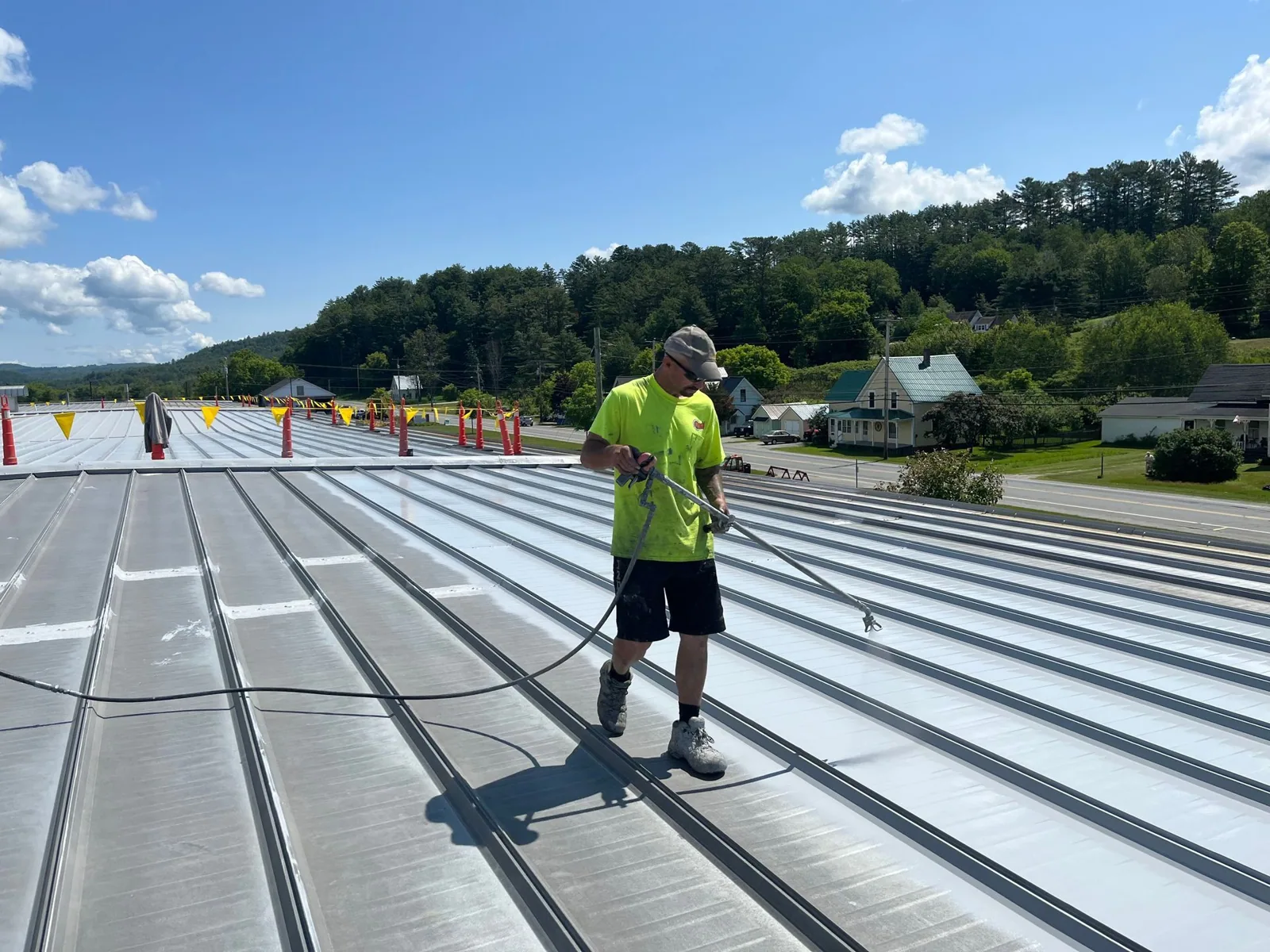
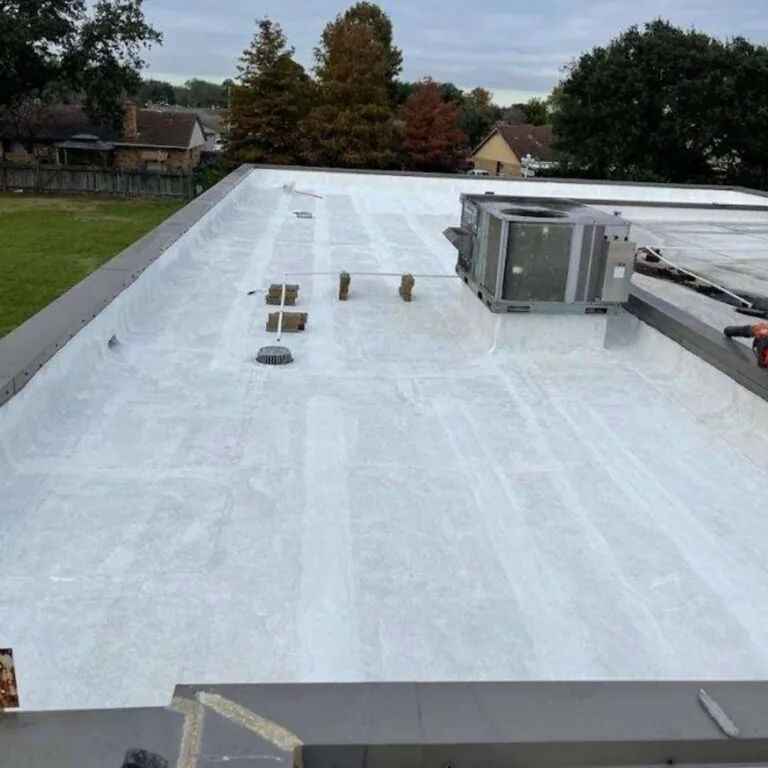
The foam is a closed-cell polyurethane that is sprayed onto a clean deck in passes, building up to a design thickness. It insulates, it adheres in a continuous layer with no laps, and it can be sloped by varying the thickness to move water toward drains. On its own it breaks down in sunlight, so a coating goes on top: silicone, acrylic or a granule-surfaced system. The coating is the part that weathers. A foam roof whose coating is maintained can run for a long time, while a foam roof whose coating has failed is exposed to water, ultraviolet light and foot traffic. We record the coating type, its condition and any past recoats. Foam also changes how a roof is repaired later. A patch has to be foam and coating, not mastic and fabric, and a repair done in the wrong material will peel at its edges within a season. For that reason the roof plan names the coating family so any future crew can match it, and it notes the walkways, curbs and drains where the coating is thinnest.
How thick is the foam, and where is it thin?
A core cut shows the layers: the deck, the foam, and the coating. We measure the foam thickness at several points, since the thickness varies with the slope and with how the crew applied it. Thin areas near drains or against walls are where the foam can be crushed by foot traffic or hit by hail. We also check for blisters, which are pockets of trapped moisture or gas between passes, and for cracks across the foam that suggest the deck is moving. A blister that has not broken the coating is watched. One that has split lets water into the foam, which is a closed-cell product but not a waterproof one once it is cut. Dense foam is firm underfoot and resists dents, while lower-density foam compresses, so we press the surface with a thumb and a probe to feel the difference and record where the roof softens. Soft foam near a drain is a typical sign that water has been getting in at the outlet for some time.
Why does ponding matter on a foam roof?
Foam is applied without laps, so standing water does not find a seam, but it does find a thin coating. Water that sits for days after a thaw or a storm wears the coating faster than water that drains. We measure ponding depth and note where it forms, then look at whether the low spot is a drain problem or a thickness problem. Tapered thickness can be added to guide water to the drain, and a drain and scupper check is part of every inspection. The 1938 New England hurricane left New Bedford under eight feet of water, but that was a ground-level event; the rooftop problem is rain, and it starts at the drain.
How does the roof stand up to wind and hail?
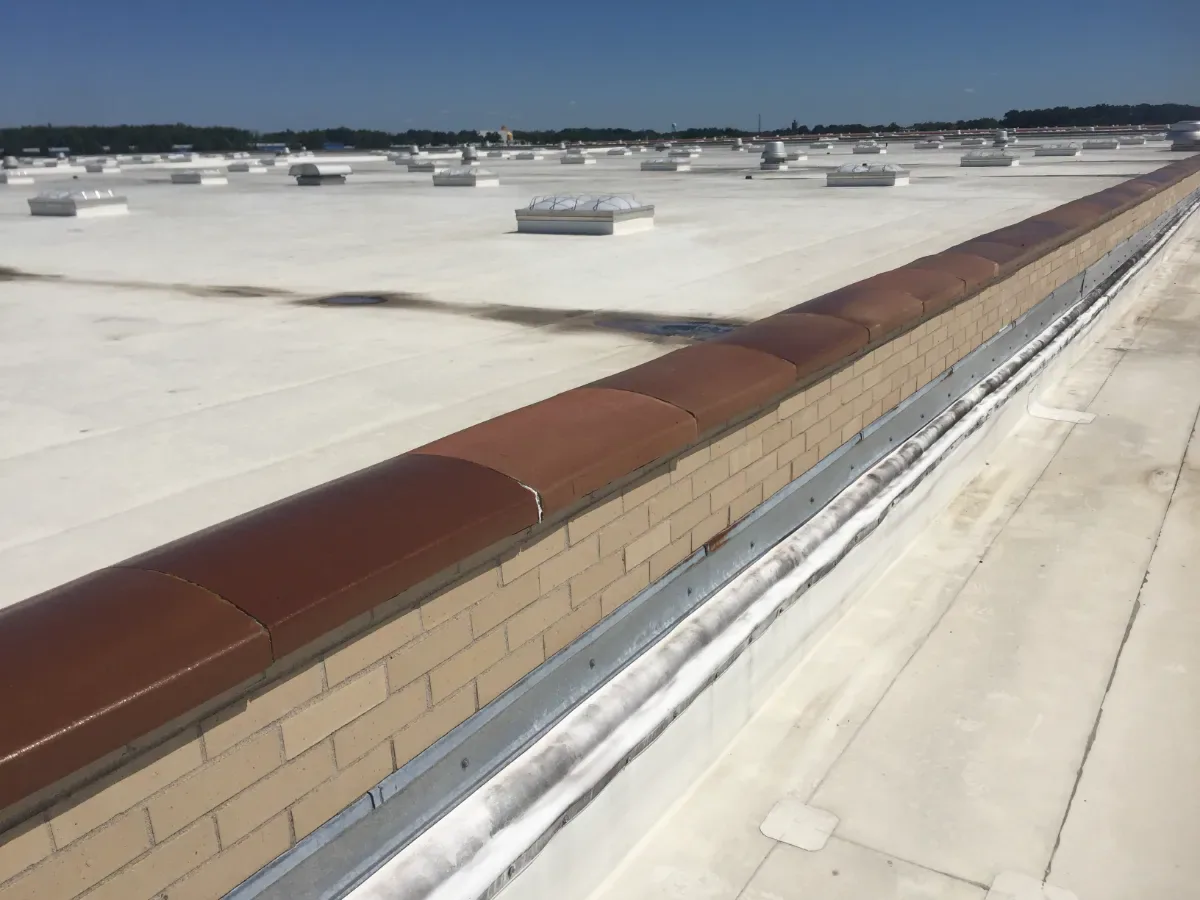
Because foam is bonded to the deck across its whole area, it resists uplift well when the bond is sound. Hurricane Bob sent a surge that peaked at 5.8 feet in New Bedford in 1991, with gusts to 89 mph over Buzzards Bay, and Hurricane Carol put a record 20-foot storm tide at New Bedford in 1954. Neither event tells us how a given roof will behave, but both are reasons to probe the edge terminations after any major storm. The weak points are the edges, where the foam is terminated against metal, and the places where the foam has been separated from the deck by moisture. We probe at the edges, tap for hollow spots and look at the edge metal for loose fasteners. Hail and heavy foot traffic can dent the foam, so we mark any depressions and see whether the coating is cracked over them. Rooftop units sit on curbs that are sprayed into the surface, and the transition between curb and field is where we expect to find the first cracks, since the two move at different rates in a cold snap.
When is a recoat enough, and when does the foam need replacing?
If the foam is dry and well bonded and the coating is worn, a recoat renews the roof. A silicone coating tolerates ponding better, and an acrylic coating costs less where water drains well. If core cuts and a moisture scan show wet foam across more than a small area, the wet foam is cut out and replaced, or the roof is removed. The building code is part of the decision, since the scope is reviewed under Massachusetts' 10th Edition, which follows the 2021 International Building Code. The cost drivers are the area of wet foam, the coating system chosen and the access around the building.
Which buildings are good candidates for foam?
Foam suits roofs with many penetrations and irregular shapes, since it flows around them and needs no seams at pipes, supports and curbs. It also adds insulation value in the same pass, which reduces the layers a crew must bring to the roof. New Bedford Harbor was the most valuable commercial fishing port in the country from 1999 to 2019, and an owner of a cold-storage or processing building near the harbor gains from continuous insulation over the roof deck. Owners in the New Bedford waterfront weigh foam against a rubber membrane when the roof has many curbs. Application needs dry, mild weather and low wind, so most foam work is scheduled for the warmer months. A roof opened in a New England autumn can be dried in with a temporary membrane, but foam itself waits for conditions that allow it to cure. The plan states which sections are done in which window.
Commercial Roofing Questions
Does foam need to be recoated?
Yes, the protective coating wears and is renewed at intervals. We inspect it each year, so a thin spot is recoated before the foam is exposed.
Can foam be applied over an existing roof?
Often, if the existing roof is dry and secure. A moisture scan and core cuts confirm it, since foam sprayed over wet insulation traps the water.
Why does weather matter during application?
The foam needs the right temperature, low wind and a dry surface to expand and bond properly. Overspray also drifts, so cars and neighboring buildings are protected.
What damages foam most often?
Foot traffic, dropped tools and worn coating. Walkway pads protect the paths to equipment, and we mark any dent or cut so it can be repaired before it leaks.
How is a foam roof repaired?
The damaged area is cleaned and dried, any wet foam is cut out, new foam is sprayed, and the coating is restored over the patch with an overlap onto sound material.
Ready to review the roof scope?
Request a Roof AssessmentKeep Reading