Service Areas
Commercial Roofing in Swansea, MA
Commercial roofing in Swansea, MA: highway retail, medical and office complex roofs, curb and seam repair, drainage and tenant-friendly replacement planning.
Request a Roof Assessment
Which finding on a medical office roof matters most to the tenants below it? Moisture, because a wet ceiling in an exam room or a records area takes a suite out of service faster than any other roof problem. The medical and office buildings in Swansea cluster beyond the old Swansea Mall, where Route 6 meets Route 118, and an inspector arriving on one of those roofs goes to the drains and the curbs before the field.
Most of Swansea's retail businesses sit along its highways, and Route 103 has a retail stretch of many smaller businesses. Between the offices and the retail strips, the town has a spread of low-slope roofs with rooftop equipment and a variety of tenants, each with different tolerance for noise, dust and interruption. A commercial roof inspection sorts out which roof is which before any repair is proposed.
What does a medical or professional office need from its roof?
A medical or professional office needs a dry interior, quiet work hours and a clear record of what the roof is. We start by identifying the membrane, the insulation and the number of rooftop units, then probe the seams and flashing around each unit. A leak above a records room or an exam room has a cost beyond the repair itself, so we trace the water to its entry point instead of treating the stain.
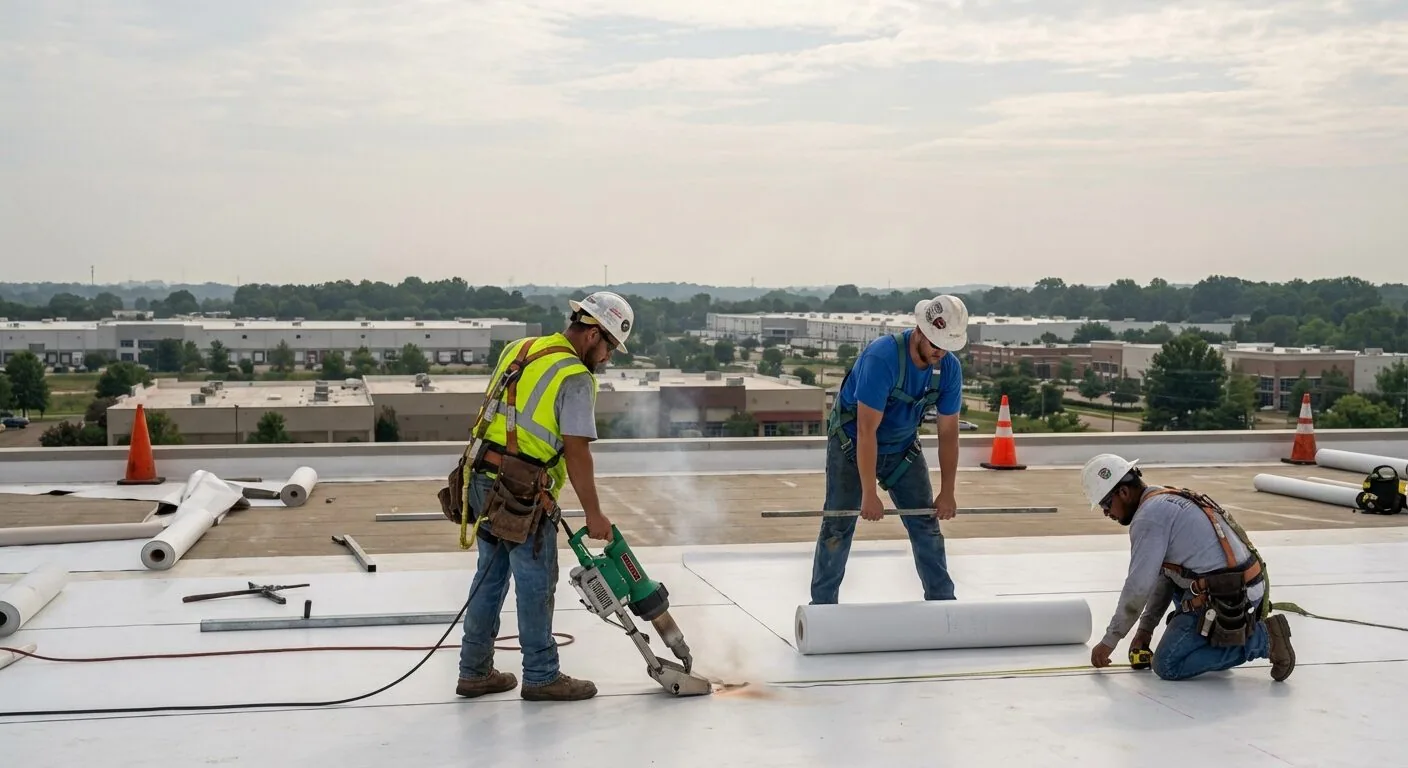
Noise and dust are the other concerns. Tear-off is loud, and a patient waiting room is a poor place for it. We work with the property manager to schedule noisy tasks outside appointment hours, protect interior spaces below and close the roof each day. An occupied building reroofing plan is written with those limits in view and approved before the first day.
How do highway retail roofs age differently?
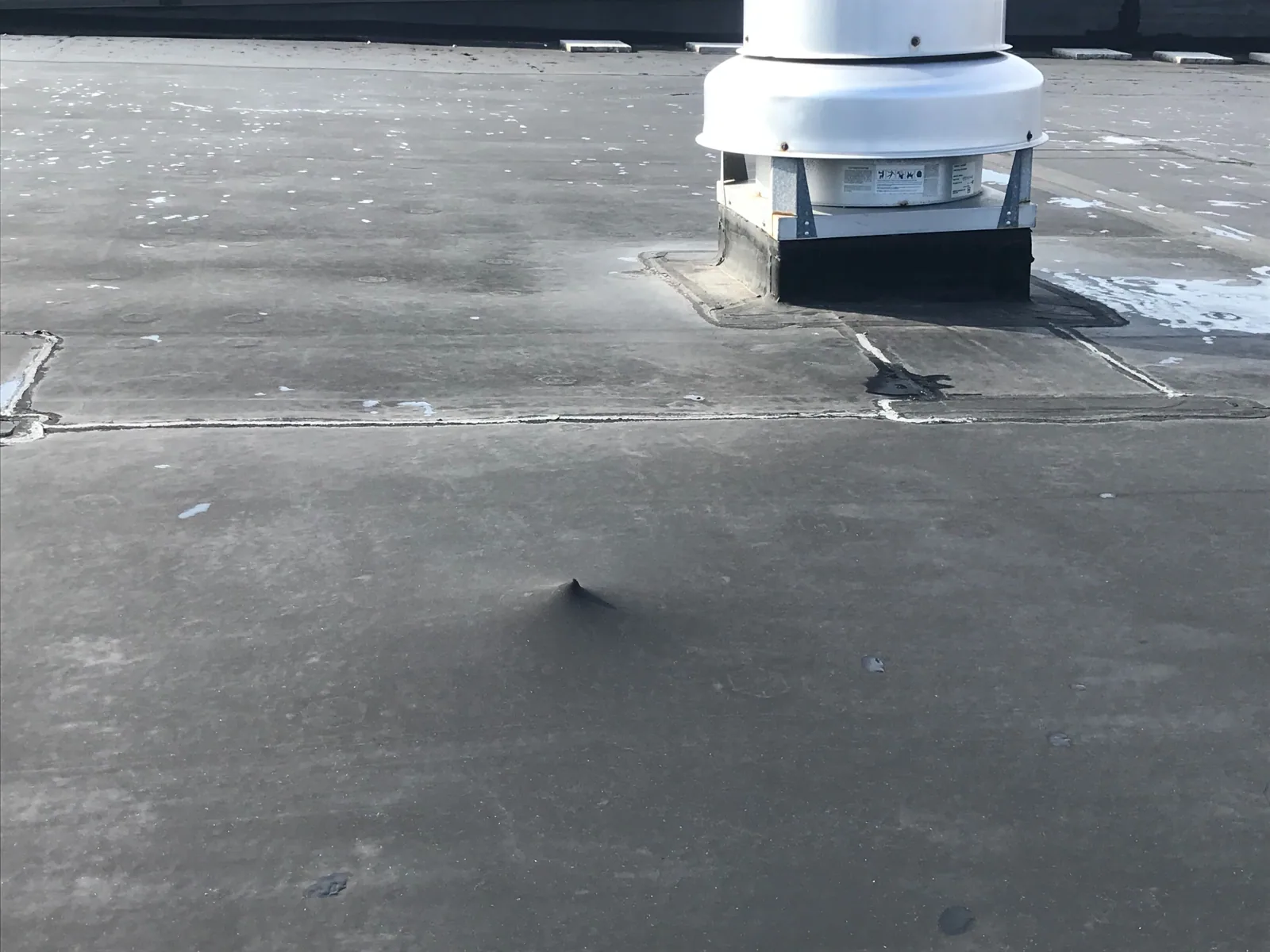
A retail strip along Route 6 or Route 103 may have a long, shared roof with several tenants and a mix of equipment. The membrane is walked on by service technicians, and every unit is a chance for a puncture, a loose curb or a flashing that was never finished. Wear shows as ruts along a service path, patches where a tool went through the sheet, and fasteners at the perimeter that have worked loose.
The other common finding is grease. A restaurant tenant's exhaust deposits grease on the membrane near the fan, and grease attacks some membranes. If we find it, we note the extent and the membrane type, and a membrane puncture repair or a localized replacement may be needed. The scope names the tenant's unit so the landlord can allocate the cost fairly.
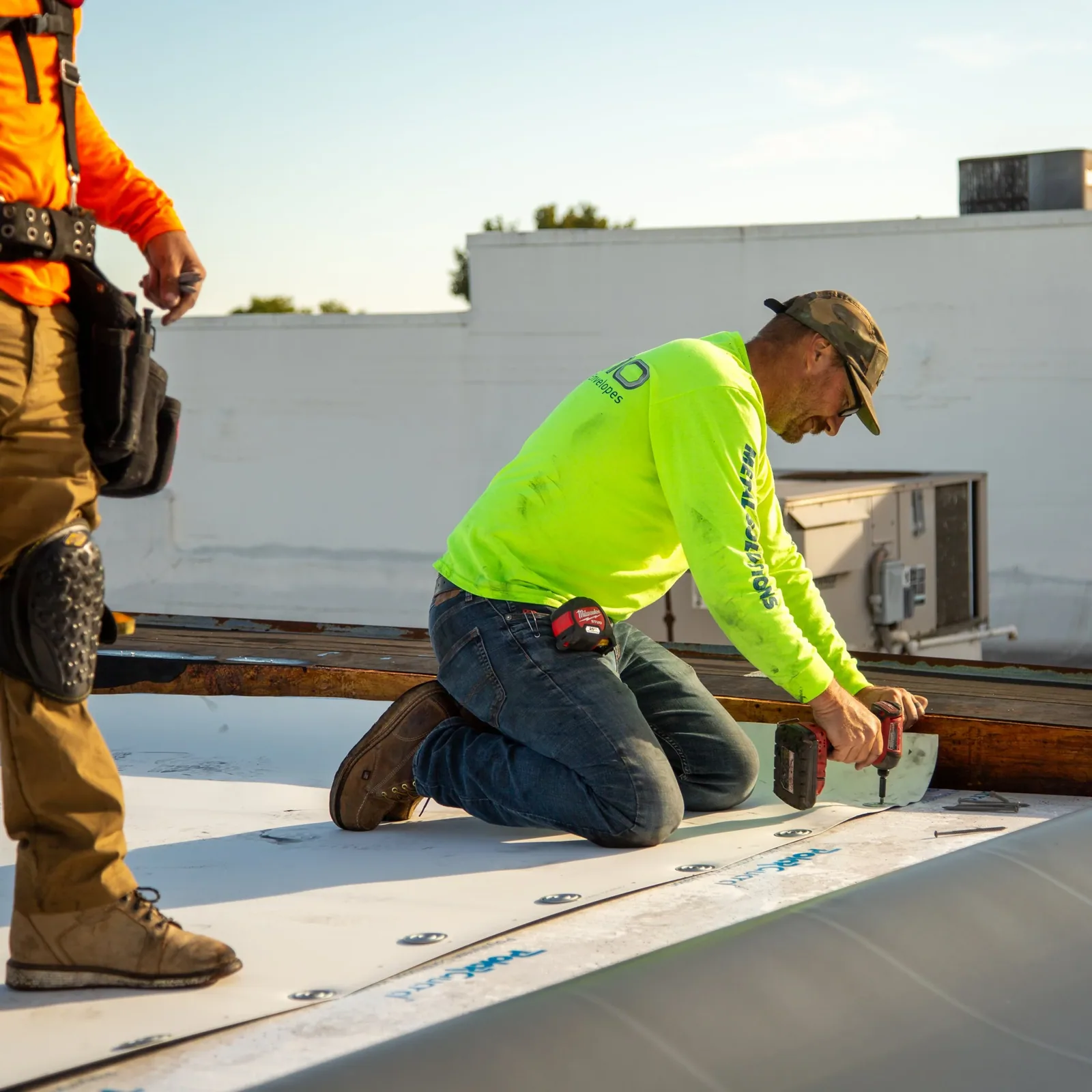
Walkways are a simple protection that is often missing. Where technicians cross the roof to reach a unit, a path of walk pads over the membrane spreads the load and keeps tools and boots off the seams. We mark the routes that technicians already use, recommend pads where wear is visible and show them on the roof plan, so the next service visit follows the path and not a shortcut over a lap.
How do the highway exits affect the schedule?
I-195 Exit 5 serves Route 136 and Exit 8 serves Route 6 to Route 118 in Swansea. From those exits a crew and a material truck can reach town, and we confirm the delivery route from the exit to the site before the truck leaves. A building on a busy road may limit where a truck can stand, and a shared lot may need a flagger or an off-hours delivery.
We also plan around the building's own rhythm: lunch rush, appointment blocks, deliveries and trash pickup. The crew starts early, stages materials away from entrances and fire lanes and closes each section by the end of the shift. The property manager receives the plan in writing, and any change in the weather that affects the work is communicated the same day. If a section has to stay open overnight, we cover it and tell the manager exactly where.
What do coastal storms and snow add to an inland retail roof?
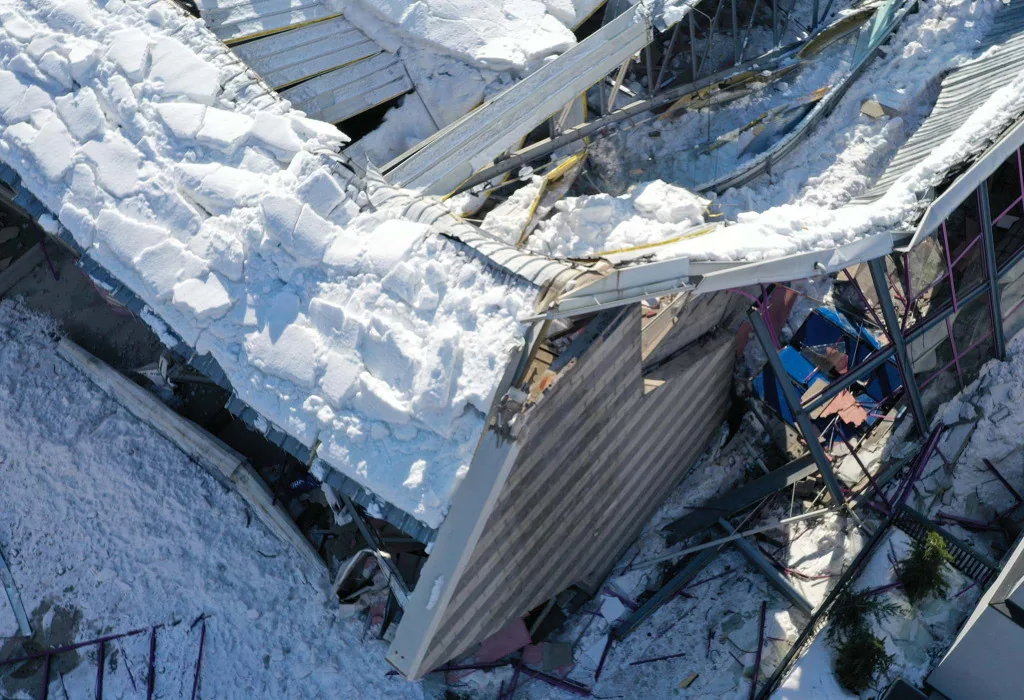
The 1991 passage of Bob meant 89 mph gusts over Buzzards Bay and outages for more than 60 percent of residents in the southeastern corner of two states, and the January 2015 blizzard left Fall River with 24.1 inches. New Bedford's snow comes to about 32.5 inches in an average year, nearly all of it December through March. Those figures belong to Buzzards Bay, New Bedford and Fall River, and they show the loads and winds a roof in this region may face.
A flat retail roof collects snow around rooftop units and against parapets, and meltwater needs a clear route to a drain. We clear the outlets, check the sumps and probe the membrane near them. After a storm, snow and ice roof damage repair starts by sealing openings and then restoring flashing and seams, so the next melt does not find the same weakness.
Drains matter as much as the membrane in a snow year. A strip with only a few outlets sends all its meltwater through them, and a single blocked strainer can fill a section of roof. We clear and flush each outlet where safe, check the sump for settlement and mark any low spot that holds water more than a day or two. If the cause is a blocked line below the roof, we stop at the roof level and tell the property manager that a plumber is needed.
How does an owner choose between repair, recover and replacement?
The choice follows the evidence. Scattered failures and dry insulation point to repair. Wet insulation across a wide area, a membrane that has shrunk or a surface that cracks under a probe points to recover or replacement. A moisture scan and a core cut, if the owner approves one, turn the choice from a guess into a measurement. The scope separates the cost of the repair itself from the cost of access, protection and cleanup, so a property manager comparing bids can see the same lines in each and judge the roofing work on its own terms.
A larger Swansea project is permitted under the state's 10th Edition of 780 CMR, which follows the 2021 IBC and took effect October 11, 2024. For owners with offices or retail in Somerset and Fall River, the same format ranks roofs by condition, and a roof capital plan sets the order of work over several budget years.
Commercial Roofing Questions
How do you protect patients and staff during roof work?
Loud work goes outside appointment hours, the interior below stays protected and the roof is closed each day. The property manager approves the plan before the first day.
What happens if a leak appears over an exam room?
We seal the opening first, then trace the source and report it. The tenant gets a clear explanation of what was found and what the permanent repair involves.
Does grease from a restaurant fan damage the membrane?
It can. Some membranes soften or break down under grease. We mark the affected area, identify the membrane and recommend a repair or replacement of that section.
Who pays when a tenant's unit causes the damage?
That depends on the lease. Our report documents which unit, which curb and what failed, so the owner can allocate the cost on the facts.
Can a strip-mall roof be replaced in phases?
Yes. Phasing by tenant bay or by roof section lets stores stay open. Each phase is dried in before the crew leaves, and the proposal shows the order.
Ready to review the roof scope?
Request a Roof AssessmentKeep Reading