Industries We Serve
Roofing for Insurance Adjusters and Restoration Contractors in New Bedford, MA
Dated roof documentation, event-versus-wear findings and temporary protection for adjusters and restorers on commercial storm claims near New Bedford, MA.
Request a Roof Assessment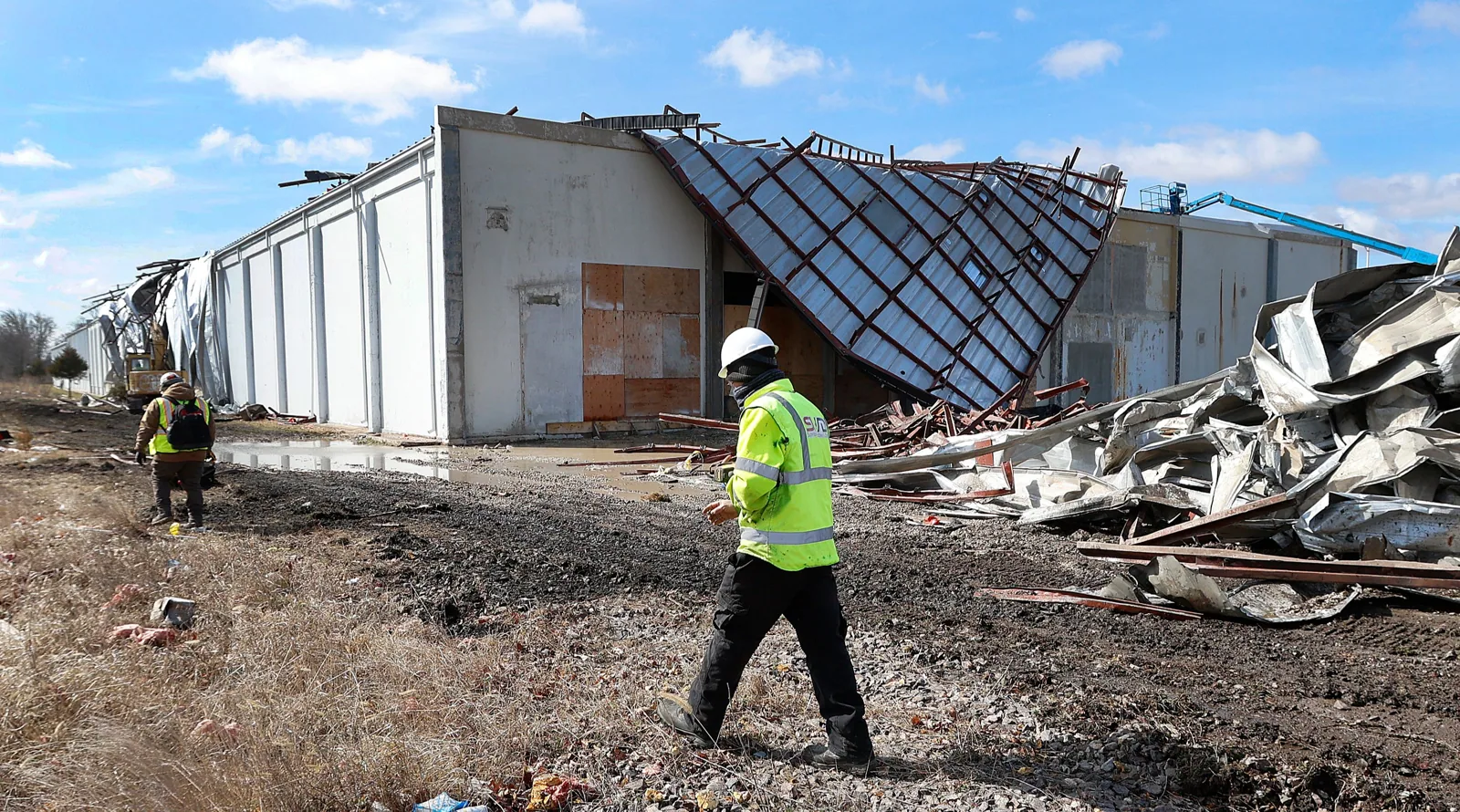
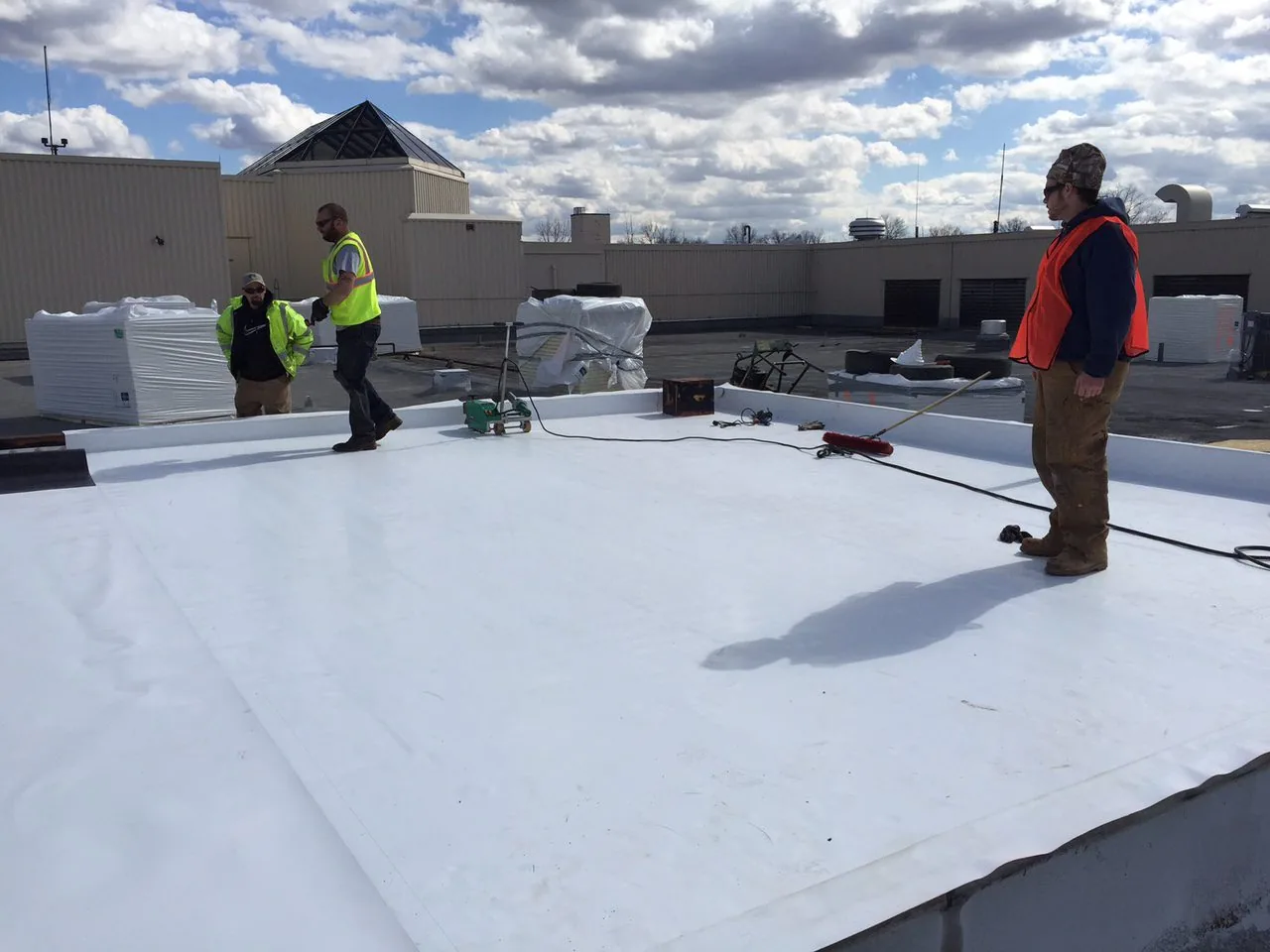
What did the roof look like the day before the storm, and who can prove it? An adjuster near New Bedford, MA asks that of every commercial claim, and the answer is often a few photographs of the parking lot and a repair invoice from a different year. The first thing an inspector finds on a storm-claimed roof is that wind damage and age damage sit side by side: a peeled corner next to a seam that has been opening for years, a dent in edge metal next to rust that predates the weather. We probe the seams, photograph each finding with a location and mark on the plan which items belong to the event and which to wear.

That separation is the only thing that makes a claim scope fair to the owner, the carrier and the restoration contractor who has to carry it out.
What does the inspector find that separates the storm from the years?
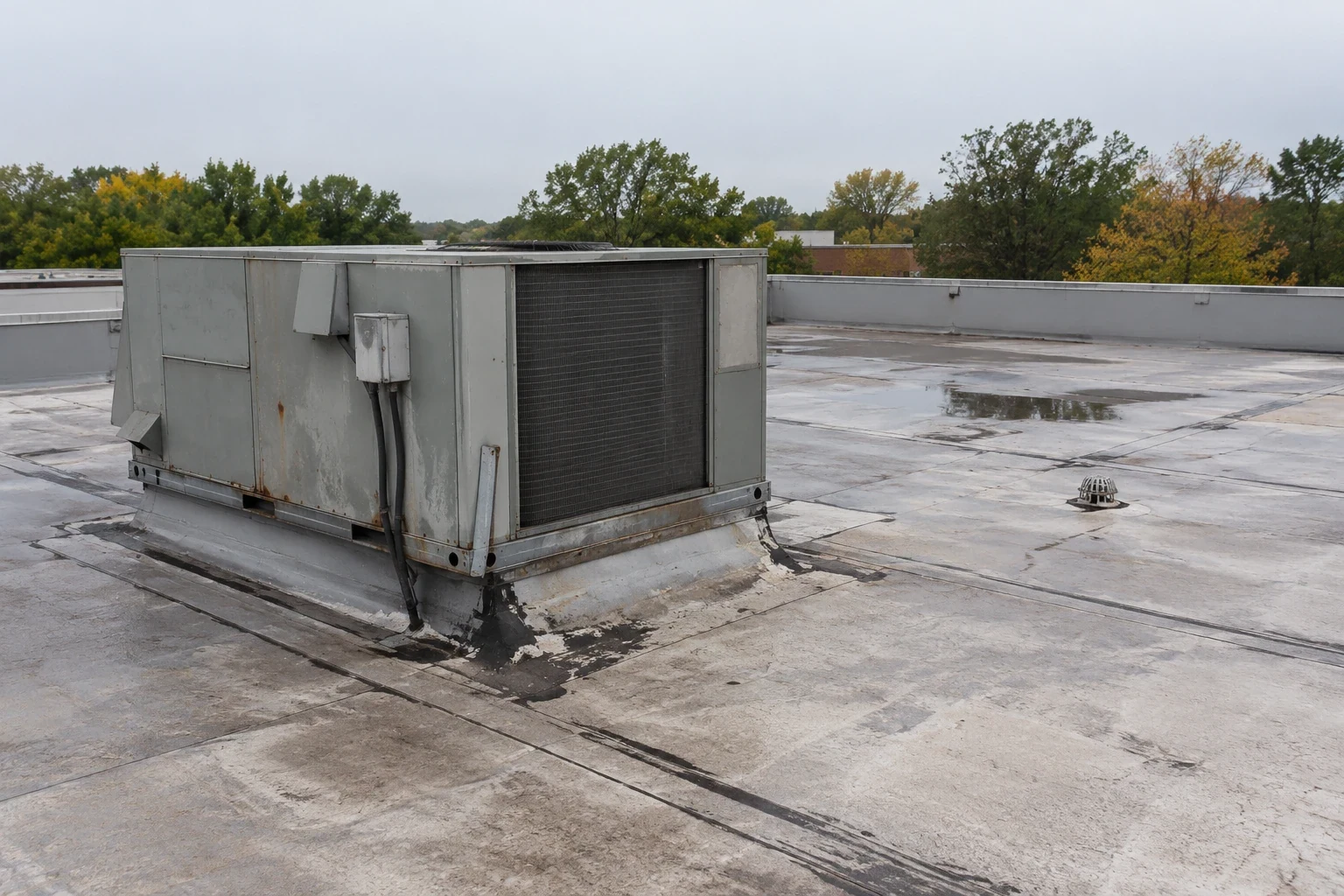
Wind leaves a pattern: edge metal pulled in one direction, membrane peeled from a corner and running downwind, fasteners backed out along one edge, rooftop units shifted on their curbs. Age leaves a different one: surface crazing across the whole field, lap sealant dried everywhere, ponding rings at the same low spots, seams opening along lines that match the original welds.
We mark each pattern on the plan, take wide, medium and close photographs, and record the direction and extent of each finding. Where moisture is suspected, we scan and cut cores to see whether insulation was wet before the event. The result is a report an adjuster can follow without a second visit.
Rooftop equipment tells part of the story. A unit that has shifted on its curb, a dented hood or a torn refrigerant line points to a force, and the direction of the shift matches the direction of the wind. Corrosion at a fastener, on the other hand, points to years of moisture. We photograph both, so the file shows which is.
Why does the dated record decide the scope?
A claim is a question about before and after. Without a before, the after can only be argued. A roof with a dated inspection report, photographs and a repair history lets the adjuster tie the damage to the event and lets the owner show what was sound. A roof with no record leaves both sides estimating.
That is why we encourage owners to keep a roof condition report current, and why our roof insurance claim assistance starts with whatever records exist and fills the gaps with a documented walk. The file we deliver separates observed damage from assumptions and states what could not be inspected.
Restoration contractors benefit from the same discipline. A scope tied to a documented finding is easier to approve, easier to price and easier to defend in a later review, and it spares everyone the cost of redoing work that the carrier declined to pay for on the first pass.
Where have storms tested the region's roofs?
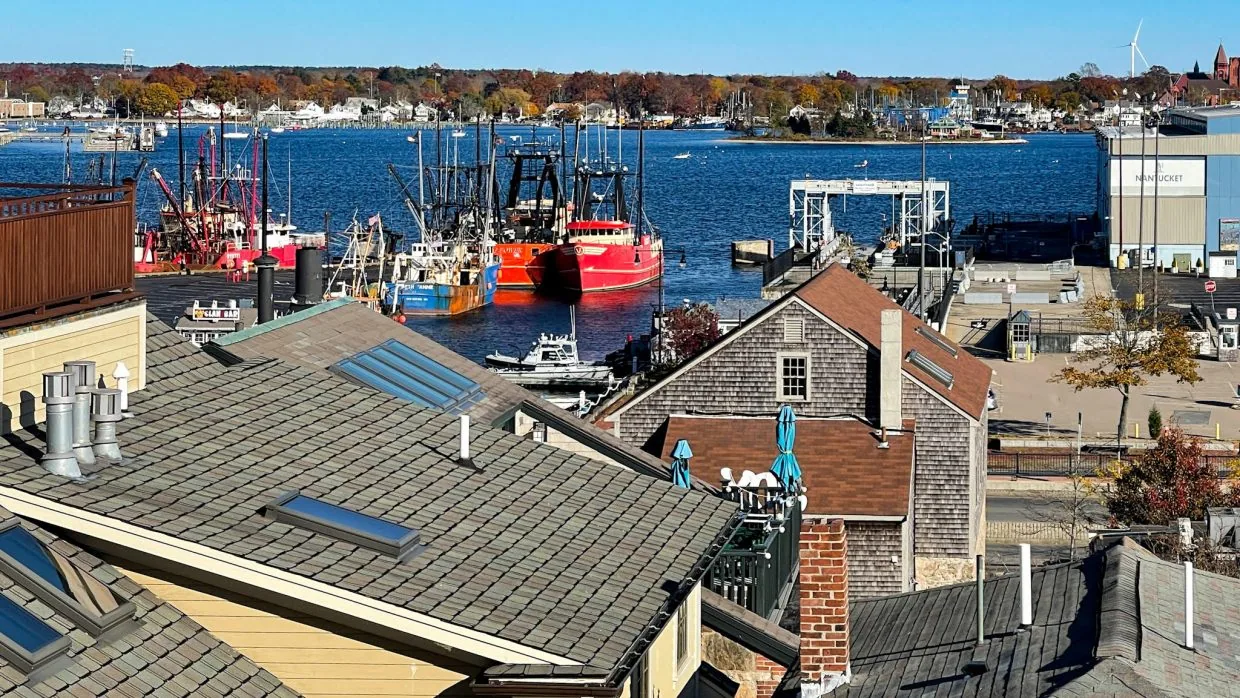
Bob in 1991 pushed a surge of 10 to 15 feet into Buzzards Bay, cut power to more than 60 percent of residents of southeast Massachusetts and southeast Rhode Island and raised 89 mph gusts over the water. A record 20-foot storm tide came to New Bedford with Carol in 1954, and the 1938 New England hurricane had left the city under eight feet of water. Hurricane Sandy on October 29, 2012 hit Westport at about 70 mph and caused power outages.
These are the reference events an adjuster can use to calibrate a claim. They do not prove damage to a particular roof, which is why the inspection matters. We read the roof against the storm date and record the evidence either way. For the roof work itself, hurricane damage roof repair follows the same record.
A restoration schedule also depends on materials. After a widespread storm, membrane, insulation and edge metal can have long lead times, and temporary protection may need to hold for weeks. We tell the adjuster and the owner early what the lead times are and what the temporary work will cost to maintain.
How does snow loading figure into a claim?
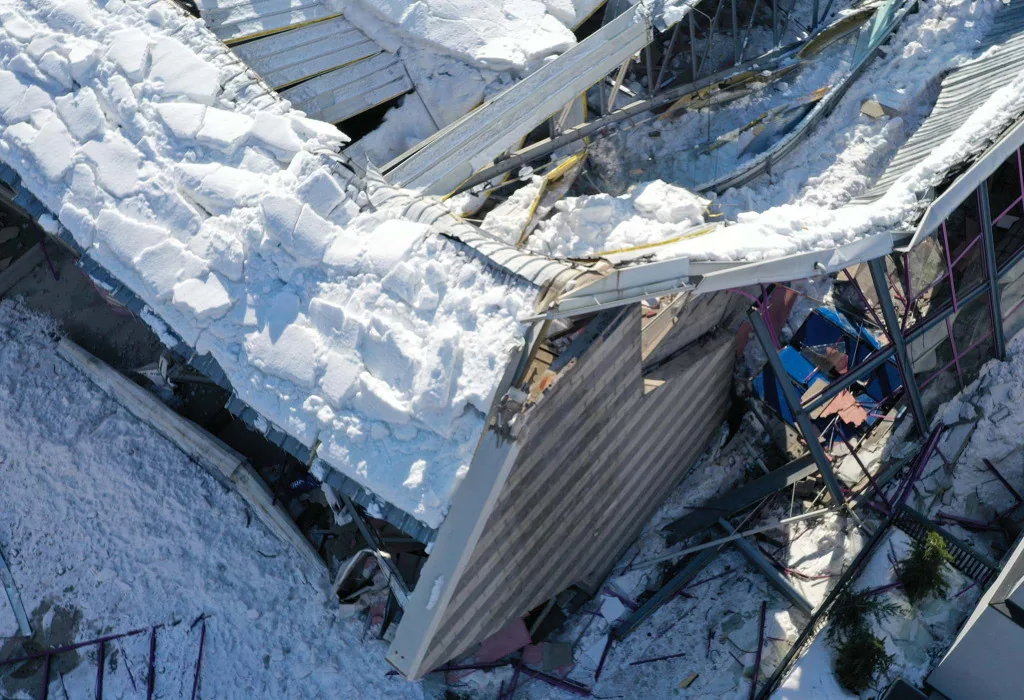
Claims for snow turn on a record that includes 32.5 inches in an average year and, in January 2015, 24.1 inches on Fall River and 26.0 inches in East Freetown. Snow damage claims turn on collapse, deflection, ice-dam leaks and drain failures, and each leaves marks: bent purlins, cracked sealant at the eave, stained decks below blocked drains.
We record deflection, check drain function and photograph ice-related damage with dates. After a heavy snow, a quick inspection that shows the roof was sound before the load is as valuable as one that documents the damage after it. Our snow and ice damage repair work follows from that record.
Interior damage is the other half of a snow claim. Water from a blocked drain or an ice dam travels along the deck before it enters, so the stain does not mark the source. We trace the path to the roof and record it, which helps the interior restoration scope match the roof findings.
What does temporary protection look like on a claim?
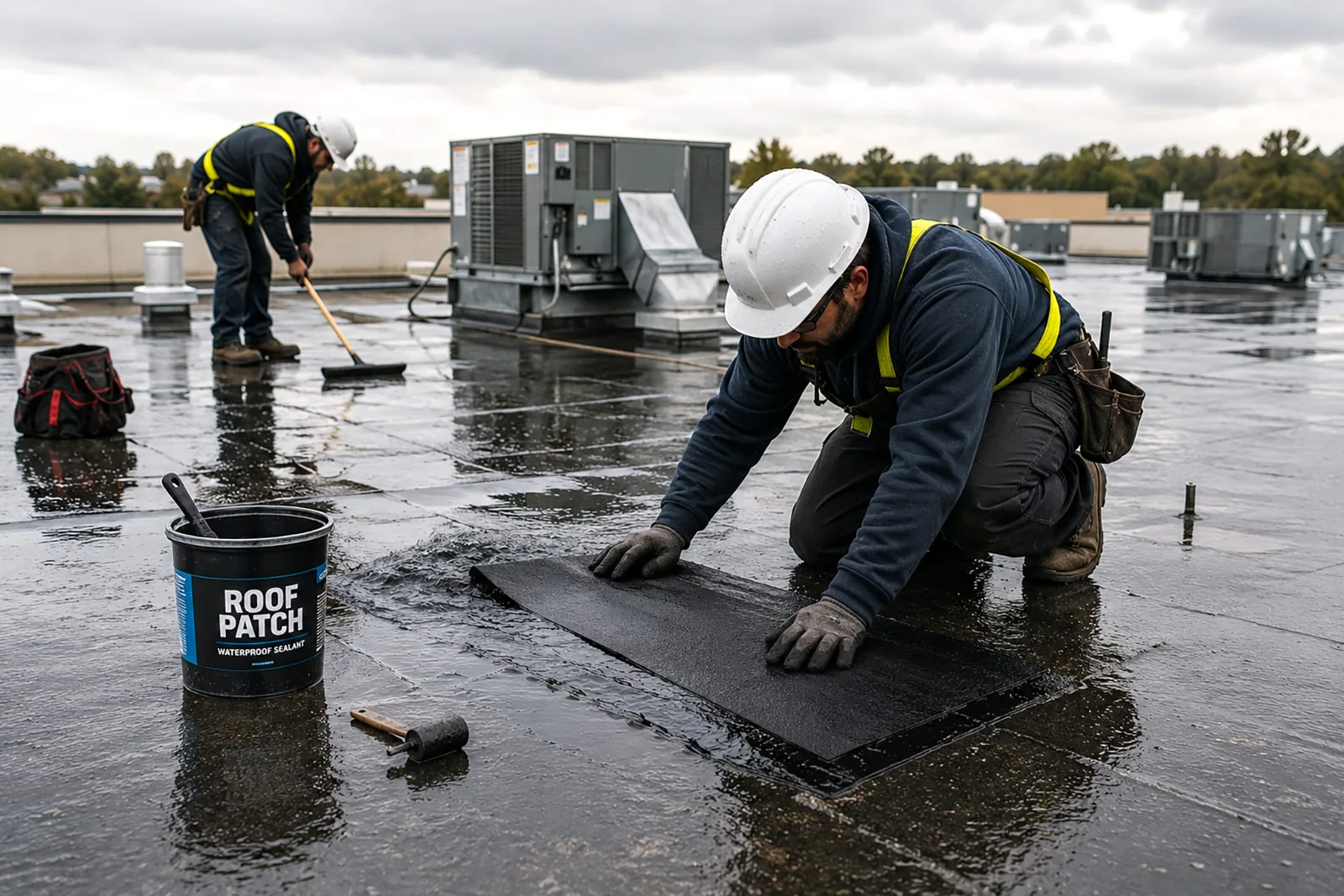
Temporary protection stops further loss, and the carrier expects the owner to arrange it. Tarps, patches, cleared drains and secured metal are the usual items, and each should be photographed before and after with the date and a note of materials and labor. A good temporary job protects the evidence as well as the interior, since it leaves the damaged area visible.
Our emergency roof repair crews respond at any hour, and our storm damage roof repair scope picks up once the extent of damage is known. A permanent repair must meet 780 CMR 10th Edition, the Massachusetts code based on the 2021 International Building Code and in effect since October 11, 2024, which can affect the scope.
Where wind is the claimed cause, we also look for the things that are not wind: construction defects, poor flashing, missing fasteners that were never installed. Those are different problems with different responsible parties, and naming them correctly at the start saves a dispute later.
What should an adjuster or restoration contractor ask a roofer?
Ask what methods were used to separate event damage from wear, what could not be inspected and why, and how photographs are tied to locations. Ask whether the roofer will meet the adjuster on the roof, and how disagreements about scope are documented.
Ask also how the roofer works with a general contractor who is rebuilding interiors, since the roof must be dry before the finish trades return, and how the findings are shared with a property management company that holds the lease.
Commercial Roofing Questions
What does a useful roof report for a claim contain?
A roof plan with areas lettered, wide and close photographs tied to those letters, a list of findings with direction and extent, moisture readings where relevant, a statement of what was inaccessible and a column separating event damage from wear. It does not decide coverage; it gives the carrier the facts to decide on.
Can a roofer meet the adjuster on the roof?
Yes, and it often shortens the claim. A joint walk lets the adjuster see the findings directly, ask questions and agree on the scope. We bring the plan and photographs, mark the items in dispute and record the outcome so the file reflects what was agreed.
How should temporary repairs be documented?
With dated photographs before, during and after, a written description of what was done, receipts for materials and labor, and a note of the location on the plan. That file shows the owner acted to limit loss, and it keeps the damaged area visible for the adjuster.
What if the roof has no inspection history?
Then the first walk builds one. We document current condition, identify what appears to be new damage and what appears old, and note any gaps in the record. Without a baseline, the report relies on the physical evidence on the roof, which is why photographs and moisture readings matter.
Ready to review the roof scope?
Request a Roof AssessmentKeep Reading