Service Areas
Commercial Roofing in Raynham, MA
Commercial roof inspection, repair and replacement for Raynham, MA retail, flex and large-span buildings near the I-495 and Route 24 interchange.
Request a Roof Assessment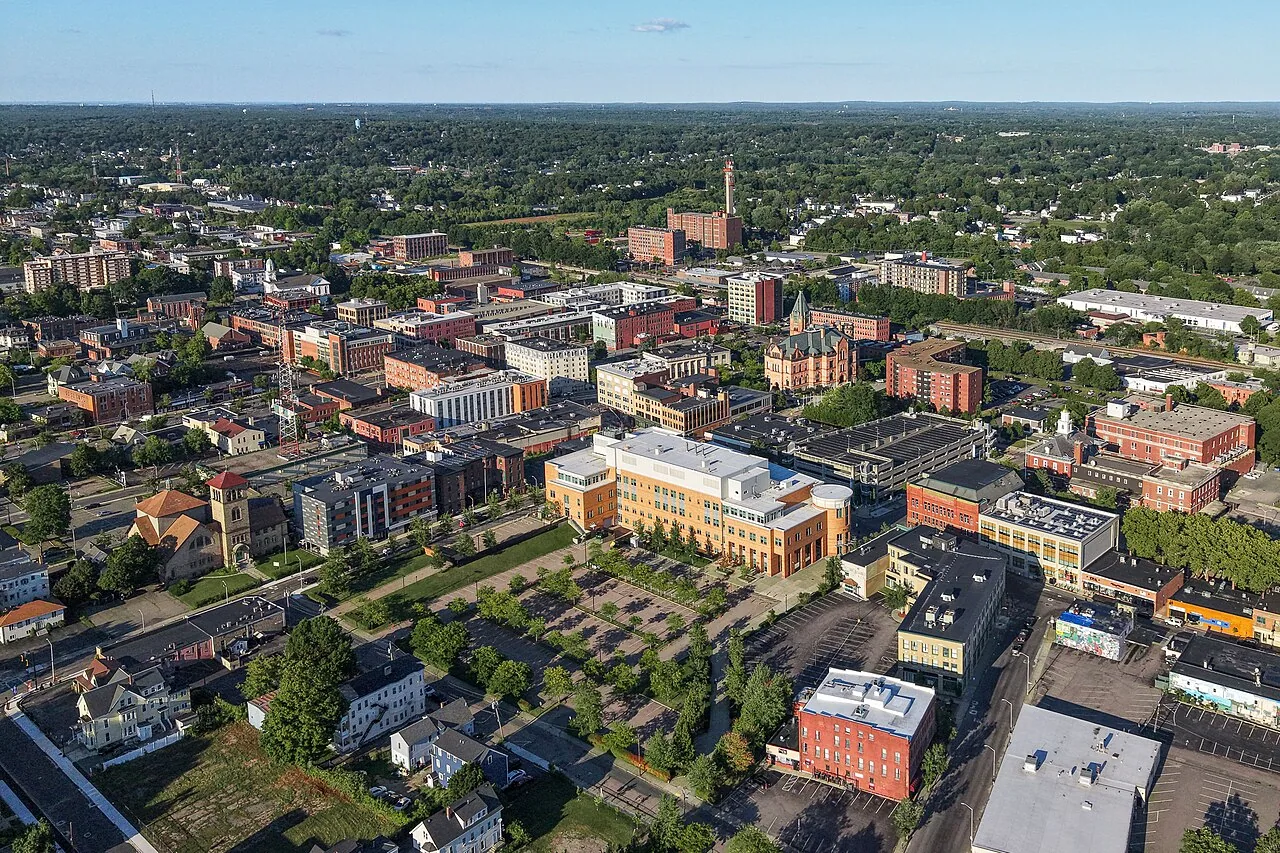
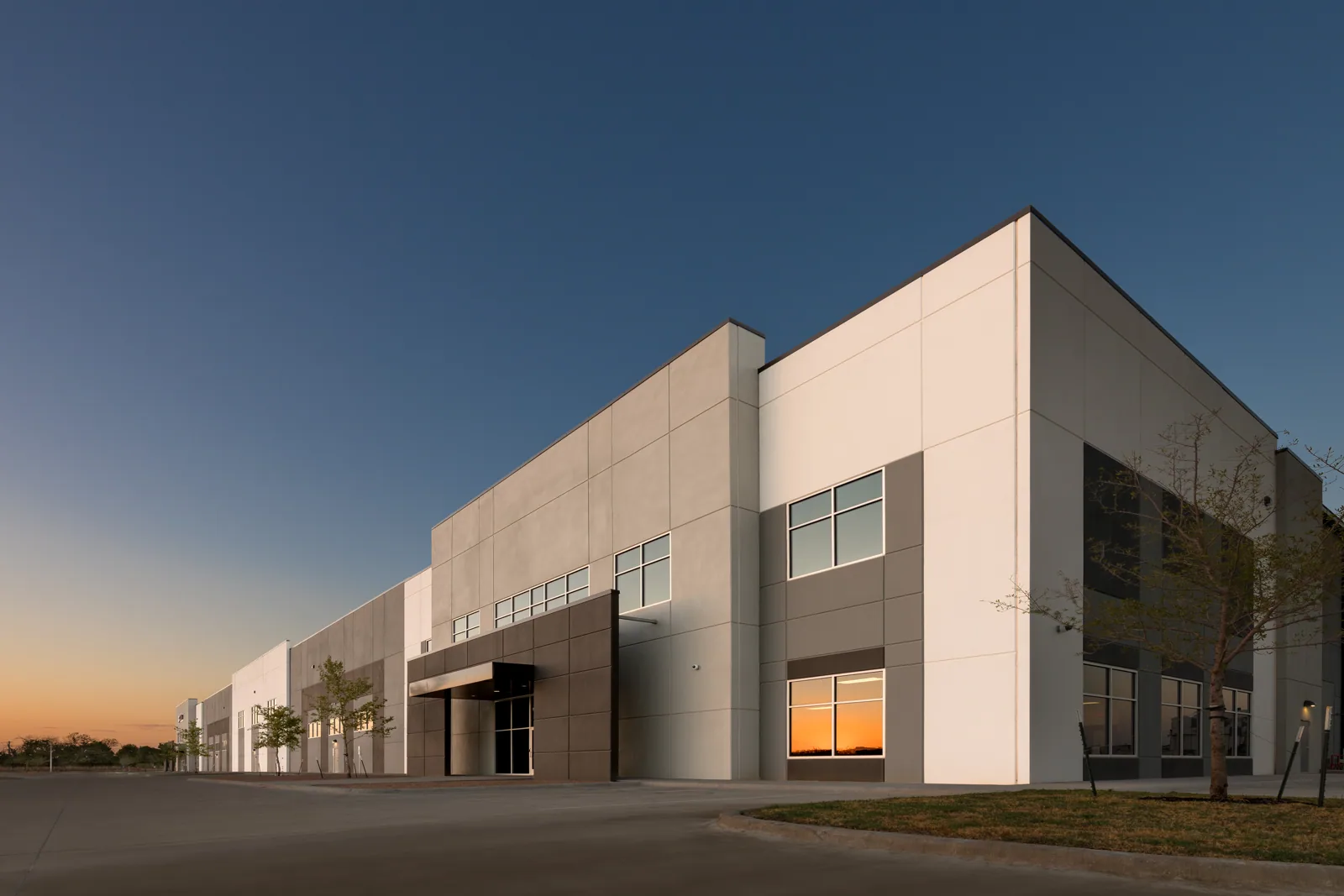
What would a facility director learn from a stained ceiling tile in a building that has changed its use? In Raynham, MA, the answer starts with the roof as it was built and the equipment that has been added since, because every new unit, vent or conduit run cut a hole that someone had to flash. Raynham covers 20.8 square miles at the point where Interstate 495 and Route 24 meet at the Bridgewater line, and the roof work we plan near those interchanges covers retail, service, distribution and large-span buildings.
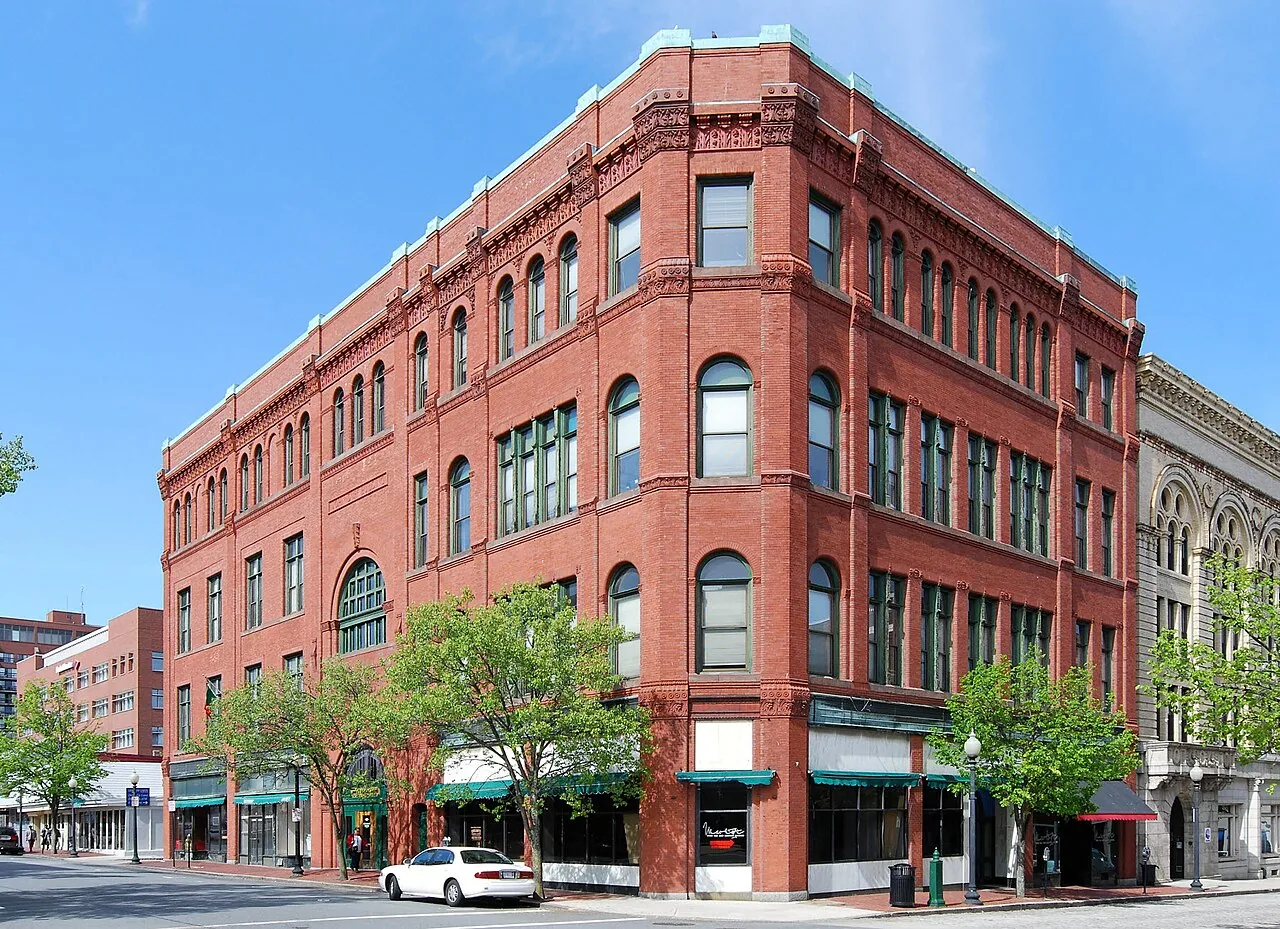
The town lies about 32 miles south of Boston and 22 miles northeast of Providence. We inspect each roof against its present use, mark every finding on the roof plan and walk it with the owner before anything is quoted.
Does a change of use change what the roof needs?
It often does. Raynham Park closed live greyhound racing on January 1, 2010, and the building still hosts simulcast racing. A building whose use shifts can end up with new mechanical loads, new interior finishes and new traffic on the roof, and the roof was seldom designed with that sequence in mind.
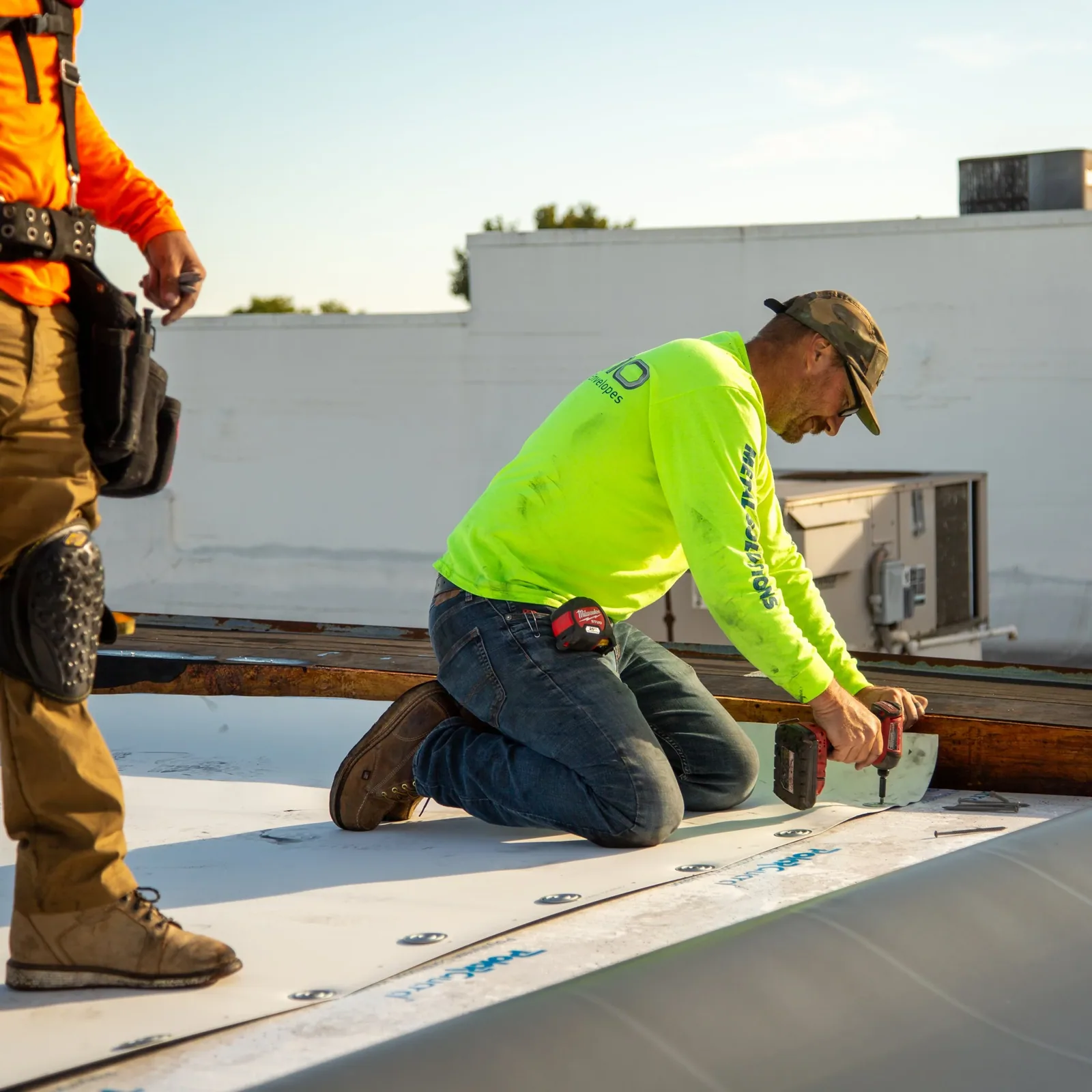
We look first at the penetrations and rooftop equipment, and then at the drains, where debris from added equipment tends to collect. A unit added later may sit on a curb that was never tied into the membrane, and its flashing may be a patch over a patch. Each curb gets a seam probe at the corners and a photograph of the termination, because those corners are where lap sealant cracks first.
Interior changes matter too. New partitions, ceilings and cold rooms alter how heat and moisture move through the roof assembly, and condensation under a membrane can pass for a leak. We compare stain patterns with weather on the day they appeared, and a core cut shows whether insulation has taken on water from above or from below.
How do the interchange and its traffic affect roof work?
Route 24 Exit 20 connects to US 44, and I-495 Exit 22 leads to Route 138, so deliveries and lifts reach buildings by routes that fill at commuting hours. We plan material drops for the early morning, stage lifts away from truck courts and agree on a daily closeout point before the crew arrives.
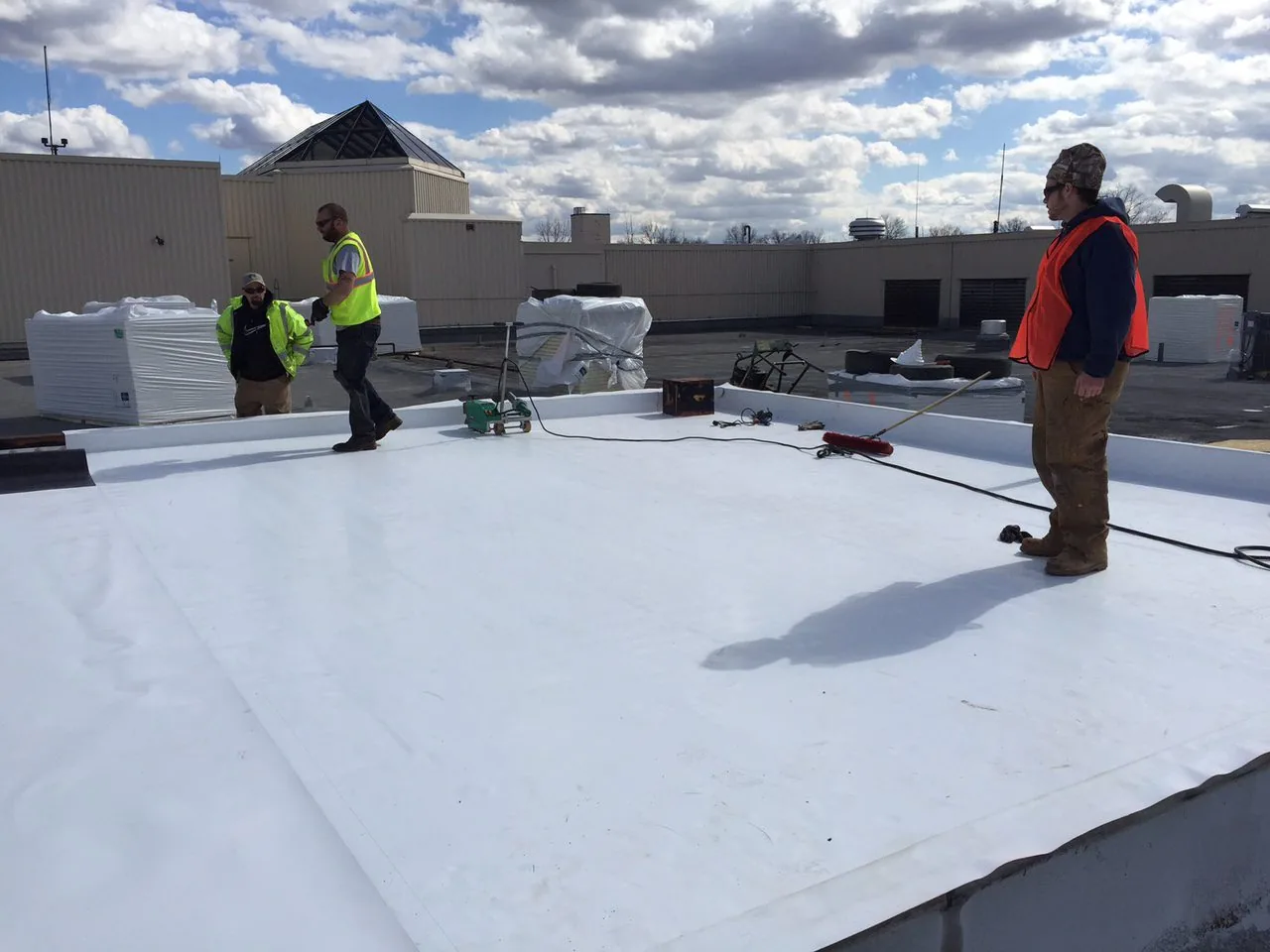
Retail and food tenants add their own limits. Customers cannot cross a work zone, and kitchen exhausts must keep running. We fence the work area, sequence the tear-off by zone and keep the roof watertight at the end of each shift. A reroof on an occupied building depends on those details more than on the membrane chosen.
The written scope names the zone, the staging area, the fire watch if any torch work is planned and the tie-in at the end of each day. An owner who sees that plan before the crew arrives knows what each day on the roof will involve.
Why do edges and parapets come first?
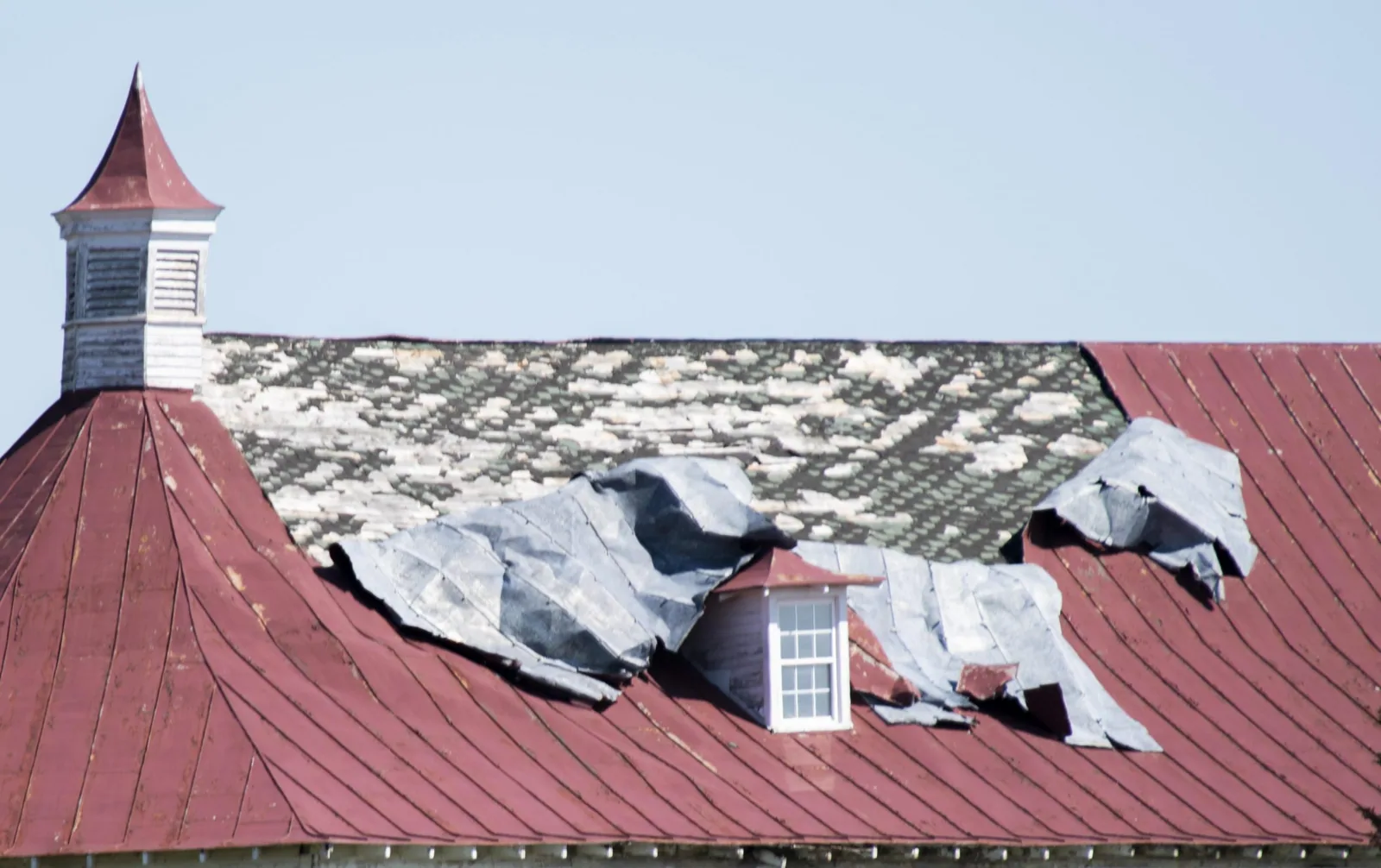
Wind finds the perimeter before it finds the field. Gusts reached 89 mph over Buzzards Bay during Hurricane Bob in 1991. That storm is why the edge metal gets pulled and every gravel stop gets examined here.
At parapets we check the wall-to-roof transition and the through-wall flashing. A flashing that has pulled away leaves a gap that wind-driven rain enters. Our wind damage check after a storm adds a search for lifted sheets, bent trim and displaced ballast.
What does a New England winter ask of a flat roof?
Raynham lies inland. Even so, a flat roof there faces the winter that New Bedford's record describes: about 32.5 inches of snow in a typical year, mostly December through March, with the meltwater and freezes that follow. Drain sumps and tapered crickets decide whether water leaves the roof or waits for the next freeze.
We measure the slope to each outlet, clear debris and mark any low spot that holds water after a thaw. A seam under standing water ages faster, and membrane shrinkage in cold weather pulls on the laps. The report lists each finding by zone so the director can see where winter has done its work.
Ice also forms at roof edges and gutters, and it can force water under the first course of membrane or shingle. We check gutter slope and edge metal laps, since a small gap at an eave lets meltwater travel under the surface and into the wall.
Which membrane suits a Raynham building?
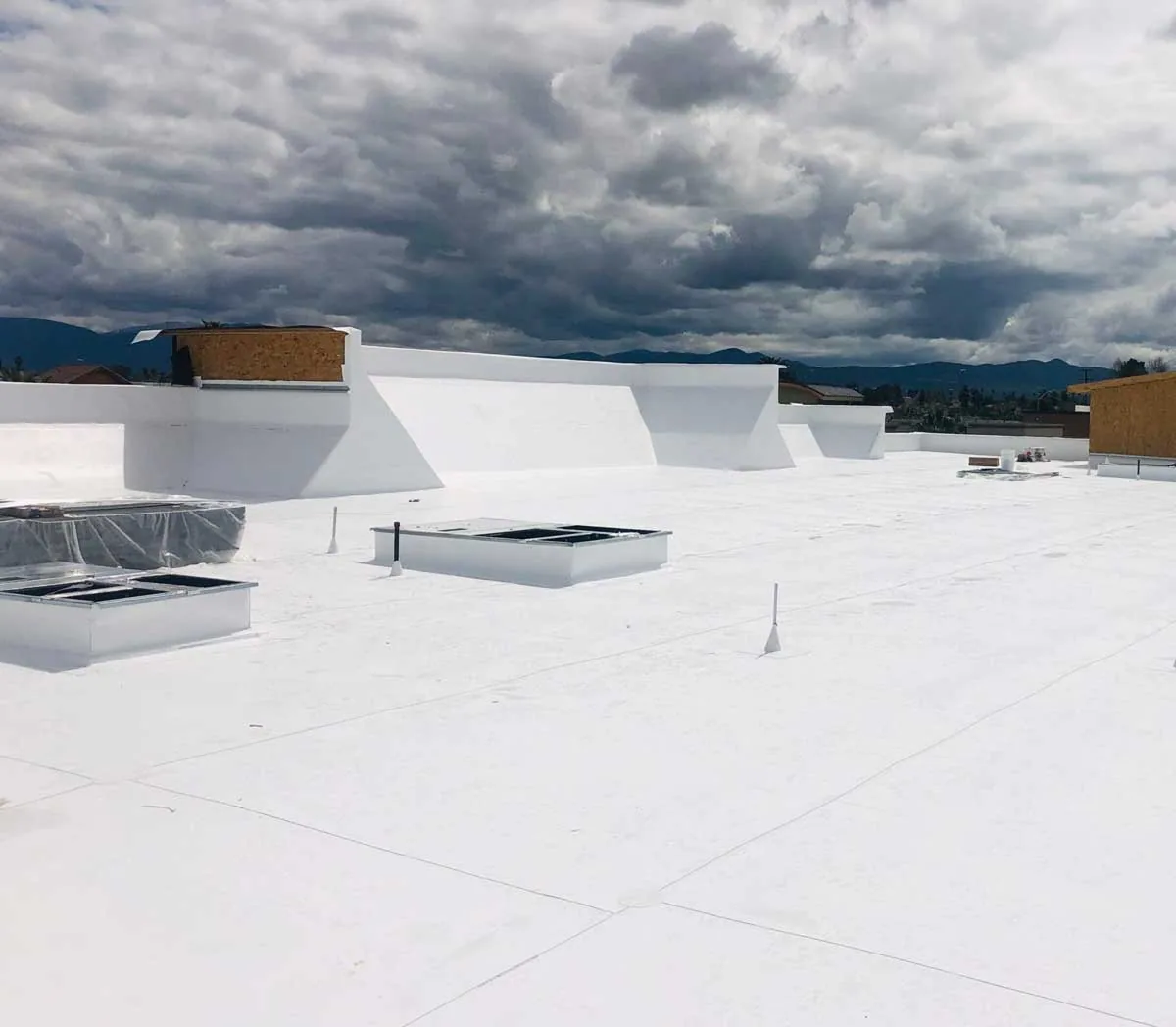
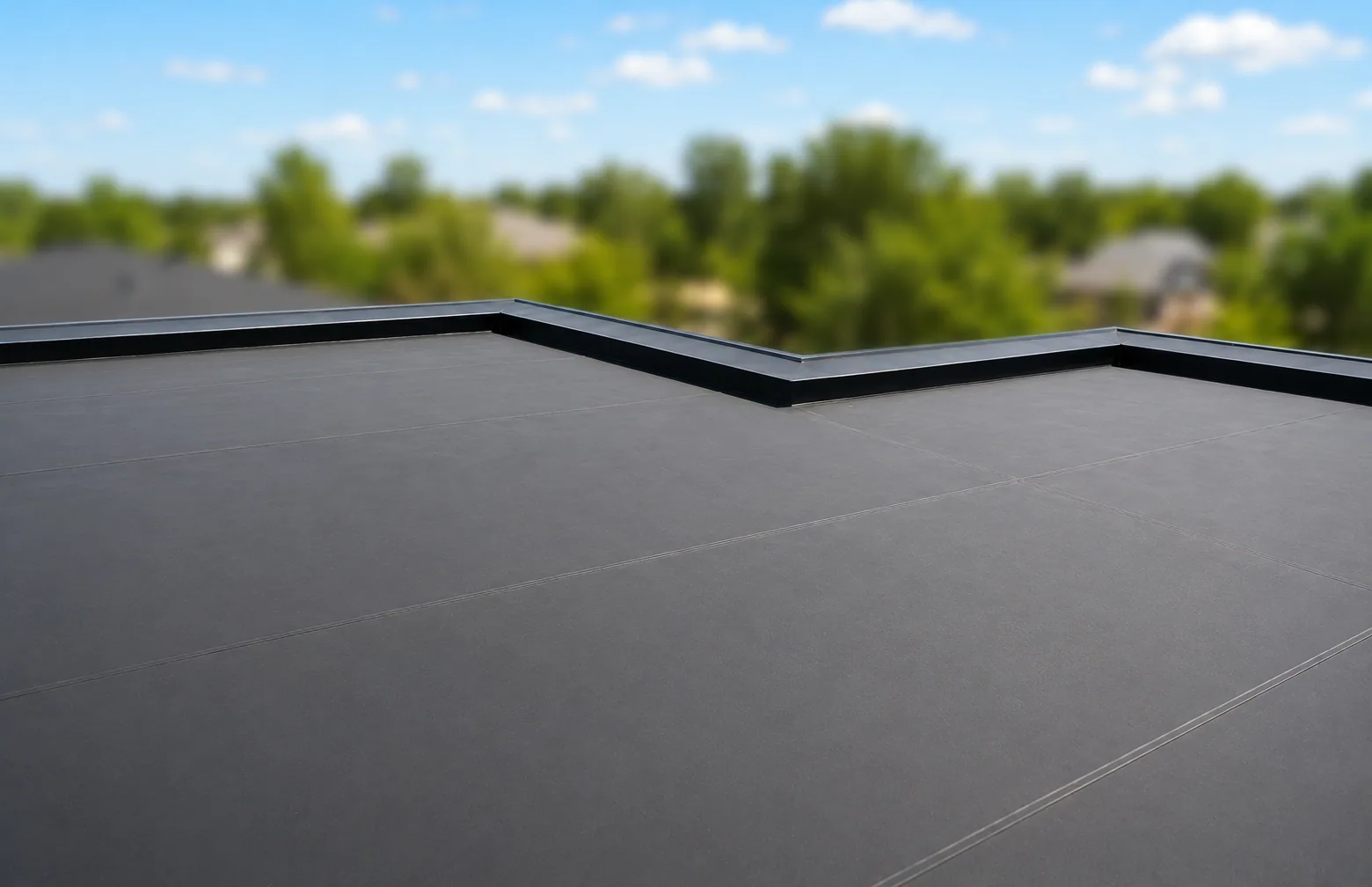
The answer follows the building. A flex or distribution roof with few penetrations often suits a mechanically attached TPO. A roof crowded with units and pipes may be better served by EPDM, which flashes details easily. A large-span building with a wide, open deck needs attention to uplift and attachment pattern.
We pick the system after the core cut, since insulation type and thickness, deck condition and the number of existing layers narrow the choice. A flex industrial roof and an interchange retail roof can end up with different answers on the same street. Cover board over the insulation, fastener density and the wind zone all enter that choice, and the written scope names each one.
How should the owner plan the next few years?
A written condition record turns a leak into a plan. It lists the roof zones, their age and their condition, and it ranks repairs by urgency. A director can then split the work between this year's budget and the next, and avoid a forced replacement after a bad winter. Our roof condition reports are written for that purpose.
Owners in Taunton and Middleborough use the same record. Cost follows area, deck condition, access and penetrations, and the report names each driver. We also give timing for each option, since an owner who can wait for spring may choose a different repair than one who must stop water this week.
Commercial Roofing Questions
How do I know whether a curb leak is the flashing or the seam beside it?
Probe both. A flashing that has pulled from the curb shows a gap at the corner, while a failed seam shows a lifted lap a foot or two away. A moisture scan tells us which one has wet insulation under it.
Can a roof stay in service while a new unit is added?
Yes, if the curb is flashed into the membrane before the unit is set and the penetration is photographed. Setting a unit first and flashing later is how most rooftop leaks begin.
What should the roof file hold for a building that changed use?
The original roof plan, every later addition with its date, the repair history and the latest inspection findings. With those, the next inspection can compare conditions instead of starting from zero.
Does a roof near a highway interchange wear differently?
Trucks and traffic do not touch the roof, but dust, exhaust residue and debris blown from the lots collect in drains and at walls. We clear them at every visit, and we check sumps and scuppers for grit that has packed into place.
Is winter a bad time to repair a flat roof?
Cold slows adhesives and wet weather closes the roof, but a repair that stops active water entry should not wait. We use cold-weather materials for urgent work and schedule the lasting fix for a better window.
How soon can someone look at an active leak?
Send the address, the location of the stain and the date it appeared. We aim to look at an active leak promptly, then explain whether a temporary seal or a full repair is the right next step.
Ready to review the roof scope?
Request a Roof AssessmentKeep Reading