Property Types We Roof
Senior Living Roof Repair in New Bedford, MA
Senior living roof repair and replacement in New Bedford, MA, with moisture checks, protected resident routes and work planned around occupied care buildings.
Request a Roof Assessment
Why does a ceiling stain return above a quiet resident wing after the roof was patched? On a senior living building in New Bedford, MA, the first finding is often a seam or wall transition beyond the room, where wind-driven rain travels under the membrane before it shows inside. We inspect the roof, trace the wet area, and mark the route to the source on a plan. The repair must stop water without disrupting care below.
That means checking the assembly before choosing a coating or replacement. A moisture scan can map suspect insulation, while a hands-on roof inspection checks seams, drains, parapets and equipment curbs. We separate active leaks from aging that can be budgeted, then explain what each choice changes for residents and staff.
What will the roof inspection tell us?
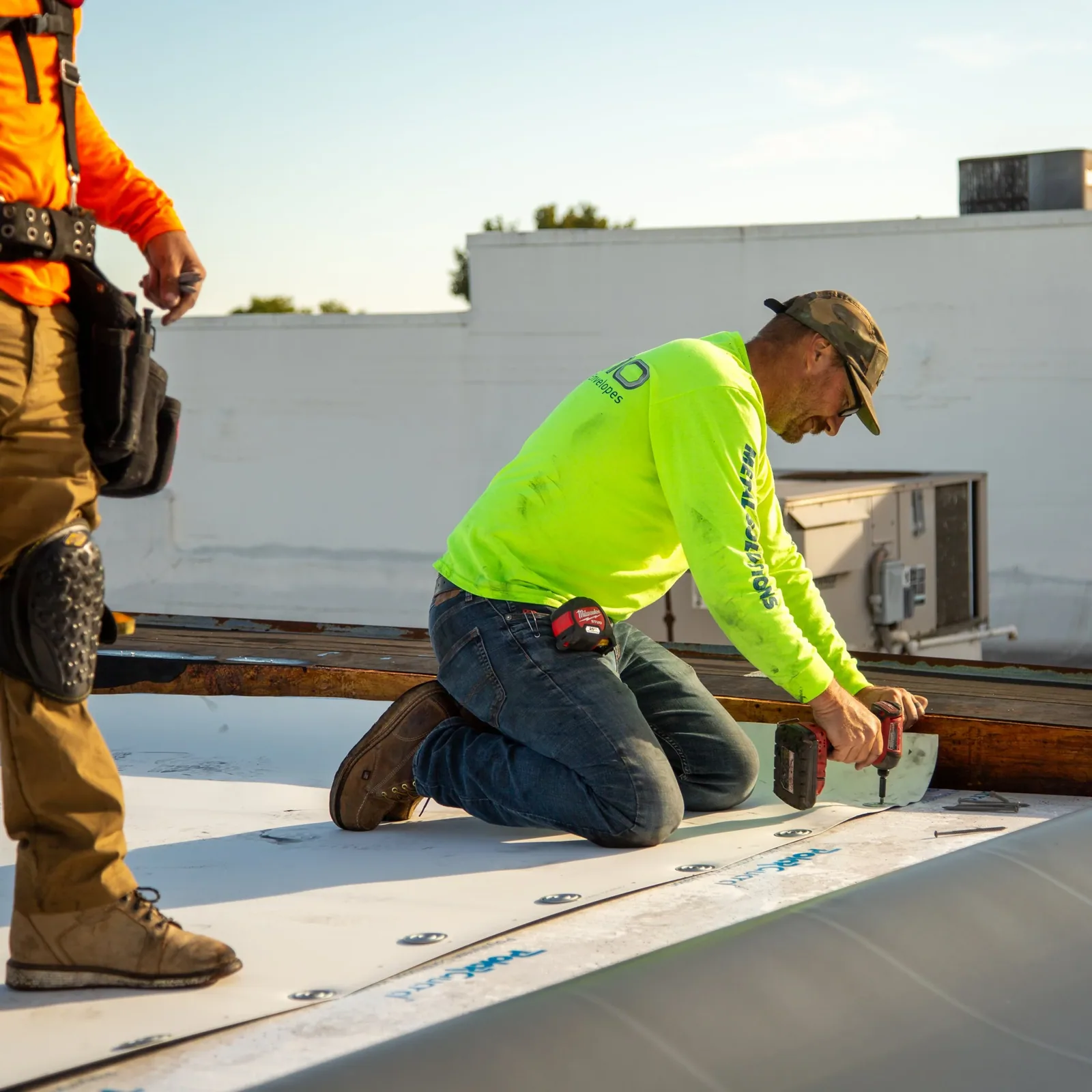
We start with the stain location, recent repair notes and any roof plan the facility can provide. On the roof, a seam probe checks laps that look closed but have lost bond. We inspect flashing at walls and curbs, then check the drains and scuppers for debris, standing water and loose connections. A core cut can confirm whether insulation under a suspect area is wet.
That finding changes the scope. Dry insulation around one failed seam may support a focused repair. Saturated boards across several areas point toward removal or a carefully evaluated recover. The report marks each observed condition and its location, so the maintenance team can compare later visits. We follow the water first, from the stain back to the opening.
How can work fit around resident care?
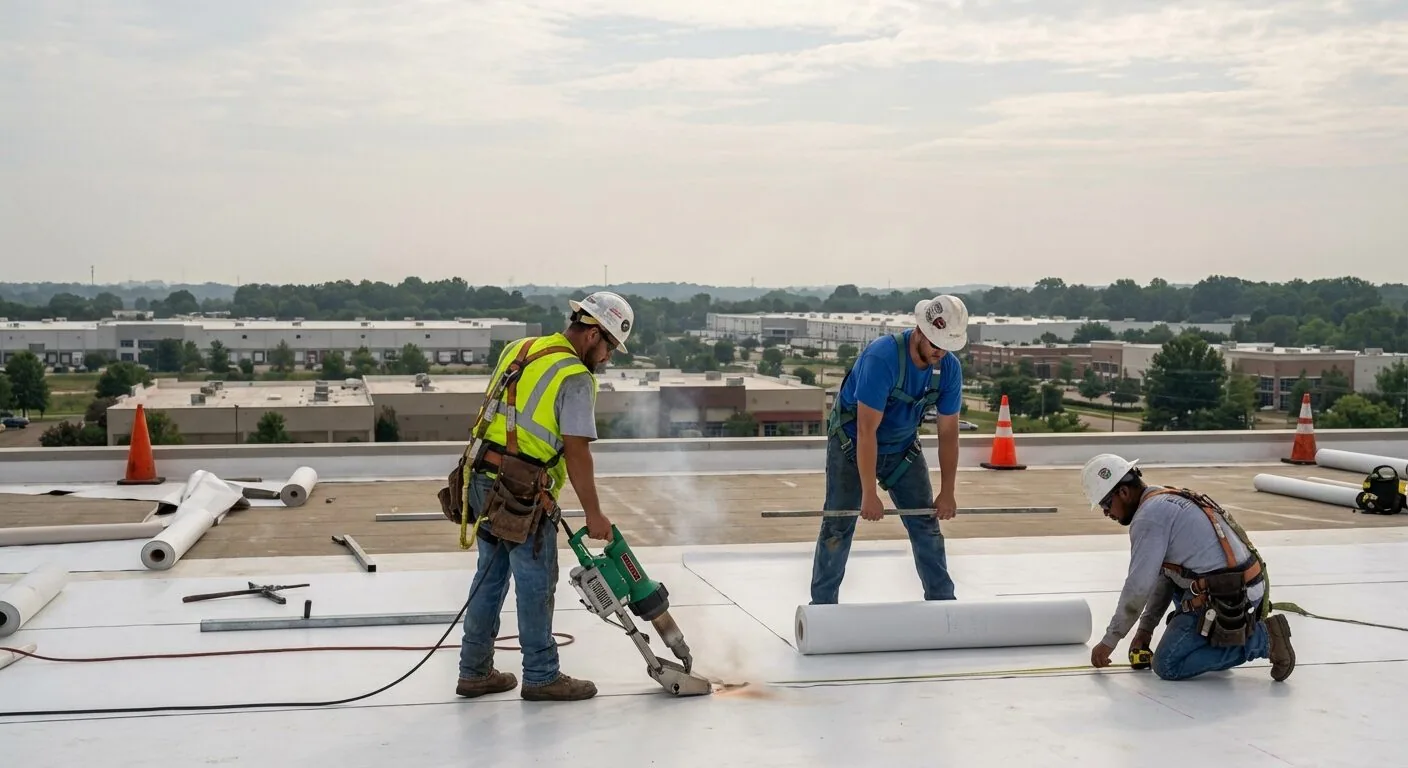
Care cannot pause for a roof crew. Before opening the assembly, we identify the room below, resident entrances, staff routes and any equipment that needs uninterrupted service. A repair over a common room may need a different sequence from work over storage or a service corridor. We keep material staging away from accessible paths, control debris, and tell the facility contact which areas are active each day.
For a larger scope, occupied-building reroofing plans sections so the building can remain in use. Noise, odor, lift access, deliveries and interior protection affect the schedule and cost. We coordinate the roof work with the people responsible for care, and we flag any condition that requires a room or mechanical system to be protected before work begins.
Care routines continue through noise and dust, so mealtimes, medication rounds and rest hours go on the schedule first and the roof work is placed around them. Residents and families are told what to expect through the facility's own channel, which keeps the crew out of conversations best handled by staff who know each resident.
Where do coastal storms test the assembly?
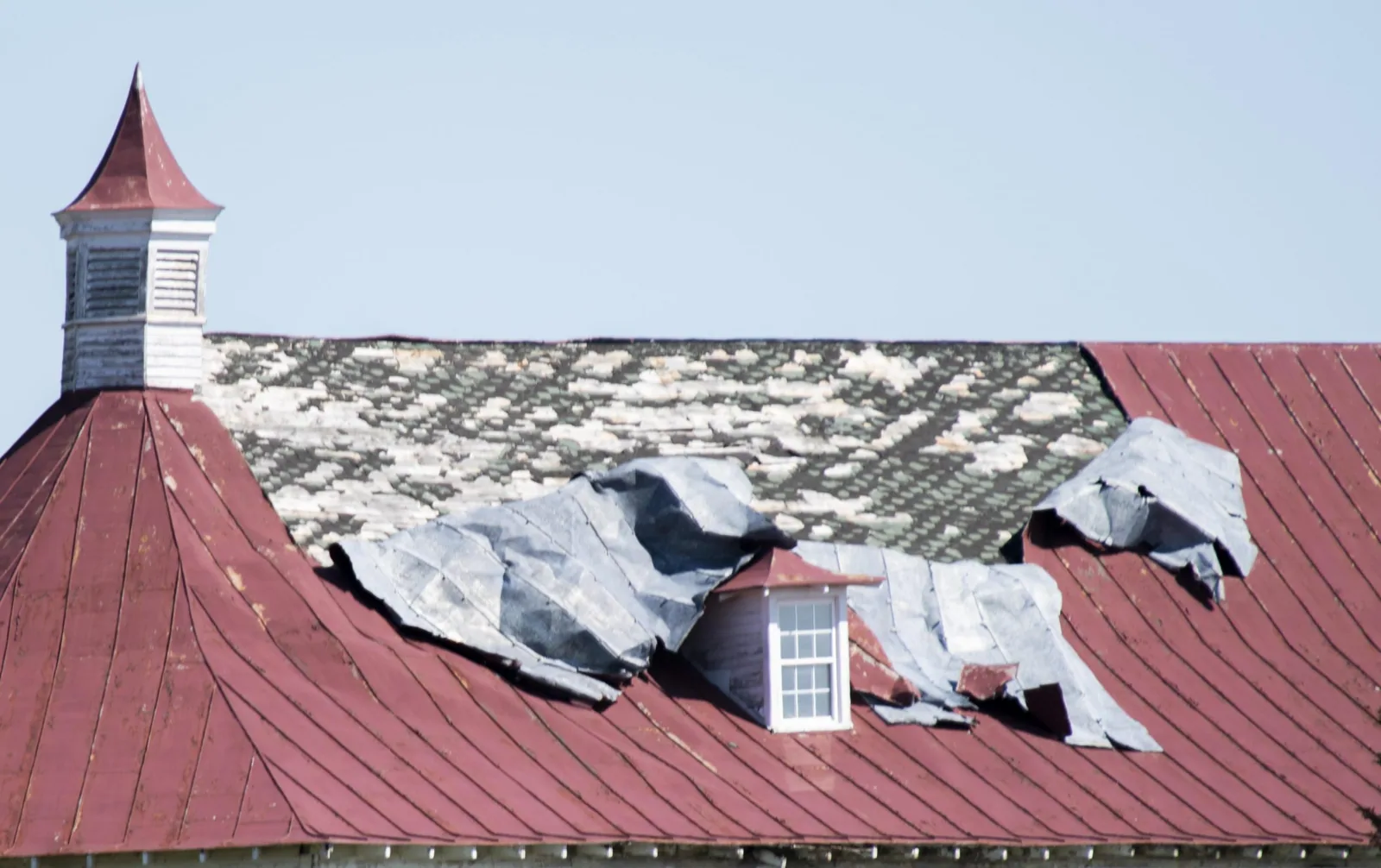
New Bedford's harbor barrier protects the inner harbor, but a rooftop still faces coastal wind. The barrier is about two miles long, and it was Carol in 1954 that set the New Bedford storm tide record at 20 feet. Those facts explain why we inspect edge metal, parapet terminations and roof-to-wall transitions after a severe storm rather than checking only the stained ceiling.
Bob's 1991 surge crested at 5.8 feet at New Bedford and Woods Hole, with a Buzzards Bay station registering 89 mph gusts. We look for lifted edges, open seams, displaced metal and water entry at penetrations. Along the New Bedford Waterfront or in Fairhaven's shared harbor area, the building's actual exposure and roof details determine the work. A wind-damage inspection identifies what moved before we price repair.
What should staff watch after winter weather?
Snowfall in New Bedford averages roughly 32.5 inches, concentrated in the months from December through March. Snowmelt can expose a drain sump that is partly blocked, a seam that has opened, or insulation that stayed wet after the last thaw. We check roof drains, overflow paths, scuppers and low areas, then record any standing water or ice-related damage. A blocked outlet over a resident area deserves prompt attention because water can continue to migrate after the snow has cleared.
For a roof with repeated ponding, we measure the area and check whether slope, a failed drain connection or a depressed deck is responsible. The right scope may include cleaning, a localized detail repair, or new tapered insulation. The work needs to address the holding point instead of sealing over the wet surface. We note what needs immediate protection and what can wait for a planned shutdown.
How do we plan a repair or replacement budget?
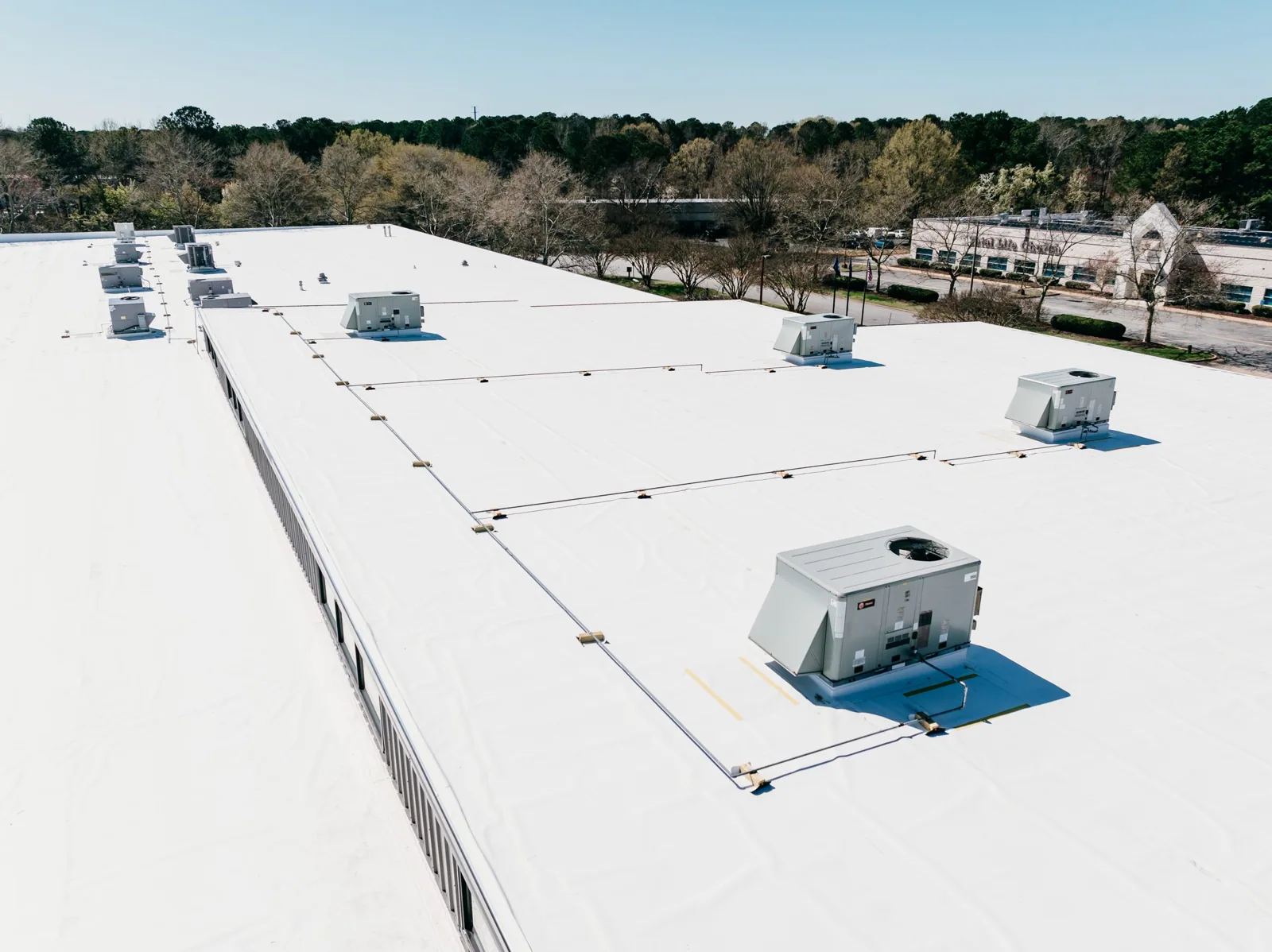
Cost follows the condition and the access. The number of failed details, wet insulation, roof height, lift access, disposal and the need to protect resident routes all affect the estimate. If the field membrane remains sound, we price repair first. If moisture has spread or repeated patches no longer hold, replacement may be the clearer long-term scope. A recover is considered only when the existing assembly can support another layer.
New Bedford's historic downtown and mill district includes older building stock, so a care building there is inspected from the roof down. The report can include marked photographs, moisture findings, a prioritized repair list and a budget-ready summary. Facilities near New Bedford Business Park and the waterfront also benefit from keeping roof plans and maintenance notes together, so later work starts from a known record rather than guesswork.
For board review, the report should separate immediate leak control from work that can be planned into next year's budget. We mark repair locations, affected rooms and any wet insulation, then state what remains uncertain until a small section is opened. If replacement is likely, the estimate identifies tear-off, new insulation and edge details as separate decisions; a recover is priced only when the existing assembly can carry another layer. This gives the administrator a usable scope for approvals and staff planning without implying every building needs the same project.
Care communities sometimes operate attached clinic or therapy spaces. A separate medical office or hospital building has its own roof assembly, equipment and access routes. We inspect those details independently and write findings by roof area, A building across the harbor in Fairhaven gets the same area-by-area read. A current plan, photos, and a meeting with the maintenance lead connect the estimate to daily operations.
After repairs, a maintenance program can schedule drain cleaning, seam checks and flashing review before the next wet season. We record the work completed and any remaining concern. That lets staff explain what has been fixed, what should be watched and when a capital request may be needed.
Commercial Roofing Questions
Can the building stay open during a roof repair?
Usually, the work can be phased while care continues, but access, noise and the room below set the sequence. We identify resident routes and sensitive areas before opening the roof, then plan protection and daily work zones with the facility lead.
What if the leak appears far from the roof opening?
Water can travel along a deck or insulation before it reaches a ceiling tile. We compare the interior stain with roof seams, curbs and drains, then use moisture readings or a core cut to locate the wet area before pricing a repair.
Does a coating fix wet insulation?
No. A coating protects a compatible, prepared surface; it does not dry saturated insulation. We check moisture first, then decide whether a local repair, replacement of wet boards or another scope fits the assembly.
What records help before the inspection?
A roof plan, past repair notes, warranty documents and a list of rooms with recurring stains make the visit more useful. We still inspect the roof itself and mark the findings rather than treating old paperwork as proof of current condition.
Ready to review the roof scope?
Request a Roof AssessmentKeep Reading