Service Areas
Commercial Roofing in Little Compton, RI
Roof inspection, metal roof repair, edge metal and replacement for Little Compton, RI farm-coast shops and small commercial buildings.
Request a Roof Assessment
Which part of a farm-stand roof or a small shop within sight of the water gets checked first? In Little Compton, RI the first look goes to the fasteners and the edge metal, because the town is bounded on the south by the Atlantic Ocean and on the west by the Sakonnet River, and 27.79 percent of its area is water. Little Compton is part of the Farm Coast, among the last coastal farming communities in Southern New England, and the roof work we plan there is on small, exposed buildings.
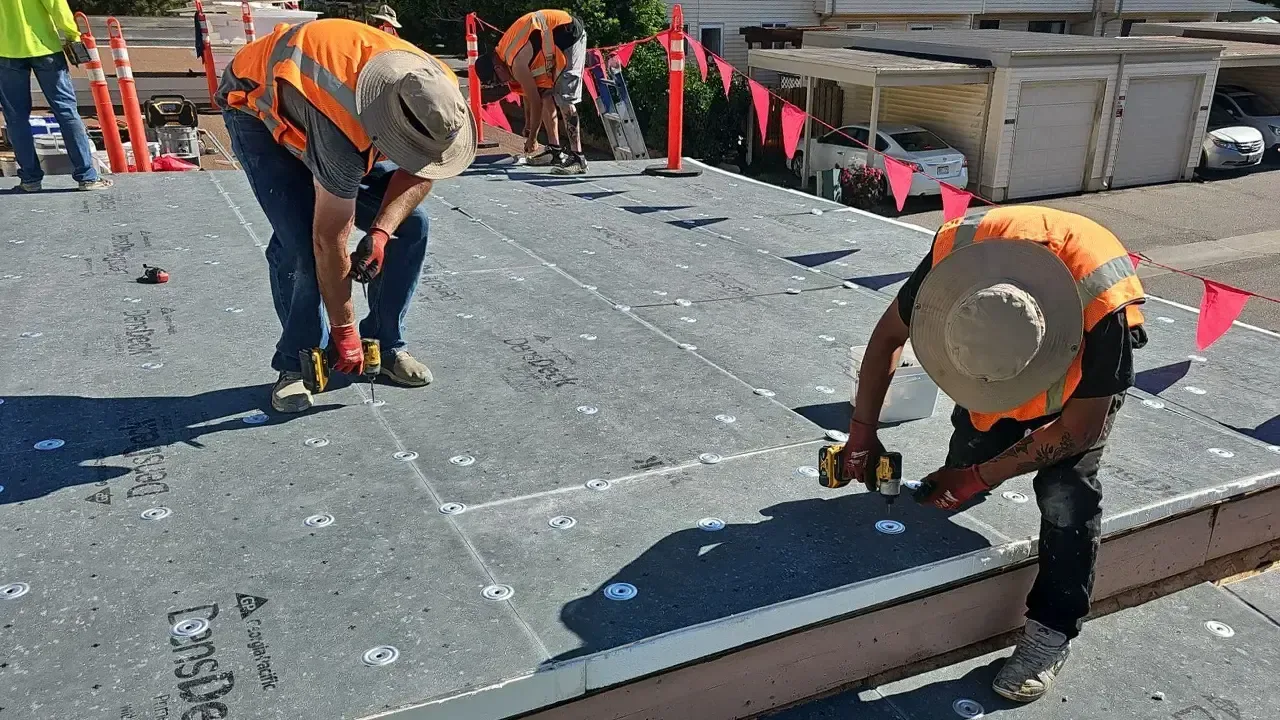
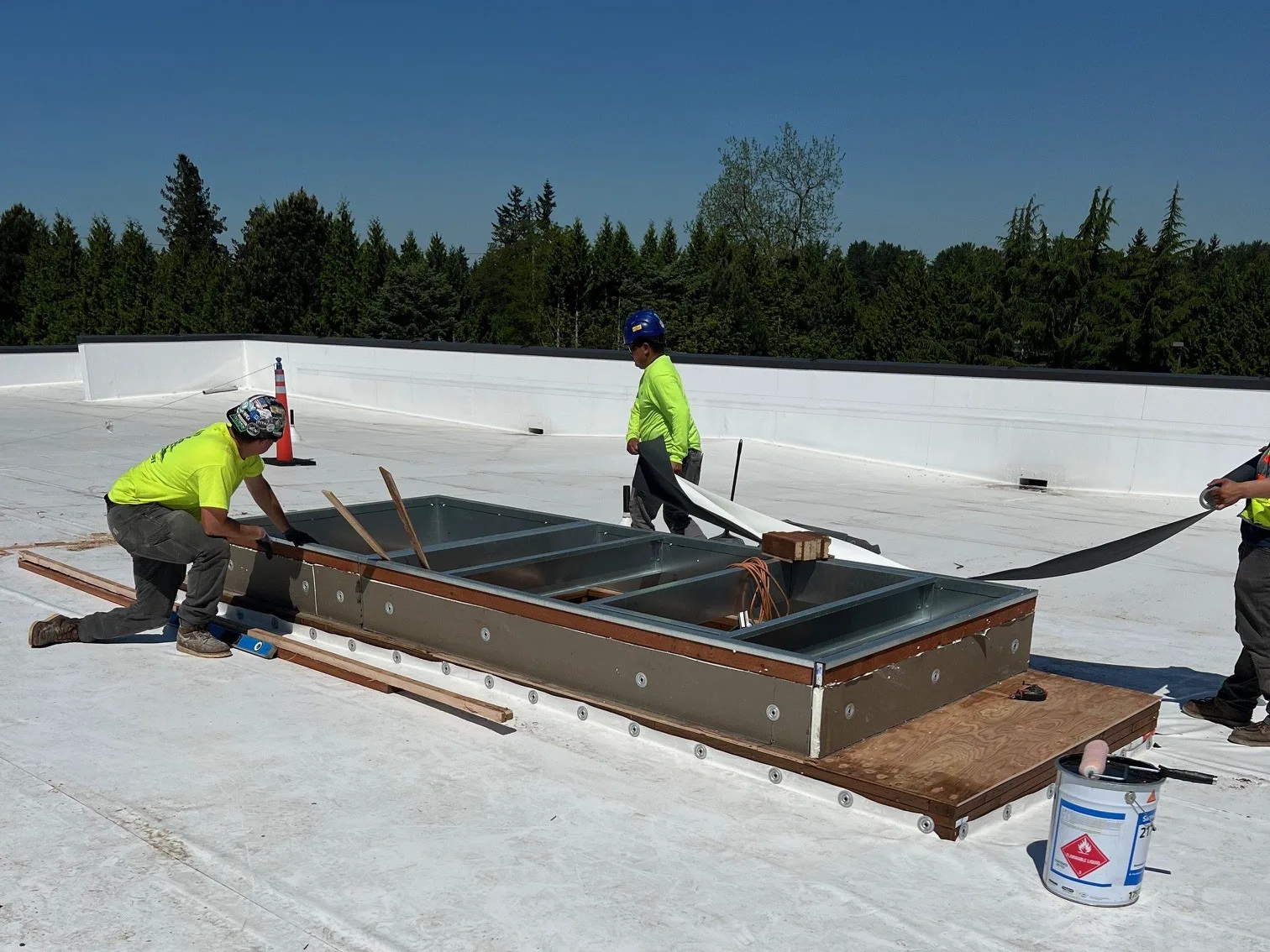
Plain roofs fail in plain places. We probe the seams, press the screws, check the sealant and log each finding on the roof plan before an owner picks a course.
Why does a coastal edge come first?
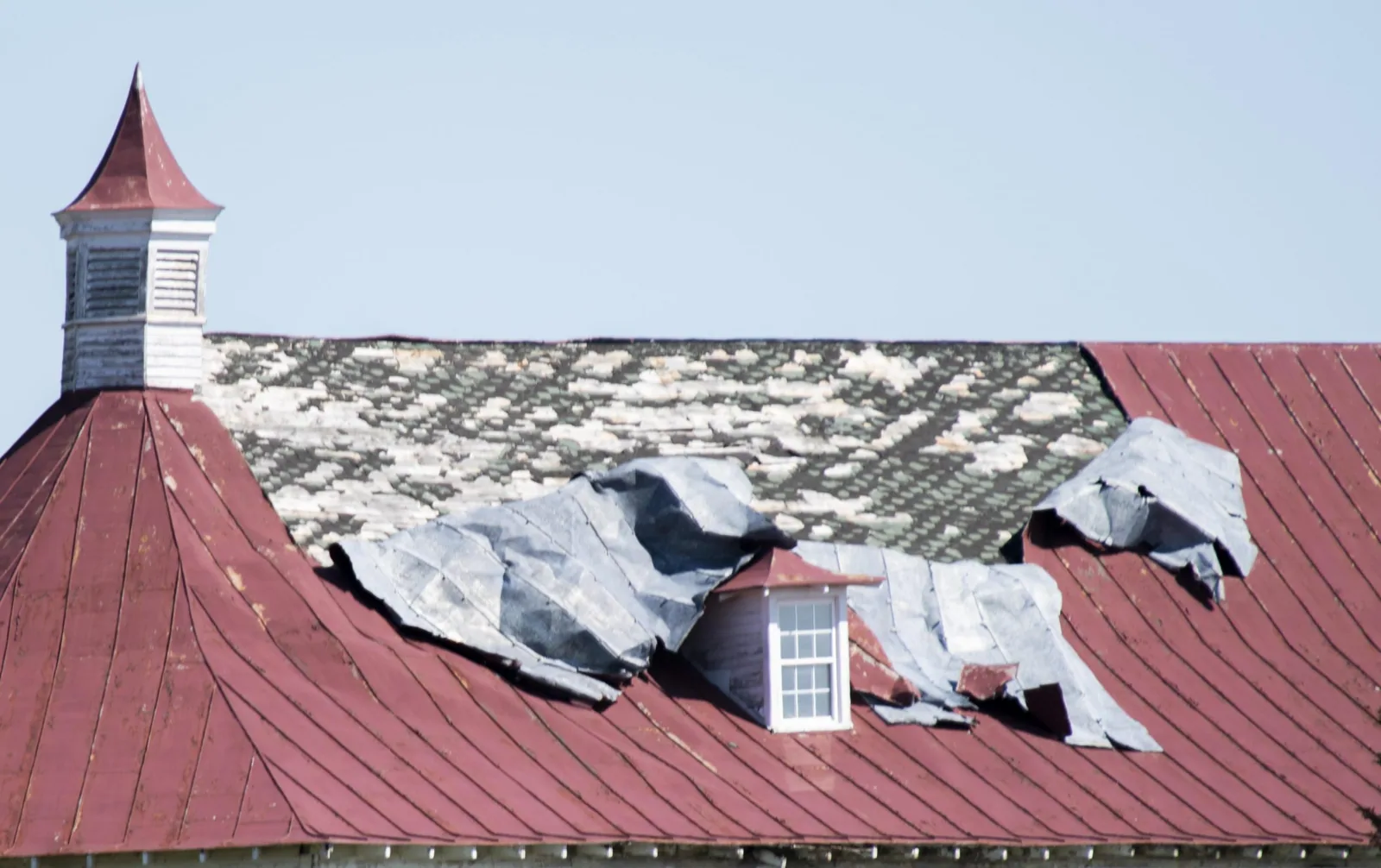
A building near open water takes wind from every direction, and the corners and edges take the most. Edge metal that has lifted a half inch lets air under the roof covering, and each gust works the gap wider. Step one on any Little Compton roof is a pull test on the edge metal and a look at the fasteners behind it.
Gutters follow. A gutter that has pulled from its hangers drags the trim with it, and water then runs behind the fascia. We check hanger spacing, joints and slope toward the downspout, and we run water to confirm that it leaves the roof and does not collect at the wall. A preventive maintenance visit each spring covers all of it.
The 1938 New England hurricane destroyed the structures on West Island and left three stone support columns standing. The 1954 hurricane named Carol is part of the regional wind record. Both storms explain why a wind damage check belongs in every spring inspection.
How does coastal moisture treat a metal roof?
Metal roofs on the coast meet damp air, spray carried by wind and long periods of condensation. Coatings wear at cut edges, scratches and dents, and rust starts there. Early rust is brushed, treated, primed and sealed, and a panel with rust through it is replaced.
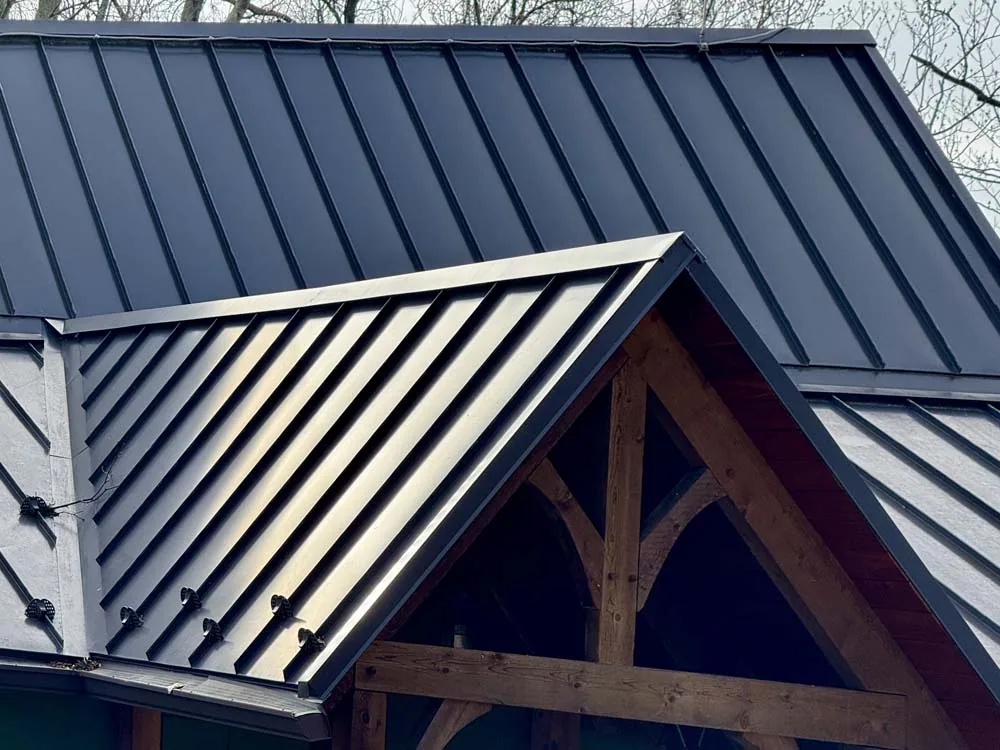
Fasteners are the second concern. Screws back out as the metal moves, and a washer that has hardened no longer seals. A raised head ringed with rust is the first sign. Where a hole has worn, the failed screw is swapped for a larger one. A standing seam roof avoids exposed screws, and its clips, seams and trim get the same close look.
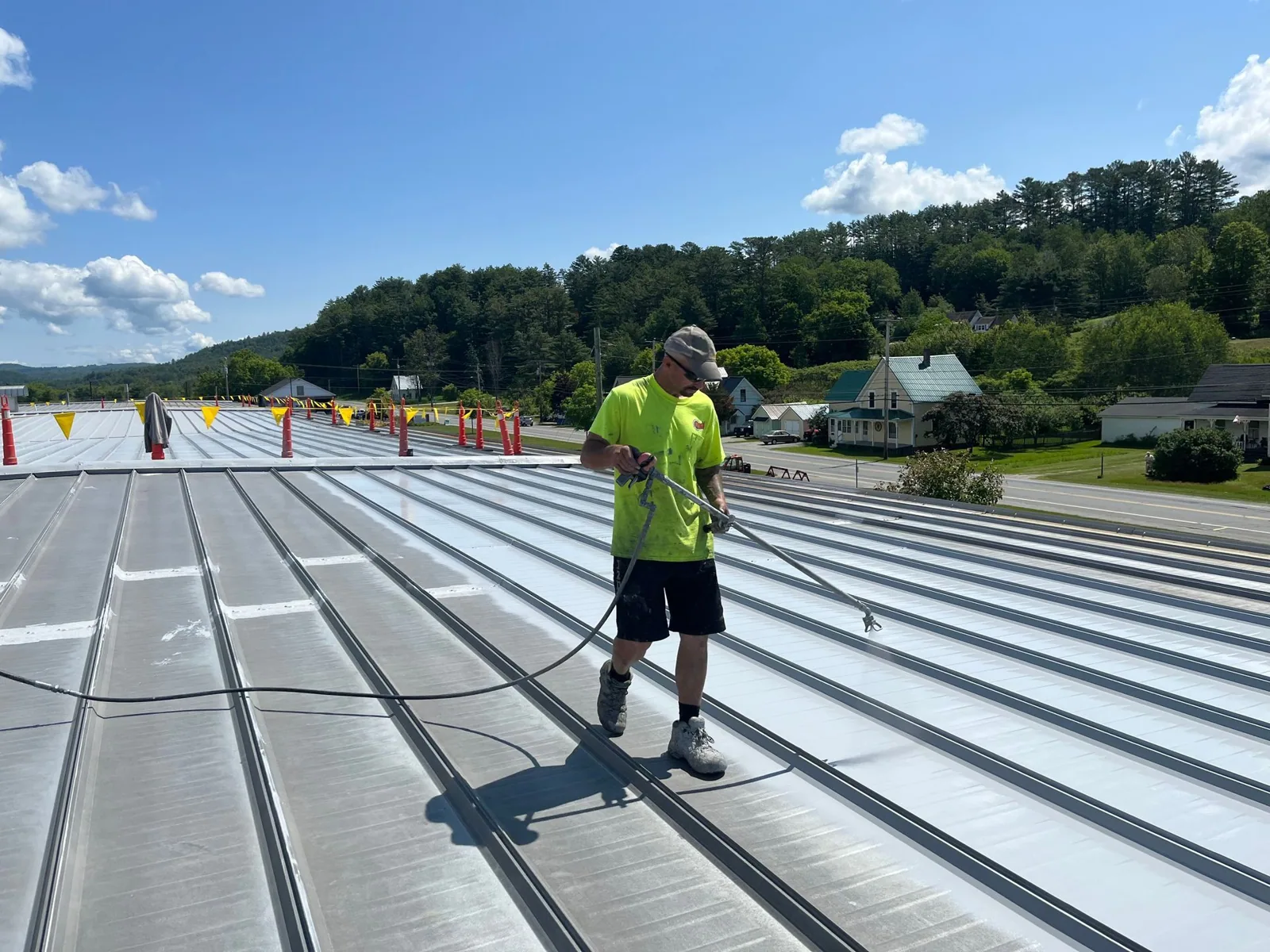
When the coating on a sound roof has worn but the panels are dry, a silicone coating can add years. It needs a clean, dry surface and a test patch for adhesion, and it goes on only after every known opening has been repaired.
What roofs does a farm coast ask us to read?
Farm stands, barns, equipment sheds and small shops share the same roads. Their roofs may be metal panels, asphalt-based sheets or a low-slope membrane, and we name the type before anything else, since the repair follows from it. Condensation under uninsulated metal can pass for a leak, so we compare stains with weather on the day they showed.
A true leak follows rain. Condensation follows temperature. The difference decides whether the answer is a sealant bead or a ventilation change. A building that sits closed through winter can hold moisture inside for months, and a spring inspection finds stains that grew while no one was there. Our commercial roof leak repair work begins by tracing the water to its source.
How do the narrow roads shape the work?
Route 77 runs 14 miles from southern Little Compton to Route 24 in Tiverton, so crews and materials arrive by a single long road. We plan the delivery, the lift position and the hours before leaving the shop, and we bring what the repair needs so the day does not end with a missing part. For a small roof, that often means one trip covers the walk, the repair and the cleanup.
Narrow lots limit staging. We confirm the ground for a lift, the clear space for debris and the route for trucks. Where a building stands close to the road, we fence the work area and keep the sidewalk or shoulder clear. Debris is bagged and removed each day, and loose material is never left on the roof overnight in wind.
What do winter and rain ask of a small roof?
Rain and melt across the region add up to about 52.21 inches of precipitation in New Bedford over roughly 124 days. A roof in Little Compton sits in the same pattern, so thaw and freeze cycles matter as much as storms.
Gutters and downspouts get checked for slope and hanger spacing, since ice at the eave forces meltwater under the first course. On a flat roof, we clear drains and mark low spots that hold water after a thaw. A shallow dirt ring left by a dried puddle is the ponding line, and we trace it to its cause, which may be a clogged outlet, a sagging deck or a low corner. The fix follows the cause, and a patch laid on the wrong one fails by the next storm.
When is a repair enough?
A repair covers a split boot, a few loose screws or a lifted seam. Coating suits a sound roof with worn surface. Replacement follows when insulation is wet, rust has taken most panels or the deck has gone soft. A core cut or moisture scan tells us which of the three fits.
Owners in Tiverton and Bristol follow the same path. The written report ranks every finding by urgency and shows photographs for each. Cost depends on roof area, deck condition, access and penetrations, and each driver appears in the report next to its timing. A coating needs several dry days, a repair needs a dry morning and a replacement needs a planned weather window with temporary protection on site.
Commercial Roofing Questions
How can I tell if the edge metal is loose?
Grip the edge at a corner and pull. Metal that moves, gaps that show daylight and fasteners that sit proud all point to loosening. We tighten and reseal, then photograph the repair.
Does coastal moisture mean a metal roof will rust?
It speeds rust where coating is broken. Cut edges, scratches and dents are the starting points. Early treatment and priming stop the spread.
Is condensation a roof problem or a building problem?
Both, since it comes from warm moist air meeting cool metal. The fix may be insulation, ventilation or a vapor change, and a repair to the roof alone will not stop it.
How soon should a leak be looked at after a storm?
As soon as the weather allows. Take photographs from the ground and call for a walk. A small opening gets larger with every rain, and wet insulation costs more to dry than a sealant bead costs to place.
Can a seasonal building be inspected in the off season?
Yes, and winter or early spring is a good time. Without tenants, access is easy and stains from the closed months are visible. We walk the roof, clear drains and write the repair list so work can finish before the building reopens.
What should I send before a visit?
A date for the last repair, the roof's age and a note on what the building is used for are enough to begin. A visit with a seam probe and a findings review comes before any quote.
Ready to review the roof scope?
Request a Roof AssessmentKeep Reading