Service Areas
Commercial Roofing in Rehoboth, MA
Roof inspection, metal roof repair, flat roof drainage and replacement for Rehoboth, MA farm, shop and small commercial buildings, with clear findings.
Request a Roof Assessment
How does an inspector tell a roof problem from a farm problem on a building that serves both? In Rehoboth, MA the answer begins with the roof type, because the town is a Right to Farm community and mostly rural, with 46.8 square miles spread among crossroads, farm lots and small commercial buildings. US Route 44 and Route 118, the town's longest state routes, intersect near the center of town, and I-195 and US Route 6 run through the southwest corner, where Exit 2 connects to Route 136.
The roof work we plan across that much ground covers metal-roofed farm and shop buildings, small offices and service buildings. Seams get probed, fasteners get checked, and every finding is marked on the roof plan.
What does a Right to Farm setting mean for a roof?
A working farm building lives with dust, moisture, animals and equipment, and its roof sees all of it. Humid air inside a barn rises to the underside of a metal roof, condenses and drips, which can look like a leak. Fumes and dust in some buildings can corrode fasteners faster than rain does, and animal housing adds ammonia that attacks bare steel.
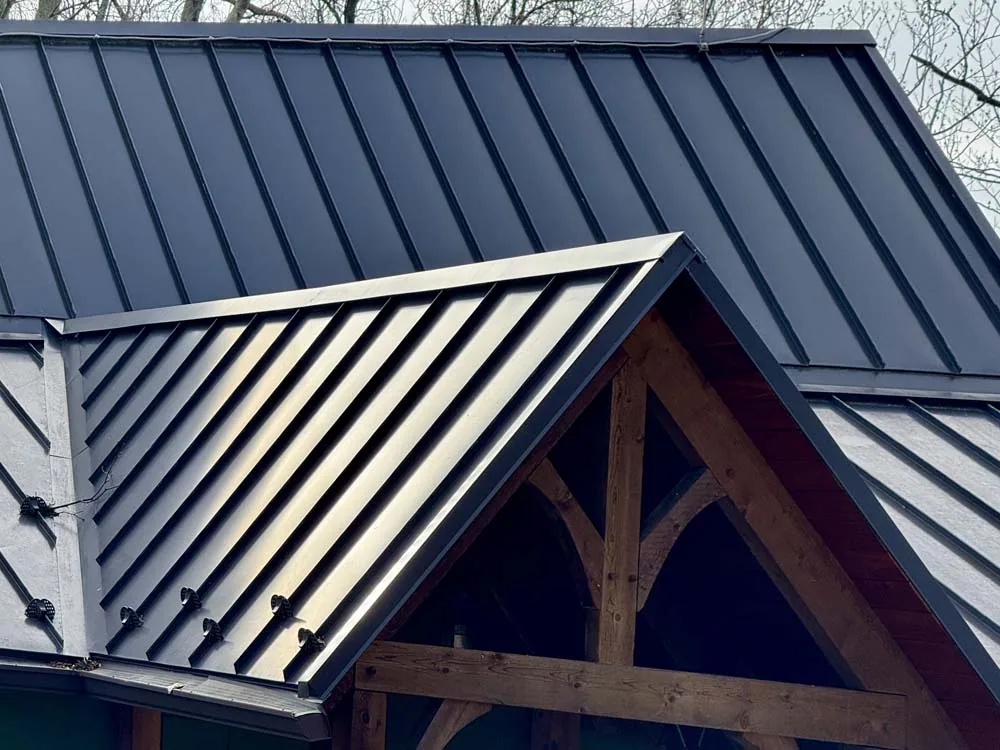
We separate condensation from water entry by timing: a leak follows rain, condensation follows temperature. We probe the deck from below where we can, check for rust staining at the screw lines and look at the sealant at ridge caps and penetrations. Insulation under a metal roof, where it exists, is checked for damp spots at the same time. A standing seam metal roof hides its fasteners, so we examine clips, seams and trim instead.
How do exposed fasteners fail on a metal panel roof?
Metal grows and shrinks every day, and a screw can work out a bit at a time until its washer stops sealing. We call it fastener back-out. A raised head with a rust ring is the first sign, and a row of them along one rib points to movement in that panel.
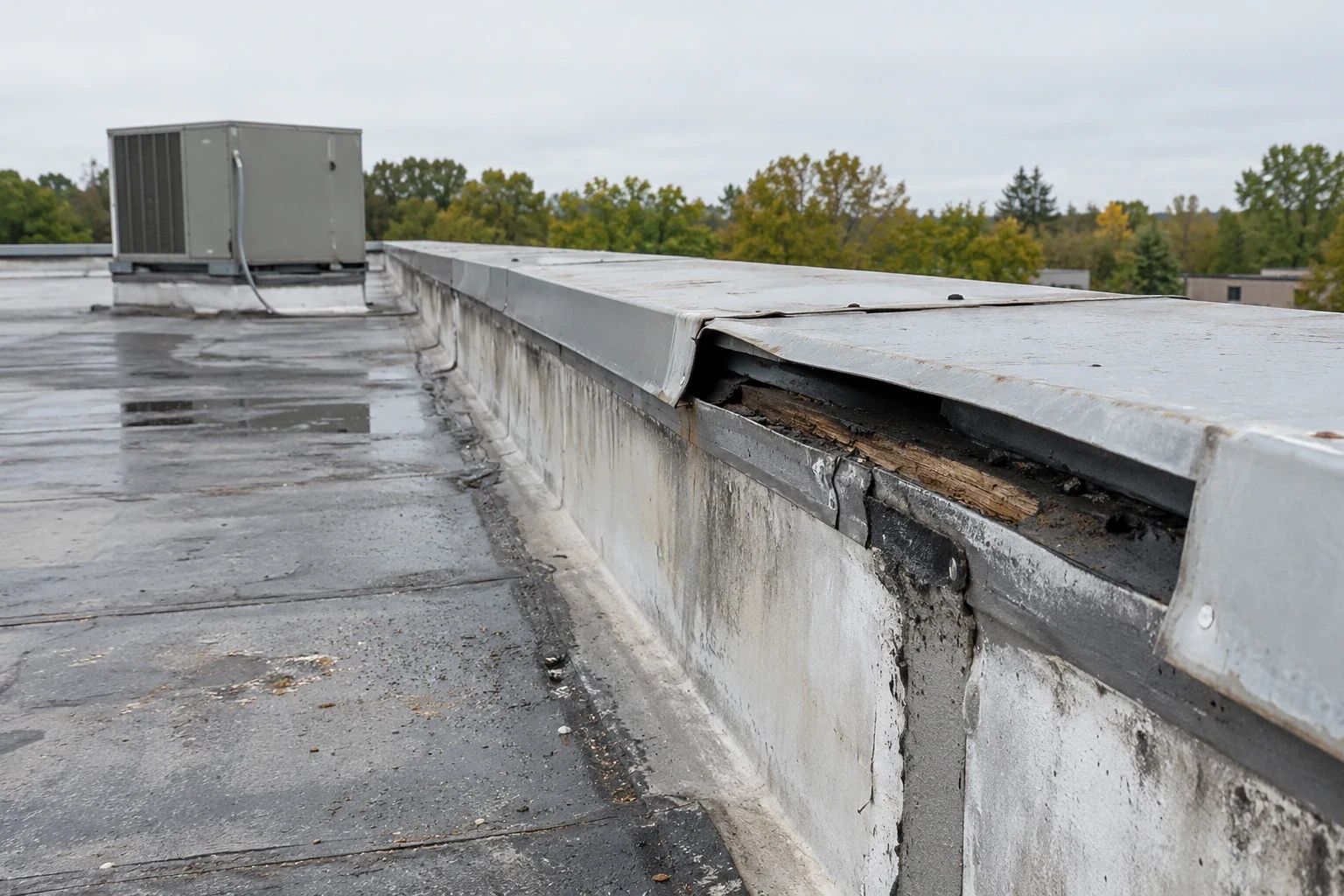
Ridge caps and eave trim deserve their own look. A cap that has lifted lets wind-driven rain in at the highest point, and loose eave trim lets water run behind the gutter. We tug on each piece, check the fasteners under it and renew butyl or sealant where it has hardened.
We press each suspect screw, replace failures with larger fasteners where the hole has worn, and reseal laps where lap sealant has cracked. Cut edges and dents get a rust check, since a dent that holds water breaks its coating. Where panels are tired but the framing is sound, a metal roof retrofit can fit over the existing roof.
What changes for small commercial buildings near the crossroads?
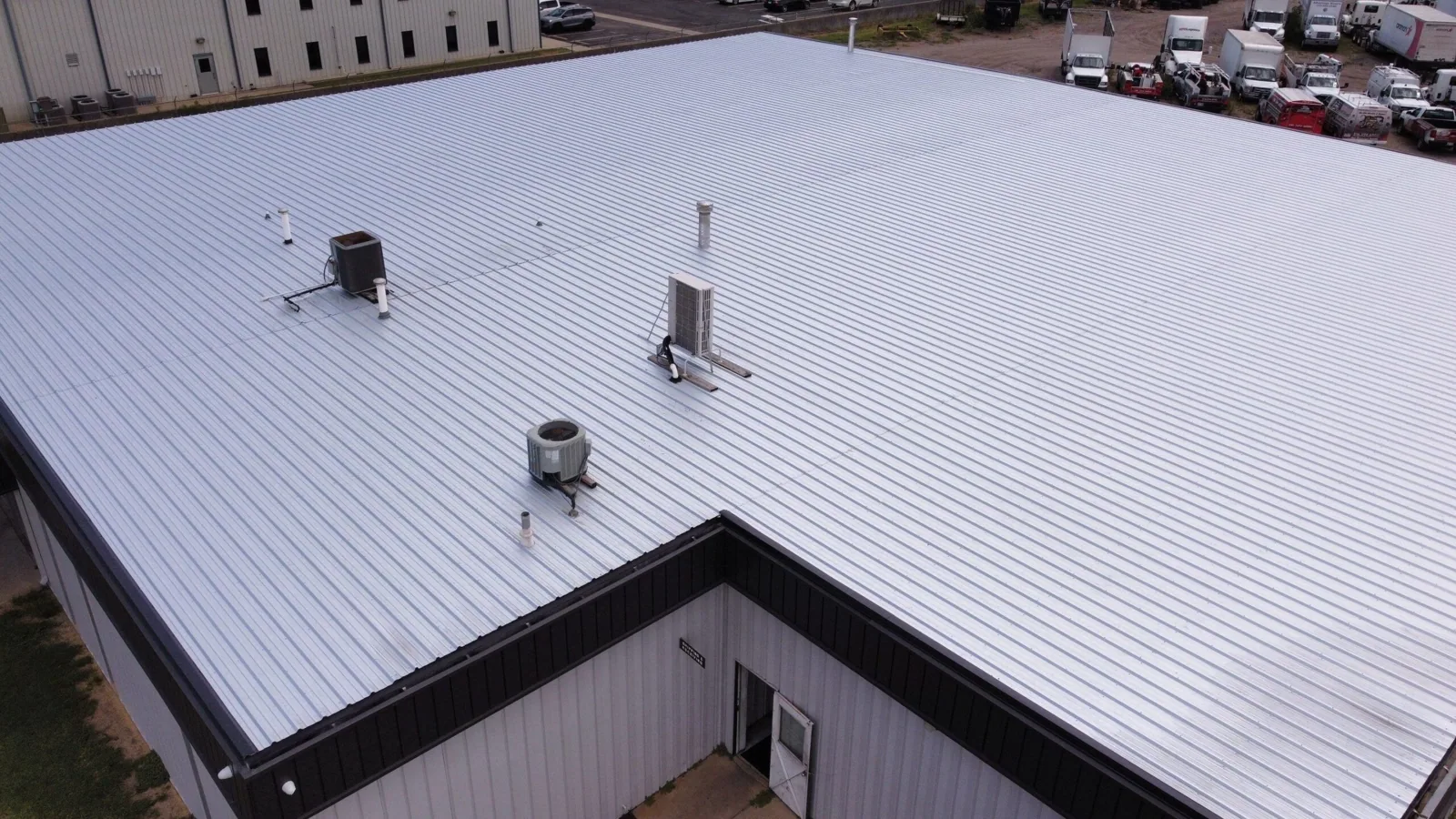
Near the center of town, where Route 44 and Route 118 meet, the roof work we plan covers small offices, shops and service buildings with low-slope roofs. A low-slope roof needs a drain or scupper, a parapet termination and a flashing at every pipe. Because the building is small, one clogged outlet can send the whole roof's water against one wall.
Outlets get cleared, lap sealant gets probed, and the through-wall flashing is examined wherever the roof meets masonry or siding. The dirt ring a puddle leaves is the ponding line; we follow it back to the clogged outlet, sagging deck or low corner that caused it. Our flashing failure repair work starts at those terminations.
What does regional weather ask of the roof?
Precipitation in New Bedford adds up to about 52.21 inches a year. Rehoboth lies inland, but a roof in the region still carries snow, sheds meltwater and survives repeated freezes. Valleys and the areas behind units hold snow longest, so tapered crickets and drain sumps get a close look, and meltwater that refreezes at an outlet is a common cause of backups under laps.
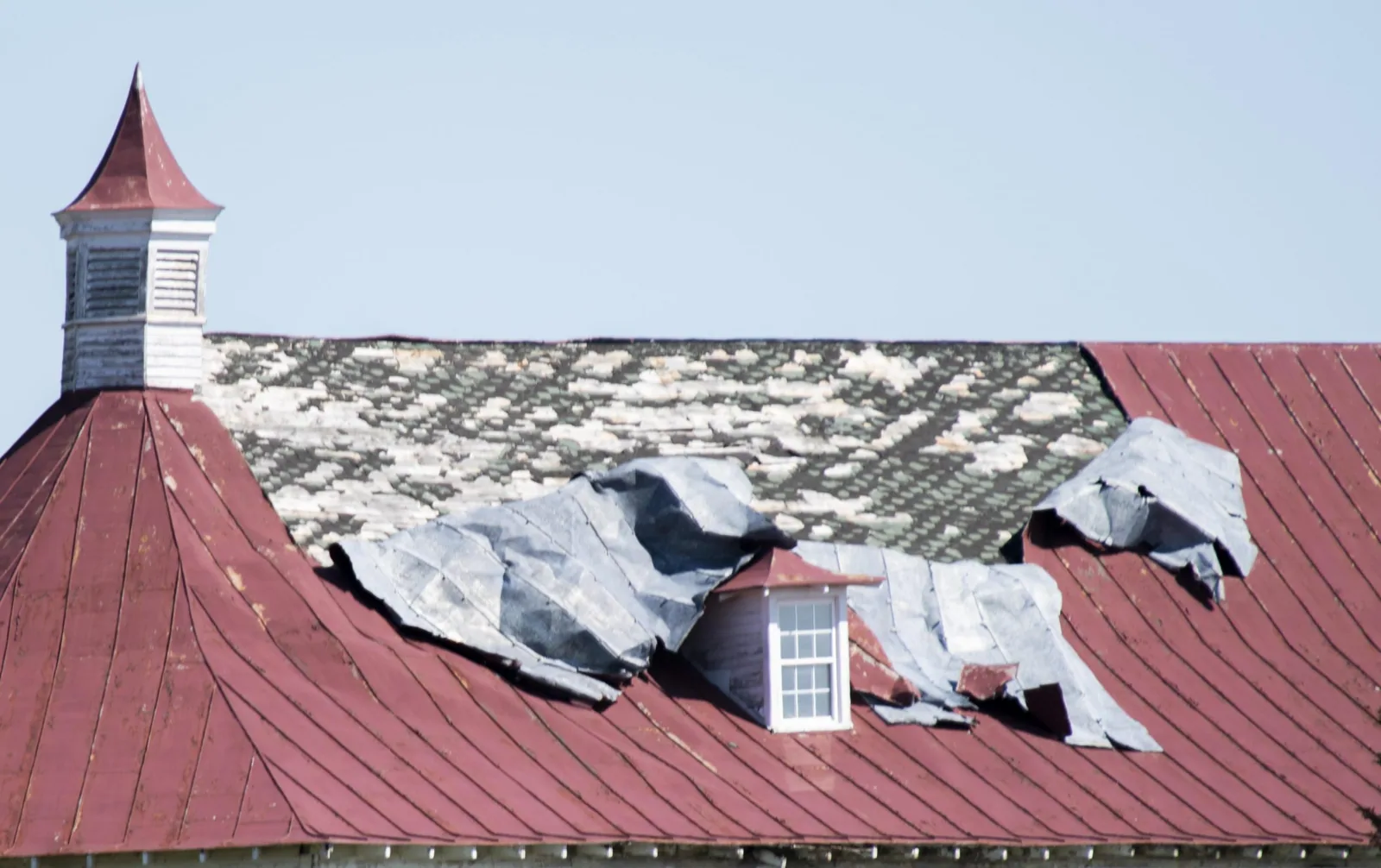
After the 1938 New England hurricane, New Bedford stood under eight feet of water, and a storm like that is why the perimeter gets inspected before the field. We start with the perimeter: edge metal, gutters and the first row of fasteners. A wind damage survey adds a check for torn flashing and lifted panels.
How do we reach a roof on a big rural parcel?
Rehoboth covers a lot of ground, and a roof may stand at the end of a long drive. We confirm the access route, the firm ground for a lift and the nearest safe place to stage materials before we leave the shop. If animals or equipment share the lot, we agree on fencing and the hours when the work area stays clear.
We plan the route in from I-195 Exit 2 or Route 44 with the owner. The larger constraint is weather. Wind stops lift work, and rain stops anything that needs a dry surface. We watch the forecast and keep temporary protection on site. Every night the roof is left watertight, and photographs of the day's work go to the owner, so a rural owner who cannot be on site still sees the roof change from first day to last.
When does a repair stop being enough?
A core cut or moisture scan decides. If insulation and deck are dry and the roof is sound outside the defect, a repair holds. If the insulation is wet in several places or the deck is soft, the scope moves toward replacement. Surface wear on a sound roof can be coated.
Owners in Seekonk and Dighton weigh the same choice. Price follows roof size, deck condition, access and penetration count; a rural lot adds travel and delivery time, and the written scope says how much. Each option also has a timing note: a coating wants a stretch of dry days, and a replacement wants a planned weather window.
Commercial Roofing Questions
How can I tell condensation from a leak in a barn?
Watch the timing. A leak shows after rain and follows the roof's low points, while condensation shows on cool mornings and dries by afternoon. We also check the underside of the panels for rust and for water stains along the screw lines.
Is a metal roof repair worth it on an older farm building?
Usually, if the panels are sound and the framing is dry. New fasteners, fresh sealant and treated rust can add years. If rust has gone through most panels, replacement or a retrofit is the better path.
What does it cost to look at a roof?
The walk and the written report are the first step, and we explain the scope before any quote. Cost for the work itself follows roof size, deck condition, access and the number of penetrations.
Can roof work happen around animals or equipment?
Yes, with fencing, a clear staging area and agreed hours. We keep tarps, fasteners and debris off the ground and finish each day with the roof watertight.
Does a Right to Farm setting limit what roof work is allowed?
Farm-use rules and local permits vary by parcel, so we ask the owner for the use, any existing approvals and the roof plan before we write a scope. Reroofing under Massachusetts 780 CMR, tenth edition, which is based on the 2021 International Building Code, still follows the permit review that applies to the building.
What should I send before a visit?
Tell us how old the roof is, what the building is used for and where it leaks; a plan is a bonus. We examine, photograph and report back before quoting, so the first conversation is about evidence on the roof and not guesses from the ground.
Ready to review the roof scope?
Request a Roof AssessmentKeep Reading