Property Types We Roof
Shopping Center Roofing in New Bedford, MA
Strip retail and shopping center roof inspection, tenant-curb repair and replacement planning across the New Bedford, MA region, scheduled around store hours.
Request a Roof Assessment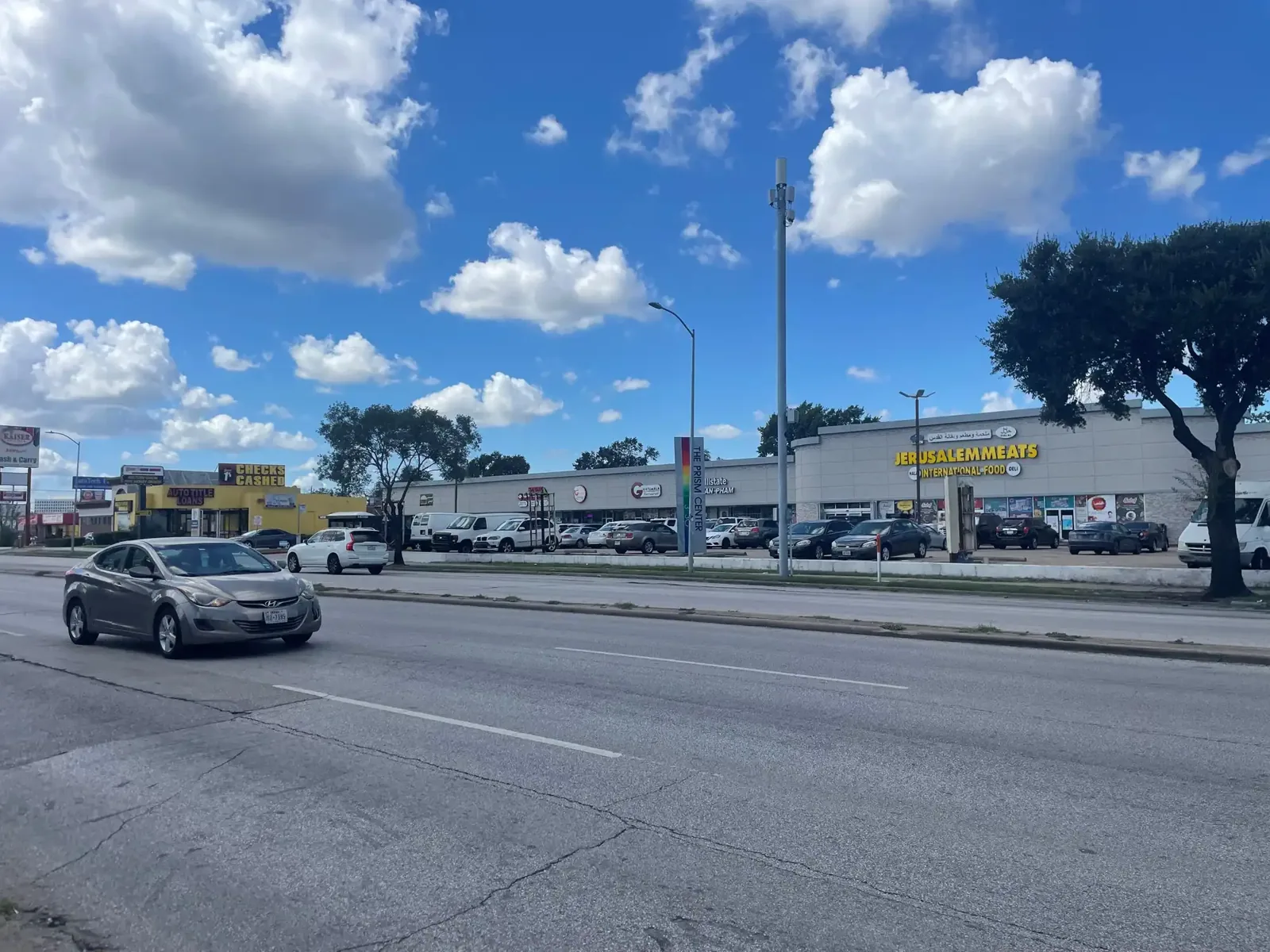
Whose roof is it when two tenants share a stain on the same ceiling? A property manager of a strip center near New Bedford, MA knows how that conversation goes: one tenant blames the landlord's membrane, another blames the neighbor's rooftop unit, and the lease says something different about each. The first thing an inspector finds on a strip roof is that the leak is rarely where the complaint is, and rarely where the lease draws the line. We probe the seams, trace each stain to a curb, a drain or a wall flashing, and mark the findings on a roof plan that shows the tenant boundaries below.
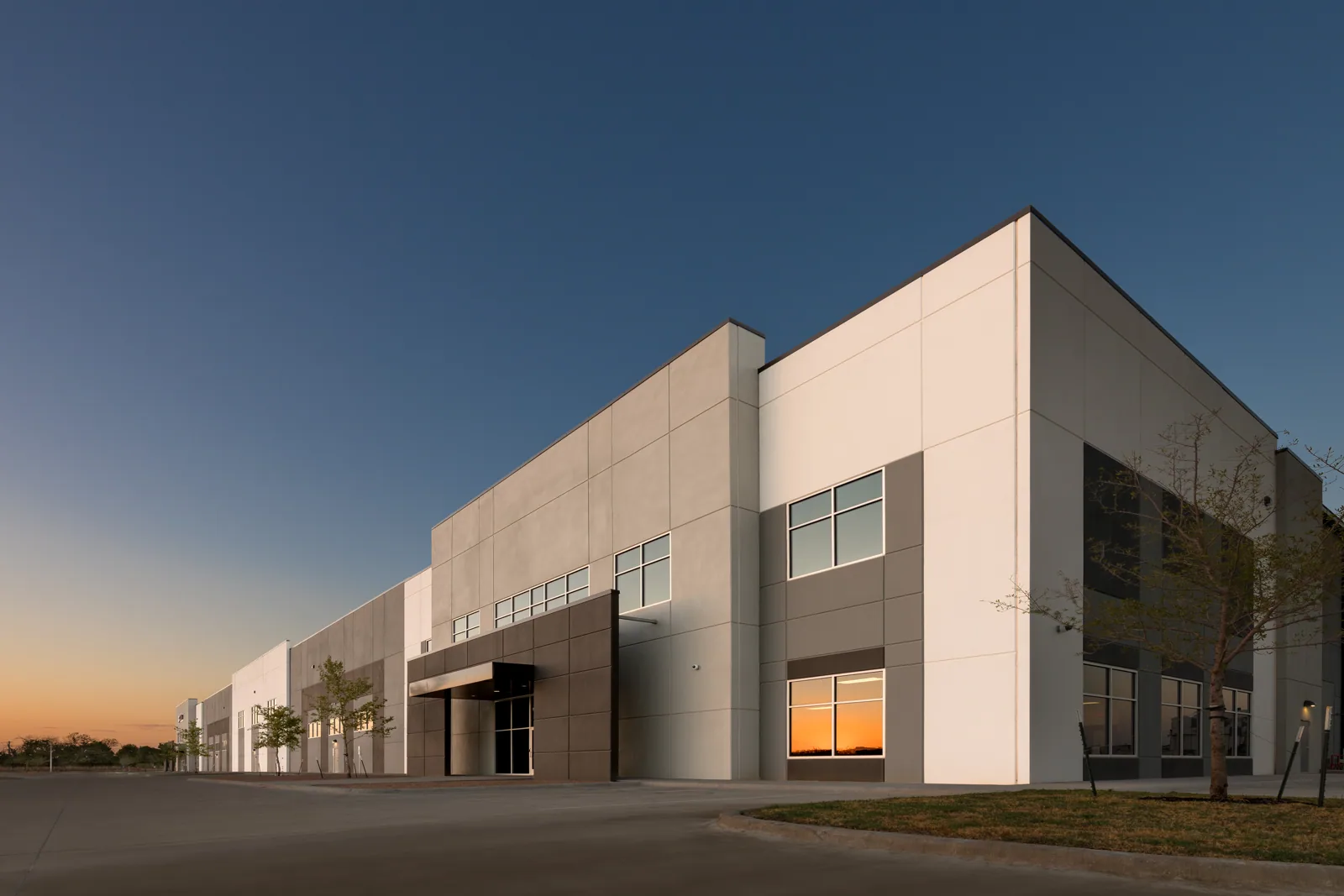
With the plan in hand, the manager can say which items are a landlord repair, which are a tenant's equipment and which are both, with photographs to settle the question.
What does the inspector find on a long, low strip roof?
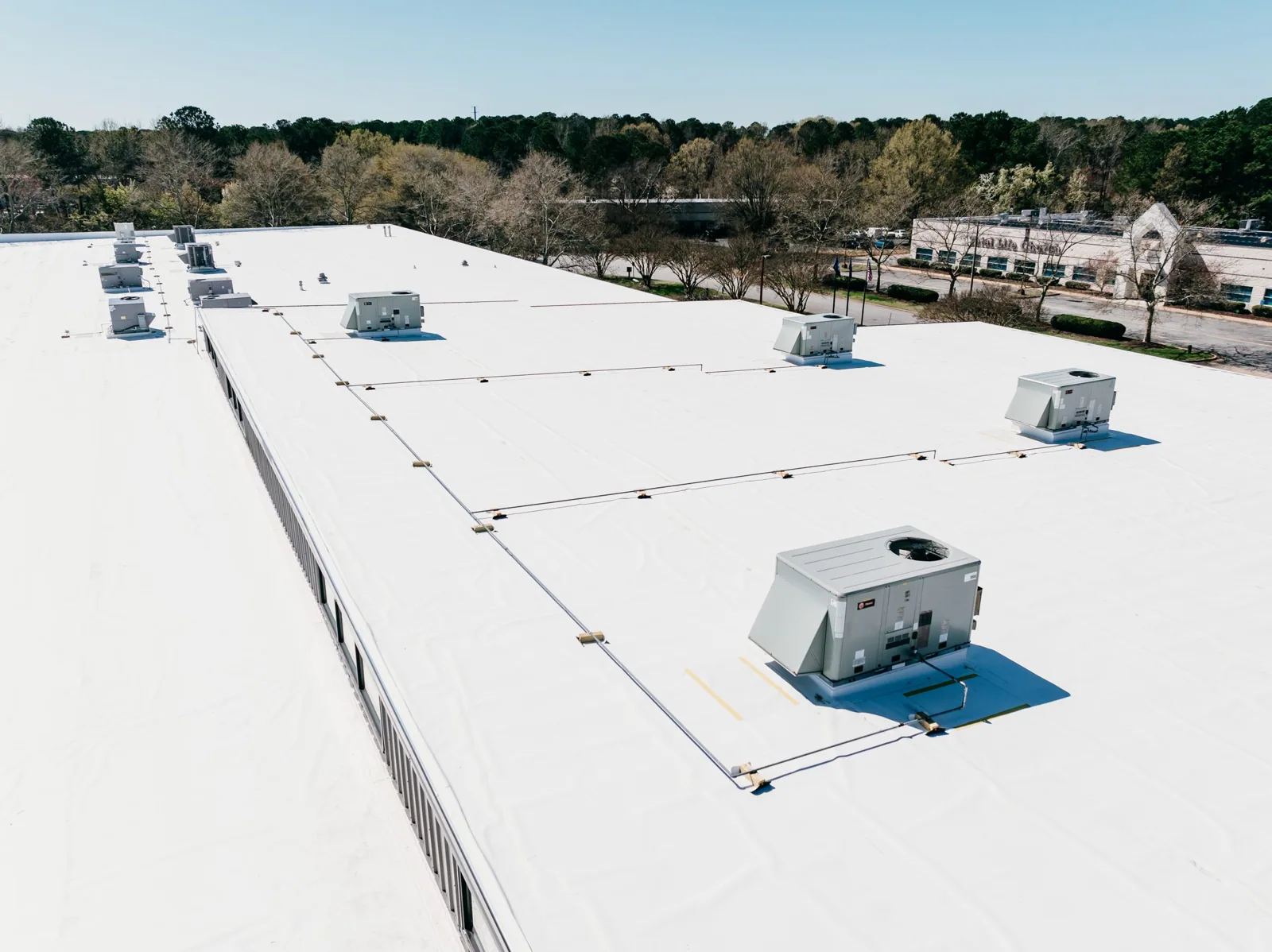
A strip center is one wide roof over many small rooms. The membrane field is usually the healthiest part of it, and the trouble sits in the details: demising wall flashings, rooftop unit curbs, tenant-added exhaust fans, plumbing vents and the parapet that runs the whole length of the front. Each unit that was added after the original construction left a penetration, and each penetration is flashed to the standards of the year it was added.
We walk the roof along the demising walls and note every transition between sections, because movement concentrates there. Lap sealant that has cracked, fastener back-out on mechanically attached sheets and membrane shrinkage at corners all show up in the same rows. The result is a repair list sorted by unit, so a manager can see which tenants share a problem.
Skylights and roof hatches turn up on older strips. A plastic dome that was sound in the year it went in is often crazed and cracked now, and its curb flashing has dried from the same sun. We list every opening, photograph it and grade it.
Why do rooftop units cause most strip center leaks?
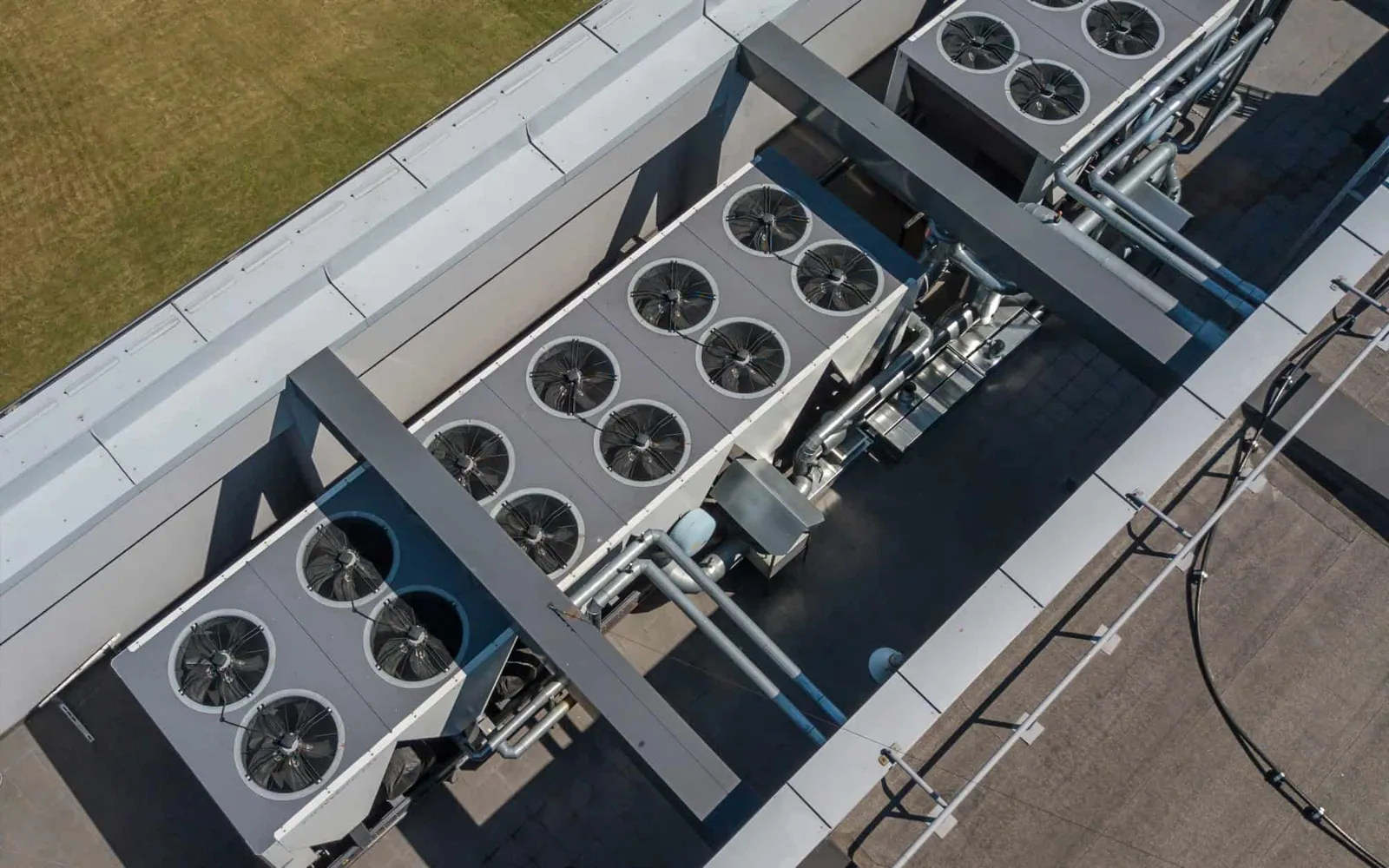
A heating and cooling unit is heavy, it vibrates, and it is serviced by a technician who carries tools across the membrane. Over a few seasons, the curb flashing opens, the condensate line drips onto one spot and walk paths wear through the sheet. When a tenant replaces a unit, the new curb often does not match the old opening, and the gap is closed with sealant that does not last.
We check every equipment curb and support, mark the condensate drips, and recommend walk pads along service routes. We also keep a log of units by tenant, so that when a replacement is planned, the roofer is called before the crane arrives instead of after the leak starts.
Cost of the leak is not only the repair. A wet ceiling in a retail unit means a closed sales floor, damaged stock and a tenant asking for rent relief, so the cheapest roofing work a manager can do is the work that keeps a leak from reaching a ceiling at all. That is why we weight the plan toward penetrations and drains instead of the open field.
Where do the region's retail corridors put pressure on the roof?
Seekonk's Route 6 retail area is known for its chain stores and restaurants, Wareham's retail centers line Routes 6 and 28 and include Wareham Crossing, which opened in 2007, and Swansea has a retail stretch of many smaller businesses along Route 103. Somerset also has several shopping plazas along Route 6. Retail lots put delivery trucks, dumpsters and customers in the same space the roofing crew needs.
That shapes the schedule. Staging has to sit where it does not block a delivery or a fire lane, crane picks have to avoid peak shopping hours and tear-off has to be sectioned so that no store is under an open roof. We plan these items with the manager before the contract is signed, and the same approach serves Seekonk, Wareham and Swansea.
How do snow and drainage affect a wide retail roof?
A strip roof sits under the same 32.5 inches of yearly snow that falls mostly December through March, and the January 2015 blizzard added 24.1 inches in Fall River. A wide, flat strip roof holds that snow across hundreds of feet, and when it melts the water has a long way to travel to a drain or scupper. A clogged drain or a scupper set slightly high leaves ponds that load the deck and age the membrane.
Every drain gets cleared and checked before winter, the slope toward each is measured, and places where a tapered cricket would carry water to the outlet are marked. After a thaw, we inspect the seams near ponding, since standing water through freeze and thaw is what opens them.
What does wind do to a front parapet and a long edge?
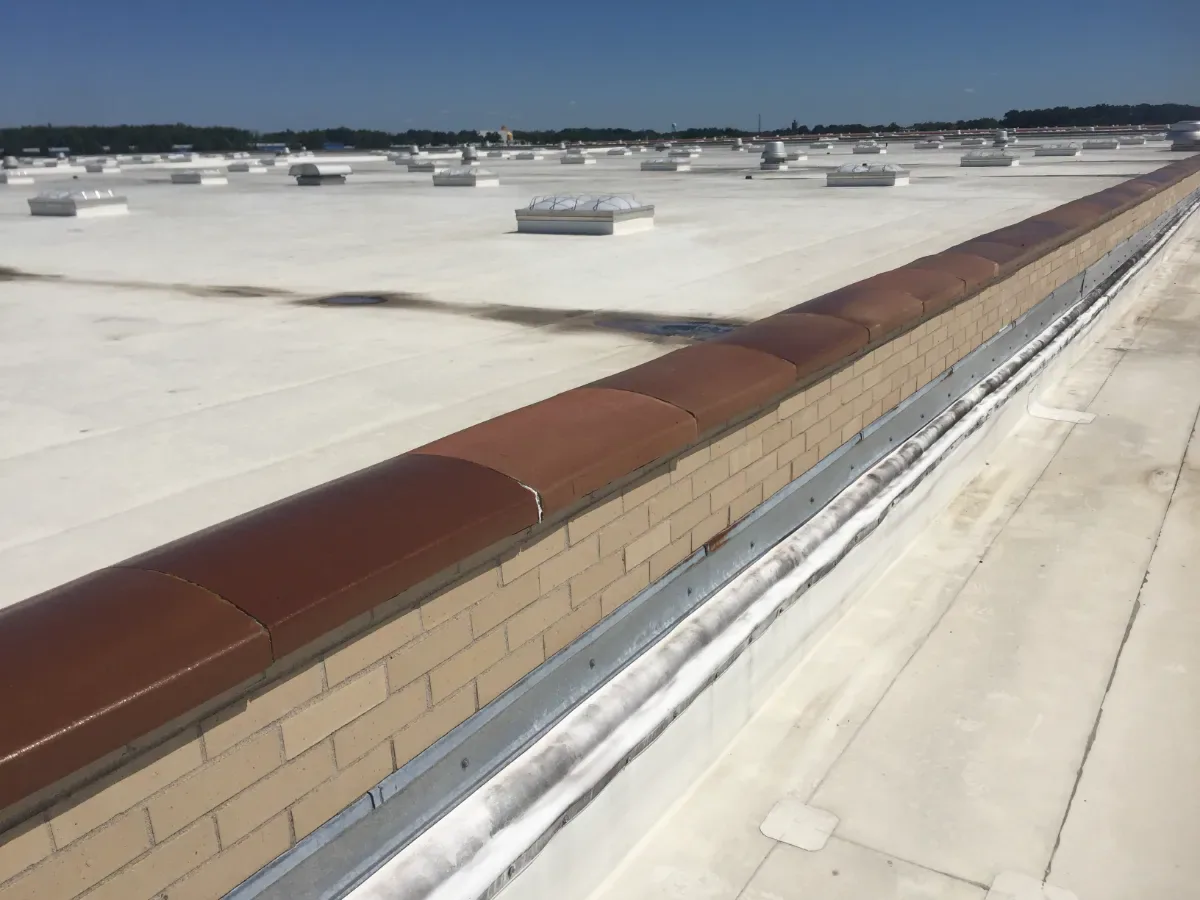
A front parapet is judged against Carol's 80 to 110 mph winds across eastern Massachusetts in 1954 and Bob's 89 mph gusts over Buzzards Bay in 1991. A strip roof has a long perimeter and a tall front parapet that acts like a sail, so the edge metal and coping take a hard load. Loose fasteners at the corner let wind get under the sheet and start a peel that can run along the row.
We check edge metal and coping along every side, tighten or replace what has backed out, and note where heavier edge details should be specified in a replacement. The Barrington Shopping Center, built in 1948, is a reminder of how long retail buildings stay in service.
What should a manager ask before replacing a strip roof?
Ask whether the insulation is dry. A moisture scan and a few core cuts decide between a recover and a full tear-off, and they decide with numbers. Ask also how the lease treats roof work, who pays for tenant-added penetrations and when the next tenant turnover is scheduled, since new tenants often bring new units.
The same questions apply to a big-box store or a grocery store, with a larger single tenant and a different schedule.
Ask for the report to be organized by tenant bay, with the bay numbers the property team already uses, so a leak complaint can be matched to the roof in a minute instead of an afternoon.
Commercial Roofing Questions
How can a manager tell whether a leak is the landlord's roof or a tenant's unit?
Trace it. The stain is located on the roof plan, then the roofer checks the nearest curb, condensate line and penetration before the field membrane. A leak at a tenant's unit curb is usually an equipment item, while a leak at a seam or a drain is the roof. Photographs of the source settle the question.
When does a shopping center need a full replacement instead of repairs?
When the insulation is wet across a wide area, when seams are failing in long runs, or when the repair line grows each year on the same sections. A core cut and moisture scan give the evidence. Until then, targeted repairs at curbs and flashings can carry the roof for several more years.
Can the roof of an open center be replaced without closing stores?
Yes, with sections small enough to be closed the same day, with staging away from entrances and with noisy work timed outside peak hours. Tenants with sensitive operations get notice and, where possible, a quieter window. The plan is written into the scope so every party knows the limits before work begins.
What does a plan of equipment by tenant save a landlord?
It saves arguments and repairs. When each unit, exhaust fan and vent is logged against a tenant, the manager knows who to call when a curb fails, and the roofer can be scheduled before any crane lifts a new unit. The log also shows how many penetrations the roof can carry before a new membrane is warranted.
Should a center repair the roof before a new tenant moves in?
Usually yes, at least over the bays being fitted out. New tenants bring new units, new exhaust and new interior finishes, and a leak after move-in is expensive for everyone. We inspect the roof over the bay, repair the details around it and agree in advance where the new equipment will sit and how the curbs will be flashed.
Ready to review the roof scope?
Request a Roof AssessmentKeep Reading